Your Cold Chain Transparent Building Trust Through Real-Time Data
Author : Alyssa Miller | Published On : 11 Aug 2026
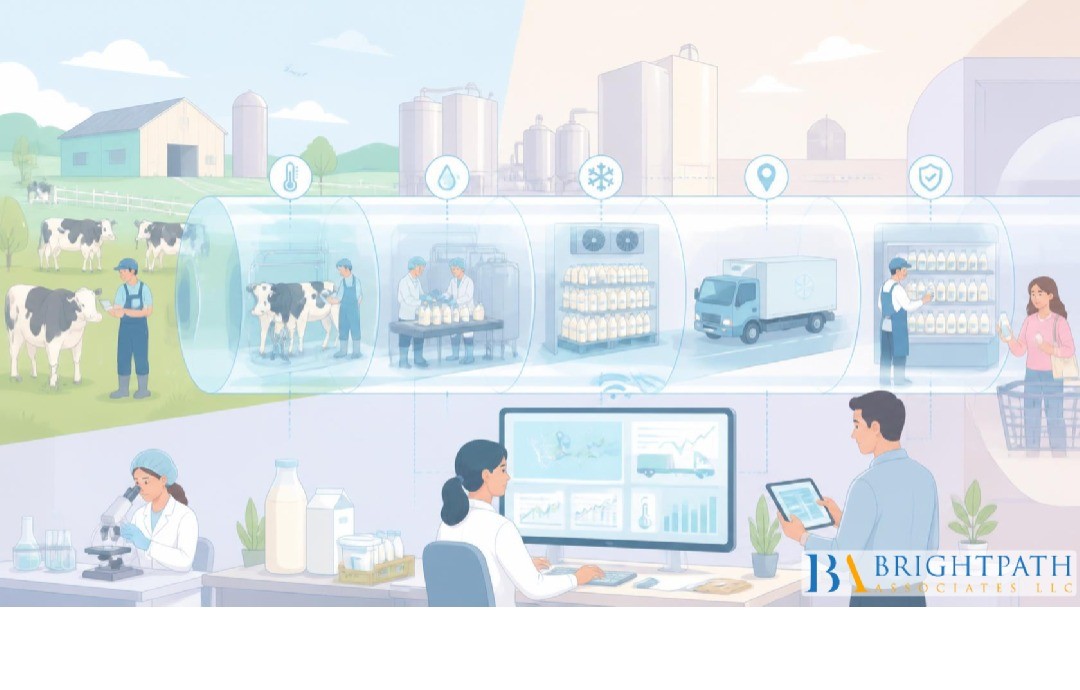
The modern dairy supply chain is becoming more complex, and maintaining product quality no longer ends when goods leave the processing facility. Milk, cheese, yogurt, cream, and other temperature-sensitive products can pass through multiple facilities, carriers, warehouses, distribution centers, and last-mile delivery networks before reaching the customer. At every stage, temperature, handling time, equipment performance, and delays can influence product integrity. For dairy companies, this makes cold-chain visibility increasingly important—not simply as an operational tool, but as a foundation for trust.
Traditionally, cold-chain management has focused on keeping products within defined temperature ranges and responding when a problem occurs. While temperature control remains essential, this approach can leave companies with limited information about what actually happened during transportation. A shipment may arrive outside its expected condition, but without detailed historical data, teams may struggle to determine when the deviation occurred, who was responsible, and whether the entire shipment was affected. Real-time data changes this equation by giving businesses a continuous record of product conditions throughout the journey.
Cold-chain transparency is broader than installing temperature sensors. A tracker may show a temperature curve, but that information becomes far more valuable when it is connected to shipment identity, route information, loading and unloading events, dwell times, equipment conditions, and custody transfers. The goal is to create a reliable digital record that allows quality, logistics, operations, and commercial teams to understand the complete history of a shipment.
Real-time visibility can also improve relationships with retailers and distribution partners. When a retailer questions the condition of a shipment, relying on assumptions or informal explanations can create friction. A detailed digital record provides objective evidence. Teams can identify the relevant event, examine the exposure history, and determine the appropriate response. This can transform quality disputes from arguments over responsibility into fact-based problem solving.
The value extends to consumers as well. Dairy customers increasingly expect freshness, safety, and product integrity, particularly as online grocery and direct-to-consumer delivery continue to influence purchasing behavior. As products move through more distribution points and delivery models, maintaining consistent visibility becomes more challenging. Companies that can demonstrate strong control over their supply chains are better positioned to build confidence among retailers, partners, and consumers.
Technology adoption inside dairy processing facilities is also making cold-chain transparency more important. Automated processing equipment can improve consistency in areas such as filling, packaging, quality control, and production monitoring. As internal processes become more data-driven, gaps in information can increasingly appear after products leave the plant. A company may know exactly how a product was processed and released but have limited visibility into what happened during transportation.
Connecting production and distribution data can help close this gap. Information about a product batch can be associated with its shipment, route, carrier, and environmental conditions. Over time, this creates a feedback loop that helps organizations identify recurring problems. A particular route may show higher exposure risk, a distribution center may have longer dwell times, or a specific carrier may experience more temperature deviations. These patterns can then support operational improvements.
Successful programs establish clear governance. Companies need to determine which data is collected, who owns it, how exceptions are categorized, who is responsible for corrective action, and how those actions are documented. These processes should extend across third-party partners as well. If a carrier or warehouse cannot provide reliable information, the company's visibility can still break down even when its internal systems are highly advanced.
The human element is equally important. A dairy business can have excellent technology and still struggle to achieve meaningful results if employees do not know how to interpret alerts or determine which events require immediate attention. Too many notifications can create alert fatigue, causing important warnings to be overlooked. Companies should therefore establish tiered response procedures that distinguish between minor events and high-risk exposures.
This transformation is creating new workforce requirements across the Dairy Industry. Dairy companies increasingly need leaders who understand traditional operations while also being comfortable with digital systems, analytics, automation, logistics, quality management, and cross-functional change. These hybrid capabilities can be difficult to find, particularly for small and mid-sized organizations competing for specialized talent.
Leadership recruitment should therefore be considered part of a company's digital transformation strategy. A successful cold-chain program may require professionals who can coordinate technology teams, quality functions, logistics partners, and business leadership. The right executive can help establish a data-driven culture while ensuring that technology remains connected to measurable business outcomes.
Another important consideration is scalability. A cold-chain visibility program should be designed to support future growth rather than solving only today's transportation challenges. As dairy companies add new products, distribution centers, geographic markets, carriers, or e-commerce channels, the amount of data and the number of operational variables will increase. A scalable data foundation can make it easier to expand visibility without repeatedly rebuilding the system.
For a deeper discussion of this subject, Cold Chain Transparent Building Trust examines how real-time information can strengthen dairy supply-chain management, reduce waste, improve accountability, and support stronger relationships throughout the distribution network.
Ultimately, cold-chain transparency is not simply about knowing the temperature of a shipment. It is about knowing what happened, understanding why it happened, determining what it means, and acting quickly. When data is connected across the supply chain, dairy businesses can move from reactive problem solving toward proactive risk management.
For small and mid-sized dairy companies, the transition does not need to happen all at once. Organizations can begin with high-risk transportation lanes, critical products, or specific distribution partners. They can establish measurable objectives, improve data integration, train employees, and expand the program as results become visible. This phased approach can reduce implementation risk while creating a foundation for broader digital transformation.
