Why Warehouse Concrete Floors Need Crack Control and Joint Protection
Author : Jason Xiao | Published On : 25 Jul 2026
Warehouse concrete floors are an important part of modern industrial buildings. They are not only walking or storage surfaces. They support forklifts, pallet trucks, storage racks, loading zones, heavy goods, and daily material handling activities. Because of this, warehouse floors must be designed for long-term durability, not only for a smooth appearance after construction.
When a warehouse floor begins to crack, spall, or lose joint performance, the problem can affect daily operations. Forklift movement may become less smooth. Joint edges may start to break. Dust and debris may collect inside cracks. Maintenance costs may increase over time. For large logistics centers, manufacturing plants, and cold storage facilities, floor problems can also slow down warehouse efficiency.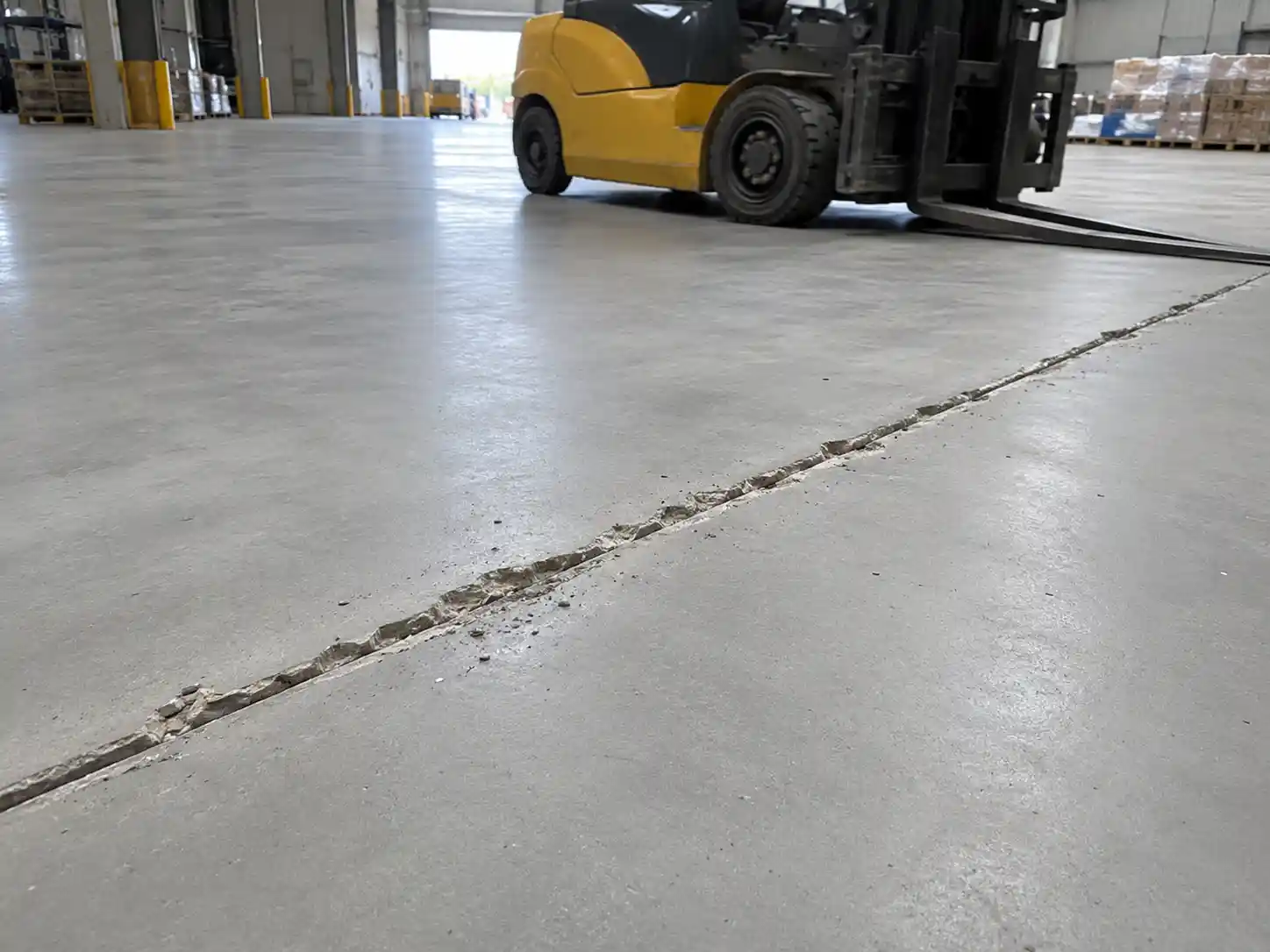
This is why crack control and joint protection should be considered from the beginning of a warehouse flooring project.
Why Warehouse Floors Crack
Concrete is strong in compression, but it can still crack when it is affected by shrinkage, temperature changes, loading stress, poor curing, subgrade movement, or improper joint planning. In warehouse environments, these stresses can be more serious because the floor is used every day.
Forklifts often travel along the same routes. Storage racks create concentrated loads. Loading areas may receive repeated impact. Cold storage areas may experience temperature-related stress. Over time, these conditions can create cracks or make existing cracks wider.
Some cracking in concrete is normal, but uncontrolled cracks can reduce floor performance. Wide cracks can collect dirt, allow moisture to enter, and create weak points in the slab. For this reason, concrete floor crack control is one of the most important parts of warehouse floor design.
The Role of Steel Fiber Reinforcement
Steel fiber reinforcement is commonly used in industrial concrete floors to improve crack control, toughness, and post-crack performance. Steel fibers are mixed directly into the concrete and distributed throughout the slab. This creates three-dimensional reinforcement inside the concrete.
When small cracks begin to form, the fibers help bridge the cracks and transfer stress across the cracked section. This does not mean the floor will never crack. However, it can help reduce crack width and improve the behavior of the slab after cracking.
For warehouse concrete floors, this is valuable because the floor must continue working under heavy traffic and repeated loading. Better crack control can help reduce maintenance problems and support long-term durability.
Steel fiber reinforced concrete can also improve impact resistance and toughness. This is useful in areas exposed to pallet movement, forklift vibration, dropped goods, and daily industrial use. Compared with some traditional reinforcement methods, steel fibers can also help improve construction efficiency because they are mixed into the concrete instead of being placed manually as a separate reinforcement layer.
Joint Protection Is Also Important
Crack control is only one part of a durable warehouse floor. Floor joints are another important detail. Concrete joints are used to control movement, shrinkage, and construction sequencing. However, joints can become weak points when forklifts and pallet trucks pass over them many times each day.
If joint edges are not properly protected, they may begin to chip or spall. At first, the damage may look small. Over time, the joint can become uneven and harder to maintain. Damaged joints may create vibration for forklifts, reduce driving comfort, and increase repair needs.
This is why concrete floor joint protection is often used in warehouse and logistics projects. Joint protection systems help protect concrete edges from repeated impact and support smoother traffic movement across floor joints.
A Complete Floor System
A durable warehouse concrete floor depends on many factors working together. Steel fiber reinforcement can improve internal slab performance and crack control. Joint protection systems can reduce damage at floor joints. Proper slab thickness, concrete mix design, subgrade preparation, curing, finishing, and joint layout are also essential.
No single product can solve every floor problem by itself. The best performance comes from a complete design approach. Engineers and contractors should consider the expected loading conditions, forklift traffic, storage rack layout, temperature environment, concrete strength, and long-term maintenance requirements.
In heavy-duty warehouse projects, crack control and joint performance should not be treated as small details. They are directly connected to floor service life and daily operation.
Long-Term Benefits for Warehouse Owners
For warehouse owners and facility managers, a durable floor can reduce repair interruptions and long-term maintenance costs. A strong and well-designed floor helps support safer material handling, smoother vehicle movement, and better operational efficiency.
Investing in crack control and joint protection during construction is often more effective than repairing serious floor damage later. Once cracks become wide or joints begin to break, repairs can be more expensive and may interrupt warehouse activity.
Conclusion
Warehouse concrete floors are exposed to constant traffic, heavy loads, storage systems, and operational pressure. Because of these demanding conditions, crack control and joint protection are essential for long-term floor performance.
Steel fiber reinforcement can help improve crack control, toughness, impact resistance, and post-crack performance in industrial concrete slabs. Joint protection systems can help reduce edge damage and improve floor durability under repeated forklift traffic.
For warehouses, logistics centers, manufacturing plants, and cold storage facilities, a durable concrete floor should be designed as a complete system. Proper reinforcement, joint planning, curing, finishing, and maintenance all work together to support long-term performance.
