Why the Right Mirror Can Change How You Get Ready
Author : Jerdon style | Published On : 29 Sep 2026
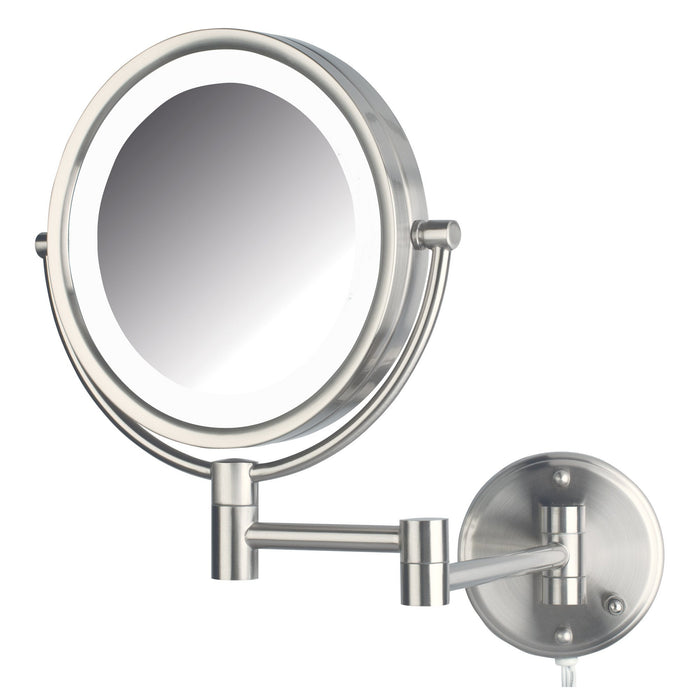
A bathroom can have beautiful tile, a polished vanity, and carefully chosen fixtures, yet still feel awkward to use. The problem is sometimes sitting directly at eye level. A vanity mirror can determine whether you lean toward the counter to see a detail, turn your face toward a window for better light, or finish a grooming task with confidence. The same is true of cosmetic mirrors, particularly when close-up visibility matters. The mirror is not simply reflecting the room. It is shaping what you can see and how you interact with the space.
That makes mirror selection less about decoration and more about precision. Consider the number of small tasks performed in front of a bathroom mirror: applying eyeliner, shaping eyebrows, shaving, checking skin, styling hair, or getting ready for work. Each requires a different level of visibility. A broad reflection is useful for seeing your overall appearance. Close work demands something else.
Why does one reflection not work for every task?
Because your eyes do not need the same amount of detail for every part of a grooming routine.
Checking your hairstyle may require a normal viewing area. Applying makeup or handling small grooming details may require magnification. Moving between those tasks without changing mirrors can be frustrating, especially when the available lighting creates shadows or glare.
This is why dual-sided and multi-magnification designs have a practical advantage. Jerdon Style offers mirrors that combine standard viewing with magnified surfaces, allowing the user to change the level of detail rather than changing the entire setup. Some models provide 5X, 10X, or even higher magnification. That turns the mirror into a task-specific tool instead of a fixed piece of bathroom furniture.
What happens when the light is part of the mirror?
The difference can be surprisingly noticeable.
Bathroom lighting is usually designed to illuminate a room, not necessarily a face at close range. A ceiling fixture can leave shadows beneath the eyes or around the sides of the face. Natural light can help, but its direction and intensity change throughout the day.
Lighted mirrors take a different approach by placing illumination around the viewing surface. Jerdon Style's collection includes illuminated designs with different lighting configurations, including models offering multiple LED settings. Some allow users to move between warmer and cooler light, creating a more controlled environment for grooming.
That matters because the goal is not simply to make the mirror brighter. It is to make the details you are working on easier to see.
Is magnification useful if you already have good eyesight?
Yes, because magnification is about task accuracy, not simply eyesight.
When an object is enlarged, small details become easier to distinguish. That can be useful for precision grooming, makeup application, skincare routines, or shaving. It also reduces the need to bring your face unusually close to a standard mirror.
However, higher magnification is not automatically better. A strong magnification level creates a narrower field of view and is most useful for specific close-up tasks. This is why mirrors offering different viewing options can be more versatile than choosing a single magnification and using it for everything.
Why does mirror placement deserve more attention?
Because position changes the experience.
A mirror mounted too far away may force you to lean forward. One placed at an inconvenient height can make an otherwise attractive vanity uncomfortable to use. A wall-mounted model with an adjustable arm offers another possibility: bring the mirror toward you when precision is needed, then move it back afterward.
Tabletop designs provide a different type of flexibility. They can be positioned directly where the task is taking place and adjusted when the user's routine changes. Jerdon Style's range includes both wall-mounted and tabletop formats, giving users options based on available space and preferred grooming habits.
What should you really look for in a bathroom mirror?
Start with the tasks, not the finish.
Ask what you regularly do in front of the mirror and what currently makes those tasks inconvenient. If detailed grooming is important, consider magnification. If shadows interfere with makeup or shaving, consider integrated lighting. If counter space is limited, a wall-mounted design may make more sense. If flexibility matters, a tabletop mirror may be preferable.
This approach also explains why a mirror can be one of the more meaningful upgrades in a bathroom. You do not have to redesign the entire room to improve the part of it you use every morning.
Can a better mirror actually change a routine?
It can, because small visual problems create repeated interruptions. You lean closer. You move toward the window. You tilt your head. You adjust a lamp. You check your work somewhere else. None of these actions seem significant on their own, but repeated every day, they become part of the routine.
A well-designed vanity mirror removes some of that friction by putting the right viewing conditions where they are needed. Cosmetic mirrors take the idea further when magnification, illumination, positioning, and close-up visibility are built around detailed grooming.
Jerdon Style approaches mirrors from a background rooted in hospitality and bath and beauty products, where convenience and usability are central to the experience. Its collection shows why the humble bathroom mirror deserves more consideration than it usually receives. The best mirror is not necessarily the one that makes the bathroom look finished. It is the one that makes the person using it think less about the mirror and more about getting ready.
