Why Is NABL Accreditation Important for Calibration Laboratories?
Author : Ncqc laboratory | Published On : 24 Oct 2026
Accurate measurement is essential for maintaining product quality, ensuring process consistency, and meeting industry requirements. Instruments such as pressure gauges, temperature sensors, weighing balances, and electrical testing equipment must deliver reliable results for effective quality control. NABL accreditation for calibration laboratories provides independent recognition of a laboratory’s technical competence for specific calibration activities, helping organizations make informed decisions about their measurement equipment.
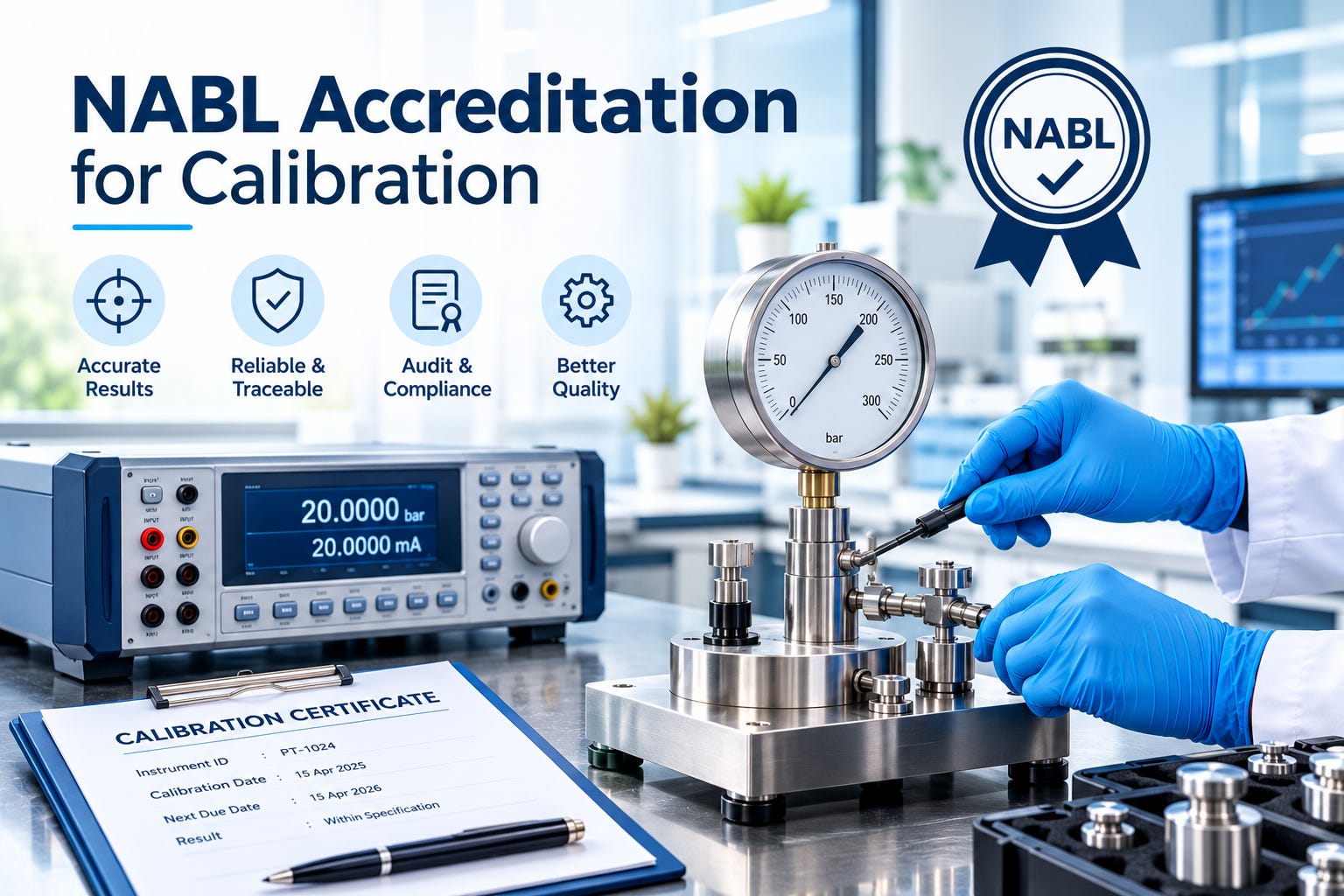
What Is NABL Accreditation?
NABL stands for the National Accreditation Board for Testing and Calibration Laboratories. It assesses the technical competence of laboratories against applicable accreditation requirements, including ISO/IEC 17025 for testing and calibration laboratories.
Accreditation demonstrates that a laboratory has been evaluated for specific activities within its approved scope. This scope may include particular instruments, measurement parameters, and ranges. Therefore, businesses should verify that the required calibration service is covered by the laboratory’s current accreditation before choosing a provider.
Why Is NABL Accreditation Important for Calibration?
1. Improves Measurement Reliability
Calibration compares an instrument’s readings with appropriate reference standards to determine measurement errors or deviations. A competent laboratory follows documented procedures and suitable technical methods to produce reliable results. This helps organizations monitor instrument performance and maintain confidence in measurements used for quality control and production.
2. Supports Measurement Traceability
Measurement traceability connects a measurement result to a recognized reference through a documented and unbroken chain of calibrations, with each step contributing to measurement uncertainty. Accredited laboratories maintain appropriate records and use suitable reference standards to support traceable measurement results.
3. Supports Quality Management and Compliance
Industries such as pharmaceuticals, automotive manufacturing, food processing, engineering, and healthcare rely on accurate measurements. Calibration within an appropriate accredited scope can help organizations meet customer specifications, support quality management systems, and address applicable regulatory requirements.
4. Demonstrates Technical Competence
The accreditation assessment evaluates relevant laboratory processes, personnel competence, equipment, calibration methods, and measurement uncertainty. This independent evaluation helps customers assess whether a laboratory has the technical capabilities required for their calibration needs.
5. Helps Maintain Audit Readiness
Calibration certificates, equipment identification records, and calibration schedules are important parts of measuring equipment management. Using an appropriately accredited laboratory can help organizations demonstrate control of measuring instruments during internal audits, certification assessments, and customer inspections, where applicable.
How to Choose a NABL-Accredited Calibration Laboratory
Before selecting a calibration service provider, verify its current accreditation status and approved scope. Confirm that the required instrument, measurement parameter, calibration range, and measurement capability are covered. Review the calibration certificate for relevant results, measurement uncertainty where applicable, and traceability information.
Consider other practical factors, including technical expertise, turnaround time, service availability, and on site calibration options. Choosing a laboratory that meets your specific requirements helps ensure that the calibration results are suitable for their intended application.
Conclusion
NABL accreditation plays an important role in building confidence in calibration results, supporting measurement traceability, and strengthening quality management practices. Selecting a laboratory with the appropriate accreditation scope helps organizations maintain reliable measuring equipment and meet relevant technical requirements.
For dependable calibration results, always verify the laboratory’s current accreditation status, approved scope, and suitability for your specific measurement needs. For further information, contact us to learn more about calibration services.
