Why Fast Operating Doors Matter in Pharmaceutical Plants
Author : Khub Ram | Published On : 26 Sep 2026
Pharmaceutical manufacturing requires an unusually high level of control. Medicines, ingredients, packaging materials, and equipment all move through carefully organized areas, and each space may have its own environmental requirements. Even something as ordinary as a doorway can therefore become an important part of the production setup.
A door in a pharmaceutical facility does much more than separate two rooms. It can influence how people and materials move, how long rooms remain exposed to one another, and how efficiently employees complete routine tasks.
This is one reason high-speed doors for pharmaceutical plants are considered for facilities where frequent movement takes place between controlled areas. These doors are designed to open and close rapidly, allowing authorized traffic to pass without leaving an entrance open longer than necessary.
Why Pharmaceutical Facilities Need Controlled Movement
Imagine two rooms with different conditions. One may be used for manufacturing, while another is intended for storage or preparation. If their doorway remains open for a long time, air can move between them.
A pharmaceutical facility has to consider this type of interaction carefully. Production areas may have specific requirements involving cleanliness, temperature, humidity, pressure, or airborne particles. The exact requirements vary according to the operation and applicable regulations.
A rapidly operating door can help limit the time that two areas are directly connected through an open doorway.
It is similar to closing a window quickly during a storm. The window does not control the weather, but closing it reduces the amount of outside air that enters the building.
Faster Access Can Improve Daily Workflow
Pharmaceutical production often involves constant movement. Employees may carry ingredients, containers, samples, tools, protective equipment, or finished products from one location to another.
A slow door can interrupt that process. Workers may have to wait for the door to open fully, move through the entrance, and then wait again while it closes. When this happens repeatedly throughout a shift, small delays can accumulate.
A fast operating system can make these transitions more convenient.
This is especially useful at entrances used frequently during production. Employees can spend less time waiting at doorways and more time performing their actual responsibilities.
The benefit is not simply about saving a few seconds. A well planned traffic route can make an entire facility easier to navigate.
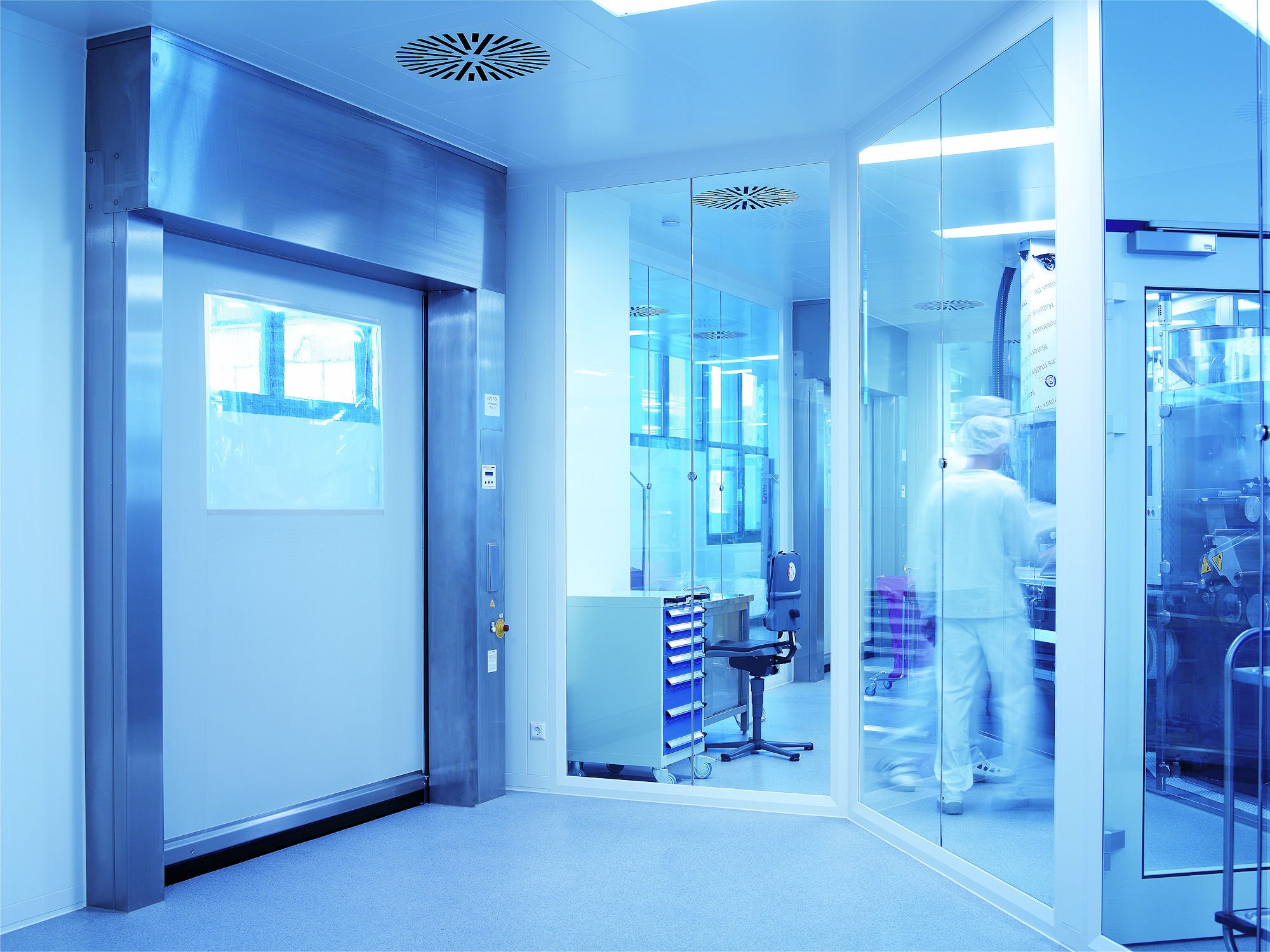
Helping Separate Different Areas
Pharmaceutical facilities often contain several zones with different purposes. Manufacturing, packaging, storage, laboratories, changing areas, and service spaces may all have separate requirements.
Doors provide physical separation between these zones.
When a door opens and remains open unnecessarily, the separation between spaces is temporarily reduced. Rapid operation can shorten that period.
The door does not replace ventilation systems, filtration equipment, cleaning procedures, or employee hygiene practices. Instead, it works alongside them.
Think of a pharmaceutical facility as a series of protective layers. Each layer has a particular job. The door is one part of that overall arrangement.
Supporting Clean Manufacturing Practices
Clean manufacturing depends on consistent procedures. Employees may follow specific routes, wear designated protective clothing, sanitize equipment, and observe rules for entering particular areas.
The physical design of the facility supports those procedures.
A suitable door can make controlled movement more practical. For example, a busy passage between two production areas may benefit from a system that responds quickly to authorized traffic.
The door can also be selected with materials and surfaces appropriate for the surrounding conditions. Smooth, easy to maintain construction may be particularly useful in spaces where regular cleaning is part of normal operations.
The right specification depends on the room, cleaning methods, environmental conditions, and intended use.
Door Speed Is Only One Consideration
It can be tempting to focus entirely on how quickly a door opens. In a pharmaceutical environment, however, speed is only one part of the decision.
The facility should also consider the size of the opening, frequency of use, type of traffic, available space, cleaning requirements, and environmental conditions.
For example, a doorway used mainly by employees may have different requirements from one through which carts and production equipment pass.
The activation method matters too. Depending on the application, a door may use sensors, switches, pull cords, or other controls. The selected system should allow convenient operation without creating unnecessary complications for workers.
Choosing Suitable Materials
Pharmaceutical facilities can have demanding cleaning routines. Doors may be exposed to moisture, cleaning solutions, temperature variations, and repeated washing.
Material selection should therefore be based on the environment in which the door will operate.
A surface that is appropriate for one facility may not be suitable for another. The cleaning process, frequency of sanitation, room conditions, and expected exposure should all be discussed during specification.
Durability is another important consideration. A door that is used constantly needs components capable of handling repeated cycles.
Selecting equipment based solely on initial purchase price can overlook the importance of long term operation and maintenance.
Safety Around Fast Moving Doors
Any door that moves quickly requires careful attention to safety.
Pharmaceutical facilities are busy workplaces. Employees may carry materials, operate carts, wear protective clothing, or move through entrances while focused on other tasks.
A properly specified door should therefore include suitable safety features for its application. Detection systems and other protective measures can help reduce the possibility of contact with people or objects.
Employees should also know how the door operates. Clear instructions can reduce confusion and discourage people from attempting to bypass controls or interfere with moving components.
Safety should be considered during design, installation, operation, and maintenance rather than treated as an afterthought.
Maintenance Keeps the System Reliable
Frequent operation naturally places wear on mechanical and electrical components. A door that opens and closes throughout the day should receive appropriate inspection and maintenance.
Maintenance teams may monitor moving parts, sensors, controls, seals, and other components according to the manufacturer's recommendations.
Regular attention can also help identify unusual sounds, slower movement, inconsistent operation, or other warning signs before they become larger problems.
For pharmaceutical operations, reliability matters because an unexpected door failure can interrupt movement between areas and create unnecessary disruption.
A planned maintenance program gives facility managers a more organized way to keep equipment functioning as intended.
Designing Around People and Equipment
A pharmaceutical facility should be designed around its actual workflow rather than simply fitting equipment into available spaces.
Before installing a fast operating door, managers can examine how employees approach the opening, what equipment passes through it, and how frequently traffic occurs.
Consider a cart carrying materials through a narrow passage. If the doorway opens quickly but the surrounding area does not provide enough clearance, the overall process may still be inconvenient.
Likewise, a door positioned along a busy route should not create an obstacle for nearby workers or equipment.
Looking at the complete traffic pattern helps ensure that the door contributes to the operation instead of becoming another source of interruption.
Working With the Right Industrial Door Provider
Pharmaceutical projects can involve specific requirements that differ from ordinary commercial buildings. Door selection should therefore involve a clear discussion about the facility's environment and intended use.
Newport Company offers industrial door solutions for applications where controlled movement and dependable operation are important. Facility managers can discuss opening dimensions, traffic frequency, operating conditions, cleaning practices, and other project requirements when evaluating an appropriate system.
Good planning at this stage can prevent avoidable complications after installation. It also allows the door to be considered as part of the facility rather than as an isolated piece of equipment.
Where Fast Doors Can Make a Difference
Different parts of a pharmaceutical operation may benefit from rapid door movement.
Manufacturing rooms can experience frequent employee and material traffic. Packaging areas may require repeated movement of products and supplies. Storage zones may see carts and equipment moving throughout the day.
Laboratory environments can have their own access requirements, while service areas may need dependable movement between controlled and less controlled spaces.
The appropriate door solution will depend on the specific purpose of each opening. There is no single design that automatically suits every pharmaceutical facility.
Conclusion
Doorways may seem like a small part of pharmaceutical manufacturing, but they can influence movement, separation between spaces, workplace efficiency, and everyday convenience.
A rapidly operating door can reduce the time an entrance remains open while making repeated traffic easier to manage. Its effectiveness, however, depends on more than opening speed. Materials, safety features, controls, maintenance, room conditions, and traffic patterns all deserve attention.
When these factors are considered together, a well-selected door can become a practical part of a pharmaceutical facility's overall design. It can help employees move efficiently while supporting the controlled environment required for modern pharmaceutical production.
