Why Environmental Consulting Firms Must Adopt Digital-Twin Modeling
Author : Ellen Gomes | Published On : 10 Aug 2026
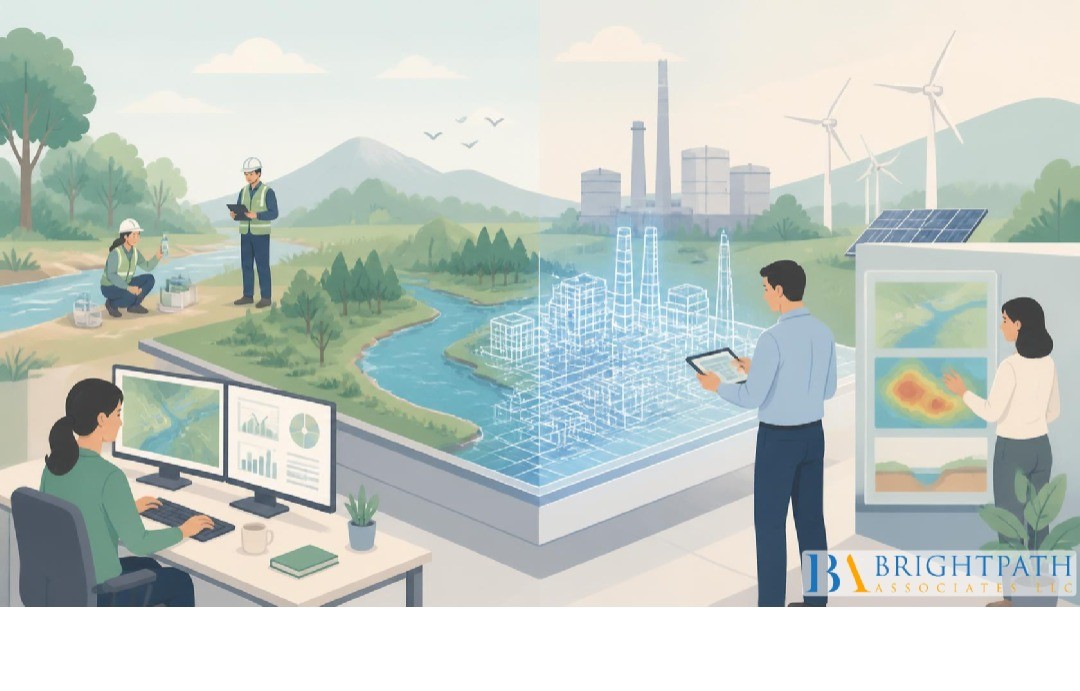
Environmental consulting is entering a new phase. Clients are no longer asking only whether their facilities comply with environmental requirements; they increasingly want to know whether those facilities can remain compliant, efficient, and resilient as operating conditions change. Extreme weather, evolving regulations, new production processes, sustainability investments, and increasingly complex environmental systems are making traditional, static assessments less sufficient. In this environment, digital twin modeling is emerging as a powerful way for environmental consulting firms to provide more dynamic, data-driven, and defensible advice.
A digital twin can be understood as a continuously updated digital representation of a real-world asset, process, facility, or environmental system. Unlike a conventional model developed for a single report or project milestone, a digital twin can evolve as new monitoring data, operational information, inspection results, and field observations become available. For environmental applications, it could represent an industrial facility, wastewater treatment system, remediation program, watershed, air-quality environment, or other complex system. This creates an ongoing connection between what is happening physically and what consultants and clients understand digitally.
The value of this approach is not simply technological sophistication. Digital twins give environmental professionals a way to test assumptions, examine scenarios, identify sensitivities, and understand how systems may behave under different conditions. A consulting team can evaluate how changes in production, equipment performance, weather, contaminant loads, or treatment processes could influence environmental outcomes. Instead of relying exclusively on a snapshot of historical conditions, organizations can develop a more flexible understanding of how their environmental systems respond to change.
This capability is becoming particularly important as businesses move from a traditional compliance mindset toward broader environmental resilience. Regulatory compliance remains essential, but executives increasingly want to understand what happens when conditions deviate from normal operations. What happens if production volumes increase? How might a wastewater treatment system respond to changing influent characteristics? What happens when equipment begins to degrade? Could a change in fuel or production chemistry affect emissions? Digital twin modeling allows these questions to be explored before they become expensive operational problems.
For environmental consulting firms, the technology can also improve the way air-quality programs are managed. Traditional emissions assessments provide important information, but operating conditions can vary significantly over time. A digital twin can connect process conditions, equipment performance, maintenance information, emissions data, and operational states to provide a more complete picture of environmental performance. Consultants can use this information to identify potential sources of variability, understand exceedance risks, and determine where additional monitoring or corrective action could have the greatest impact.
Water and wastewater applications may offer an equally compelling opportunity. Treatment systems are highly dynamic because influent quality can change according to production schedules, cleaning activities, stormwater conditions, upstream process changes, and unexpected operational events. A digital twin can help environmental teams model these variations and evaluate how individual treatment units respond. By stress-testing different scenarios, consultants and operators can better understand system limitations and identify opportunities for optimization before implementing costly physical changes.
Digital twins can also support companies adopting new environmental and clean technologies. Sustainability projects often introduce new equipment, processes, control systems, and data platforms. While these investments may improve environmental performance, they can also create new operational interactions that need to be understood. For example, changing production processes may alter emissions characteristics or wastewater treatment requirements. A digital twin can help consultants evaluate these interactions and identify potential environmental risks before changes are fully implemented.
Another major benefit is improved scenario planning. Environmental consulting has traditionally relied on modeling and sensitivity analysis, but digital twin technology can make scenario planning more connected to real operational decisions. Rather than presenting clients with abstract possibilities, consultants can examine specific choices and their potential consequences. Maintenance schedules, operating conditions, production changes, control settings, and process modifications can be evaluated against defined environmental outcomes.
This creates a stronger foundation for environmental risk management. Executives often struggle to act on environmental risks when they are presented only as qualitative possibilities. Digital twin modeling can help quantify relationships between operating decisions and potential environmental outcomes. It can also identify which variables have the greatest influence on performance and where additional sampling, monitoring, or testing would provide the most useful information. This helps organizations direct resources toward reducing meaningful uncertainty rather than simply producing additional documentation.
The benefits extend beyond individual projects. One weakness of traditional consulting engagements is that valuable technical knowledge can become locked inside a completed report. Once a project ends, the analysis may not be revisited until another environmental issue arises. A maintained digital twin creates an opportunity for continuous learning. Consultants and clients can compare predicted performance with actual results, investigate differences, update assumptions, and improve future decisions. Over time, this feedback loop can make environmental programs more efficient and more accurate.
However, adopting digital twin modeling requires more than purchasing software. It requires a significant shift in organizational capabilities. Environmental consulting firms need professionals who can combine environmental science, engineering knowledge, data management, modeling, and business communication. These professionals must understand uncertainty and calibration while also being able to explain technical conclusions to executives, operators, regulators, and other stakeholders.
This creates an important talent challenge for firms operating in the environmental sector. Organizations looking to expand their digital capabilities may need environmental engineers, data specialists, modeling experts, technology leaders, and senior consultants who can bridge traditional environmental expertise with modern digital systems. Companies seeking specialized professionals can explore Environmental Services Industry from BrightPath Associates to support the development of teams capable of leading this transformation.
Recruitment should therefore be considered part of a firm's digital transformation strategy rather than an administrative activity that happens after technology decisions are made. Hiring the wrong person for a digital transformation role can result in expensive implementation delays, poor adoption, and disconnected systems. The right leader, by contrast, can establish technical standards, develop talent, coordinate multidisciplinary teams, and ensure that digital tools remain aligned with client requirements.
Environmental consulting firms interested in exploring the subject further can also read Why Environmental Consulting Firms Must Adopt Digital-Twin Modeling. The article examines how digital twins can strengthen environmental compliance, scenario planning, risk management, sustainability initiatives, and data-driven advisory services.
The larger opportunity is to transform environmental consulting from a predominantly report-driven service into a continuous decision-support capability. Digital twins can help consultants move closer to their clients' day-to-day operations, providing insights that remain useful long after a study has been completed. This can create stronger client relationships while enabling consulting firms to deliver more measurable and recurring value.
The future of environmental services will likely require a combination of scientific rigor, engineering judgment, technology, and specialized talent. Digital twin modeling does not eliminate the importance of fieldwork, validated testing, regulatory documentation, or professional expertise. Instead, it can make those activities more targeted and valuable by showing where uncertainty matters most and where decisions can have the greatest environmental impact.
For environmental consulting leaders, the question is no longer simply whether digital twin technology is innovative. The more important question is whether the organization has the data infrastructure, governance processes, technical expertise, and talent necessary to use it responsibly. Firms that make these investments today can position themselves to deliver faster, more transparent, and more defensible environmental advice as client expectations continue to evolve.
