Why Distribution-Center Analytics Should Drive Your Packaging Decisions
Author : Todd Beddard | Published On : 01 Oct 2026
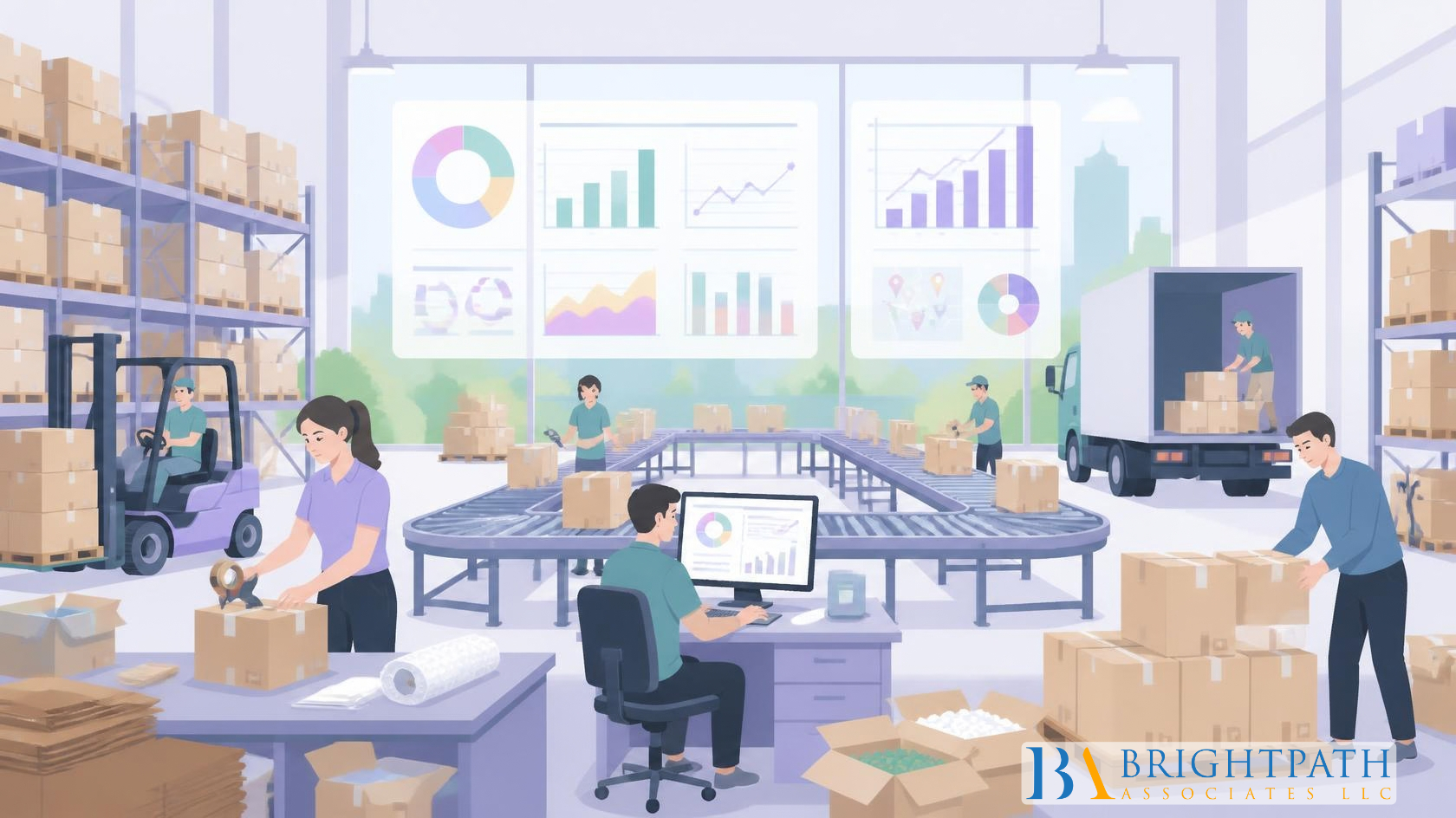
Packaging decisions are often made long before a product reaches a distribution center. Engineers select materials, product teams determine dimensions, procurement evaluates costs, and marketing considers presentation. But there is another source of information that can fundamentally change how packaging decisions are made: what actually happens after the product enters the distribution network.
Products are handled, stacked, moved, stored, picked, packed, loaded, transported, and sometimes returned. Each stage provides clues about whether packaging is performing as intended. Yet many companies still make packaging decisions primarily around material costs, product specifications, and historical assumptions rather than using distribution-center analytics to understand real-world performance.
For small and mid-sized packaging companies, this represents an opportunity to turn operational data into a strategic advantage.
The Distribution Center Is a Real-World Packaging Laboratory
A laboratory can simulate certain conditions, but a distribution center exposes packaging to the complexity of actual commerce. Instead of asking only, “How much does this package cost to manufacture?” companies can begin asking a broader question:
Packages may experience repeated handling, stacking pressure, vibration, temperature fluctuations, conveyor movement, palletization, and varying transportation conditions. A package that performs perfectly during controlled testing may behave differently when it is processed thousands of times across a distribution network.
Damage rates, repacking frequency, product returns, handling exceptions, warehouse dwell time, dimensional-weight charges, and pallet utilization can reveal problems that may not be visible during the original packaging design process.
Packaging Cost Goes Beyond Materials
Suppose one package costs slightly less to produce than another. On paper, that may appear to be the better option. But if that package creates higher damage rates, requires additional warehouse handling, occupies more storage space, or increases transportation costs, the initial material savings may be offset elsewhere.
For example, a company might discover that a particular package frequently requires manual intervention because its dimensions cause problems on automated sorting equipment. Another package may be structurally sound but consume excessive pallet space.
These are not merely packaging-design issues. They are operational issues. When packaging engineers, supply-chain leaders, warehouse managers, and finance teams examine the same data, the company can develop a more complete picture of packaging economics.
Dimensional Efficiency Is Becoming More Important
Warehouse and transportation efficiency are increasingly connected to packaging dimensions. Analytics can help companies examine patterns across thousands of shipments and identify where packaging dimensions are creating inefficiencies.
A package that contains unnecessary empty space may require more storage capacity and reduce the number of units that can be placed on a pallet or loaded into a vehicle. Depending on the distribution model, dimensional characteristics can also influence transportation economics.
The goal is not always to make packages smaller. In some cases, reducing dimensions too aggressively could increase product damage. The objective is to identify the point at which protection, material use, handling efficiency, and transportation requirements are appropriately balanced.
Sustainability Needs Operational Data Too
Reducing material consumption can support waste-reduction goals, but simply using less material does not automatically produce a better overall packaging solution. If lightweight packaging causes substantially more product damage or returns, the environmental and economic consequences can extend beyond the packaging itself.
A data-driven approach allows organizations to examine these trade-offs. Companies can evaluate material consumption alongside damage rates, transportation efficiency, pallet utilization, recycling considerations, and product returns.
This broader perspective is increasingly relevant within the Packaging and Containers Industry, where manufacturers are navigating digital transformation, sustainability priorities, automation, advanced materials, and supply-chain resilience simultaneously.
Turning Distribution Data Into Packaging Intelligence
The original BrightPath discussion, Why Distribution Center Analytics Should Drive Your Packaging Decisions, highlights the importance of looking beyond traditional packaging assumptions and using distribution-center information to inform packaging strategy.
The future of packaging may depend less on designing a package once and more on continuously learning from how that package performs. For executives, this represents both a technology opportunity and a leadership challenge.
As connected warehouses, automated handling systems, analytics platforms, and AI-supported decision-making become more common, packaging companies can increasingly create feedback loops between design and real-world performance.
The companies that benefit from packaging analytics will need more than dashboards. They will need leaders capable of translating operational data into engineering decisions, investment priorities, sustainability strategies, and measurable business outcomes.
Share your perspective in the comments, and connect with BrightPath Associates LLC if your organization needs specialized leadership or executive talent to support packaging innovation, analytics, supply-chain transformation, or operational growth.
