Why Customers Don’t Trust New Ecommerce Brands
Author : radhiya arora | Published On : 29 May 2026
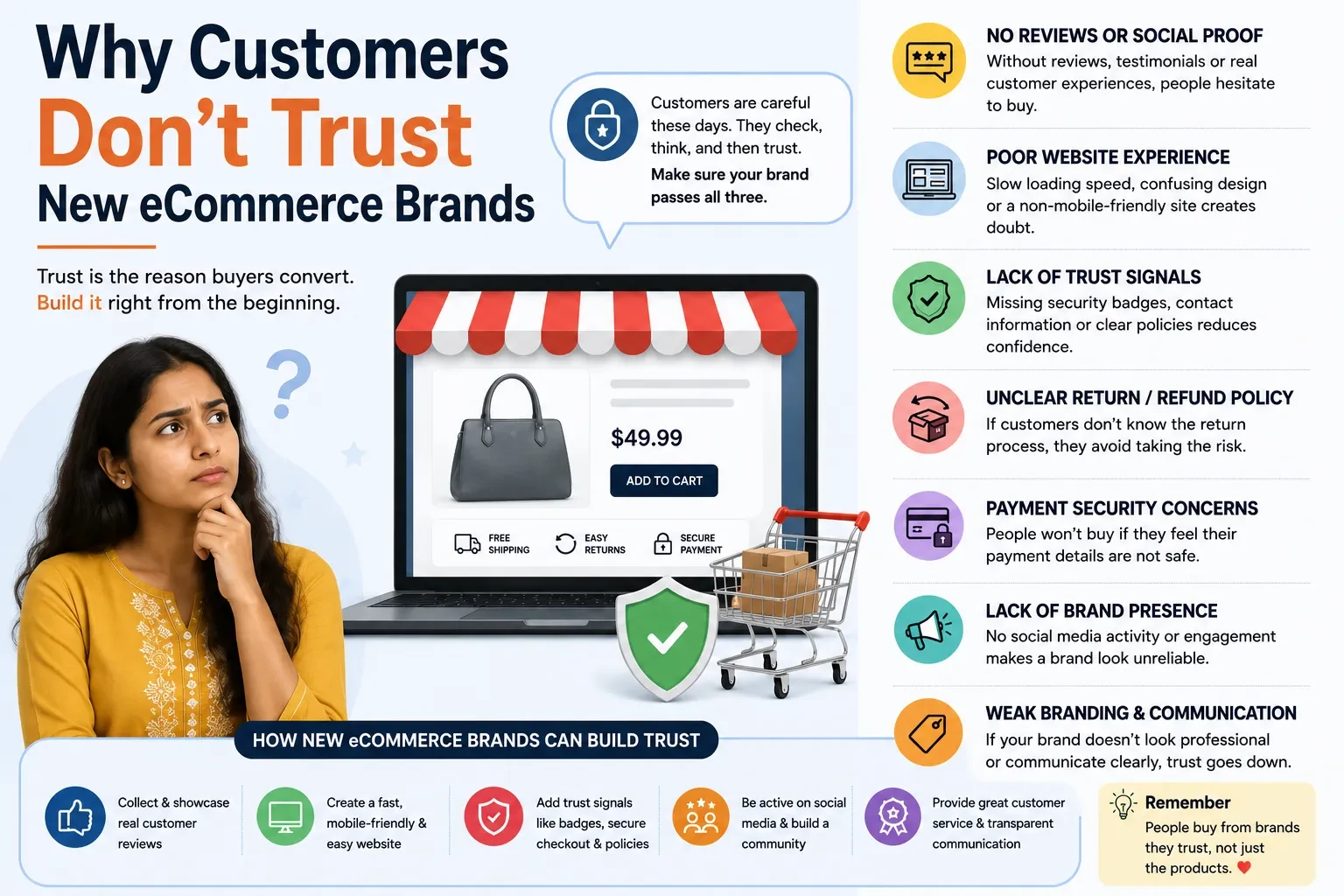
A lot of people think running an eCommerce brand is easy now.
Create a website, run some ads, upload products, and orders should start coming — at least that’s what many beginners expect. But when the traffic comes, and sales still don’t happen, most store owners get confused.
The truth is, customers don’t trust new brands quickly anymore.
People have seen too many fake websites, copied products, bad customer service experiences, and online scams. Because of that, buyers have become very careful while shopping online. Before purchasing from a new store, they quietly check everything.
They look at reviews.
They open the Instagram page.
They check if the website feels genuine.
Sometimes they even read the refund policy before ordering.
And honestly, if something feels even slightly weird, most people leave the site immediately
1. Poor Website Design Creates Doubt
People notice website quality faster than business owners think.
If the website looks outdated or messy, customers start judging the brand instantly. Slow loading speed, random colors, poor mobile experience, blurry product images — all these things make a store feel unreliable.
Most customers never say this openly, but many think something like:
That single doubt is enough to stop a purchase.
A clean and simple website automatically feels safer. Customers trust stores that look organized and professional because it gives the impression that the business is serious about what it’s doing.
2. No Reviews Means No Confidence
People trust other buyers more than advertisements.
A new customer does not know your brand personally. So naturally, they look for proof from existing customers. If there are no reviews, no testimonials, or no real customer photos, trust becomes weak.
Think about your own behavior.
When you buy something online for the first time, you probably check ratings too. Everyone does it.
This is exactly why brands push:
-
customer reviews
-
influencer promotions
-
user-generated content
-
testimonials
because these things make the business feel real instead of looking like a random online store.
3. Weak Branding Makes Stores Look Generic
Many new eCommerce stores look copied from each other.
Same layouts.
Same product descriptions.
Same style of posts.
Nothing feels original.
Because of that, customers forget the brand very quickly.
Good branding creates familiarity. When people repeatedly see a consistent style, tone, and message, they slowly begin trusting the business.
Branding is not just about logos. It’s about how the brand feels overall.
Some brands feel cheap immediately. Some feel trustworthy immediately. Customers notice that difference faster than business owners realize.
4. Hidden Refund Policies Scare Customers
Nobody wants to feel trapped after placing an order.
If refund or return policies are hard to find, customers become uncomfortable. They start thinking:
“What if the product is bad?”
“What if I receive something damaged?”
“What if nobody replies after payment?”
Even if customers never use the refund policy, they still want the comfort of knowing it exists.
Simple transparency builds trust.
5. Poor Product Descriptions Create Confusion
Online shopping works differently from offline shopping.
Customers cannot touch the product. They cannot check the quality physically. Everything depends on the product page.
When descriptions are incomplete or copied from somewhere else, buyers don’t feel confident.
Good product pages explain things naturally:
-
what the product does
-
who it is for
-
why it is useful
-
what makes it different
Clear information reduces hesitation. Confused customers rarely buy anything.
6. Unsafe Payment Experience
People are extremely careful with online payments now.
If checkout pages look strange or unsecured, customers leave very quickly. Even small trust signals matter here.
Things like:
-
secure payment badges
-
HTTPS protection
-
trusted payment methods
help customers feel safer while ordering.
A customer may like the product completely, but one unsafe-looking checkout page can still destroy the sale.
7. No Social Media Presence Feels Suspicious
Nowadays, many customers search Instagram before buying from a brand.
If the page is inactive, has very low engagement, or looks abandoned, people start doubting whether the business is genuine.
Customers like seeing activity.
They want to see:
-
regular posts
-
comments
-
customer interactions
-
behind-the-scenes content
-
real engagement
It makes the brand feel alive instead of looking fake or temporary.
8. Customers Connect With Brands That Feel Real
People are tired of brands that only try to sell constantly.
Customers connect more with businesses that feel human. Brands that share stories, communicate casually, and interact honestly usually build stronger trust over time.
That emotional connection matters a lot today.
Sometimes customers buy from a brand simply because they like its vibe, content, or communication style.
Final Thoughts
Trust is not built through ads alone.
A brand can spend thousands on marketing, but if customers don’t feel comfortable on the website, sales will still remain low.
Most successful eCommerce brands win because customers feel safe buying from them. That trust comes from small things done properly — good communication, strong branding, social proof, transparency, and a better customer experience overall.
People may forget ads quickly, but they remember brands that made them feel confident while purchasing.
Frequently Asked Questions (FAQs)
Why do customers not trust new eCommerce brands?
Customers often hesitate because of lack of reviews, weak branding, poor website design, or low social proof.
How can eCommerce brands build customer trust?
Brands can build trust through customer reviews, secure checkout, strong branding, influencer marketing, and transparent communication.
Why are customer reviews important for online stores?
Customer reviews create social proof and help buyers feel confident before making a purchase.
Does website design affect eCommerce sales?
Yes, a professional and mobile-friendly website improves user experience and increases customer trust.
How can a D2C consultant help eCommerce brands?
A D2C consultant can help improve branding, conversion optimization, customer trust, SEO, and marketing strategies.
