Why Choose PPR Pipe for Hot and Cold Water Supply Systems?
Author : HitokaCece HitokaCece | Published On : 17 Jul 2026
Introduction
Over the years in the plastic pipe manufacturing industry, I have seen PPR pipe transform plumbing systems in residential, commercial, and industrial buildings around the world. Polypropylene random copolymer (PPR) pipe offers a combination of thermal performance, durability, and ease of installation that traditional materials like copper, galvanized steel, and CPVC simply cannot match. PPR pipe handles hot and cold water with equal ease, resists corrosion and scaling, and is joined using heat fusion to create permanent, leak-free connections. Having worked with plumbing contractors, building engineers, and procurement professionals across multiple regions, I have learned what makes PPR pipe the preferred choice for modern plumbing systems. In this article, I want to share why PPR pipe is the preferred choice for hot and cold water supply systems.
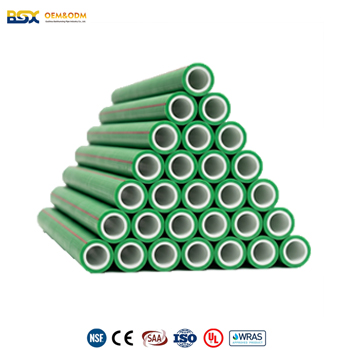
PPR Pipe Thermal Resistance and Temperature Performance
The most significant advantage of PPR pipe for water supply systems is its thermal resistance and temperature performance. PPR pipe is designed for both hot and cold water applications, with a maximum continuous service temperature of 70°C and a peak temperature capability of up to 95°C for short periods. This makes PPR suitable for domestic hot water, hydronic heating systems, and industrial hot water applications. Unlike some plastic pipes that soften or degrade at elevated temperatures, PPR maintains its structural integrity and pressure rating at hot water temperatures. The thermal insulation properties of PPR also reduce heat loss in hot water systems, improving energy efficiency. The pipe's low thermal conductivity means that hot water stays hot longer, reducing the energy required to maintain water temperature. PPR pipe is a plastic pipe made from atactic polypropylene as the raw material, produced through a gas-phase copolymerization process [0†L12-L15]. I have worked with building engineers who chose PPR for its thermal performance and found that their hot water systems operated more efficiently than with traditional metal pipes.
PPR Pipe Corrosion and Scale Resistance
The second critical advantage of PPR pipe is its corrosion and scale resistance. Metal pipes—copper, galvanized steel, and iron—are susceptible to corrosion from water chemistry, which can lead to pinhole leaks, pipe degradation, and water contamination. Corrosion also creates rough interior surfaces that promote scale buildup, reducing flow capacity and increasing pumping costs. PPR pipe is inherently resistant to corrosion and does not react with water or the minerals commonly found in water supplies. The smooth interior surface of PPR pipe resists scale formation, maintaining flow capacity over the life of the system. This means that PPR pipes do not need to be replaced due to internal corrosion or scale buildup, and water quality is maintained without the risk of metal contamination. For applications with aggressive water chemistry or where water quality is critical, PPR offers a reliable, long-lasting solution. I have worked with plumbing contractors who replaced corroded copper pipes with PPR and eliminated the pinhole leaks and water quality issues that plagued their older systems.
PPR Pipe Fusion Joint Reliability
The third key advantage of PPR pipe is its fusion joint reliability. PPR pipe is joined using heat fusion—a process where the pipe ends and fittings are heated simultaneously and then pressed together to create a permanent, homogeneous joint. The fusion joint is as strong as the pipe itself, with no potential leak paths and no need for threaded connections, soldering, or solvent cement. This joint integrity eliminates the most common source of plumbing failures—joint leaks. The fusion process also eliminates the need for flame or solder, making it safer to install in confined spaces and reducing the risk of fire during installation. For plumbing systems in occupied buildings, the reduced risk of water damage from joint failure is a significant benefit. The fusion joints are also resistant to vibration and thermal cycling, maintaining their integrity over the life of the system. I have worked with building engineers who reported that PPR plumbing systems with fusion joints experienced significantly fewer callbacks for leaks than systems using traditional joint methods.
Conclusion
PPR pipe is the preferred choice for hot and cold water supply systems because it offers excellent thermal resistance that handles temperatures up to 70°C for continuous service, corrosion and scale resistance that maintains water quality and flow capacity, and fusion joint reliability that eliminates leak points and reduces installation costs. For plumbing contractors, building engineers, and procurement professionals, PPR pipe is not just a piping material—it is a proven solution for reliable, long-lasting plumbing systems. In a world where building performance and water quality matter, the right PPR pipe is not just a product—it is an investment in building quality.
