Why Are Metabolite Reference Standards Essential for Accurate Metabolite Identification?
Author : Rosanna Benn | Published On : 24 Oct 2026
Metabolomics is the scientific study of small molecules called metabolites that are present in biological systems. These compounds provide valuable insights into metabolic pathways, cellular activities, disease mechanisms, and responses to environmental changes. However, identifying metabolites accurately can be challenging because biological samples often contain hundreds or thousands of chemically diverse compounds.
Metabolite reference standards play an important role in overcoming this challenge. They provide known compounds that researchers can analyze and compare with unknown substances detected in biological samples. By evaluating characteristics such as retention time, mass-to-charge ratio, and fragmentation patterns, scientists can obtain stronger evidence for metabolite identification.
Using reliable metabolite reference standards can support more consistent analytical workflows, improve confidence in experimental findings, and help researchers interpret complex metabolomics data.
What Are Metabolite Reference Standards?
Metabolite reference standards are well-characterized compounds used as reference materials during analytical testing. Researchers analyze these known substances to establish characteristic measurements that can be compared with results obtained from unknown samples.
In mass spectrometry-based metabolomics, reference standards may help researchers evaluate retention times, mass spectra, ionization behavior, and fragmentation patterns. These characteristics provide useful information for determining whether a compound detected in a sample matches a known metabolite.
For example, a researcher studying blood samples may detect a signal that could correspond to a particular amino acid. By analyzing an appropriate reference standard under comparable conditions, the researcher can compare the observed signal with the expected analytical characteristics of that compound.
Reference standards are particularly useful when multiple metabolites have similar molecular masses or closely related chemical structures. Combining several types of analytical evidence can help researchers distinguish between possible candidates more reliably.
Why Accurate Metabolite Identification Matters
Accurate metabolite identification is essential for producing meaningful and reproducible metabolomics results. Researchers use metabolite measurements to investigate biological processes, compare experimental groups, and explore potential relationships between metabolic changes and health conditions.
If a compound is incorrectly identified, researchers may draw inaccurate conclusions about the biological pathways involved in a particular process. This can affect subsequent experiments, data interpretation, and the selection of compounds for further investigation.
For example, two structurally related metabolites may have similar mass-to-charge ratios but different biological roles. Distinguishing between them is important when studying metabolic pathways or investigating potential biomarkers.
Reference standards help address this challenge by providing known compounds for comparison. When used with appropriate analytical methods, they strengthen the evidence supporting metabolite identification and help researchers make better-informed decisions about their results.
How Metabolite Reference Standards Support Mass Spectrometry
Mass spectrometry is widely used in metabolomics because it can detect and characterize many compounds present in complex biological samples. However, a mass spectrometry signal does not always provide enough information to establish the identity of a metabolite on its own.
Reference standards help researchers interpret these signals by providing measurements from known compounds. Several analytical characteristics are particularly useful during this process.
Retention Time Comparison
Retention time refers to the time a compound takes to pass through a chromatographic system and reach the detector. In liquid chromatography–mass spectrometry (LC-MS), compounds may separate according to their interactions with the chromatography column and mobile phase.
Researchers can compare the retention time of an unknown compound with that of a reference standard analyzed under comparable conditions. A compatible retention time provides additional evidence that the unknown signal may correspond to the same compound.
Retention times can vary with column chemistry, temperature, flow rate, and mobile-phase composition. Therefore, comparisons are most informative when analytical conditions are consistent.
Mass Spectral Matching
A mass spectrum shows the mass-to-charge ratios of ions detected during analysis. These measurements can help researchers assess whether an unknown compound has characteristics consistent with a proposed metabolite.
By comparing experimental spectra with reference spectra obtained from known standards, researchers can identify potential matches and narrow down candidate compounds.
The quality of a spectral match depends on factors such as instrument configuration, ionization conditions, and data-processing methods. A match should therefore be interpreted alongside other available evidence rather than treated as automatic proof of identity.
Fragmentation Pattern Analysis
Tandem mass spectrometry, or MS/MS, provides additional structural information by measuring fragments produced when selected ions break apart. These fragments can help distinguish related metabolites that share similar molecular masses.
When reference standards are analyzed using comparable MS/MS conditions, their fragmentation patterns can be compared with those observed in unknown samples. Agreement across several characteristic fragments can strengthen the proposed identification.
Together, retention-time comparison, mass spectral matching, and fragmentation analysis provide complementary information that supports more reliable metabolite identification.
The Importance of Reference Standards in Untargeted Metabolomics
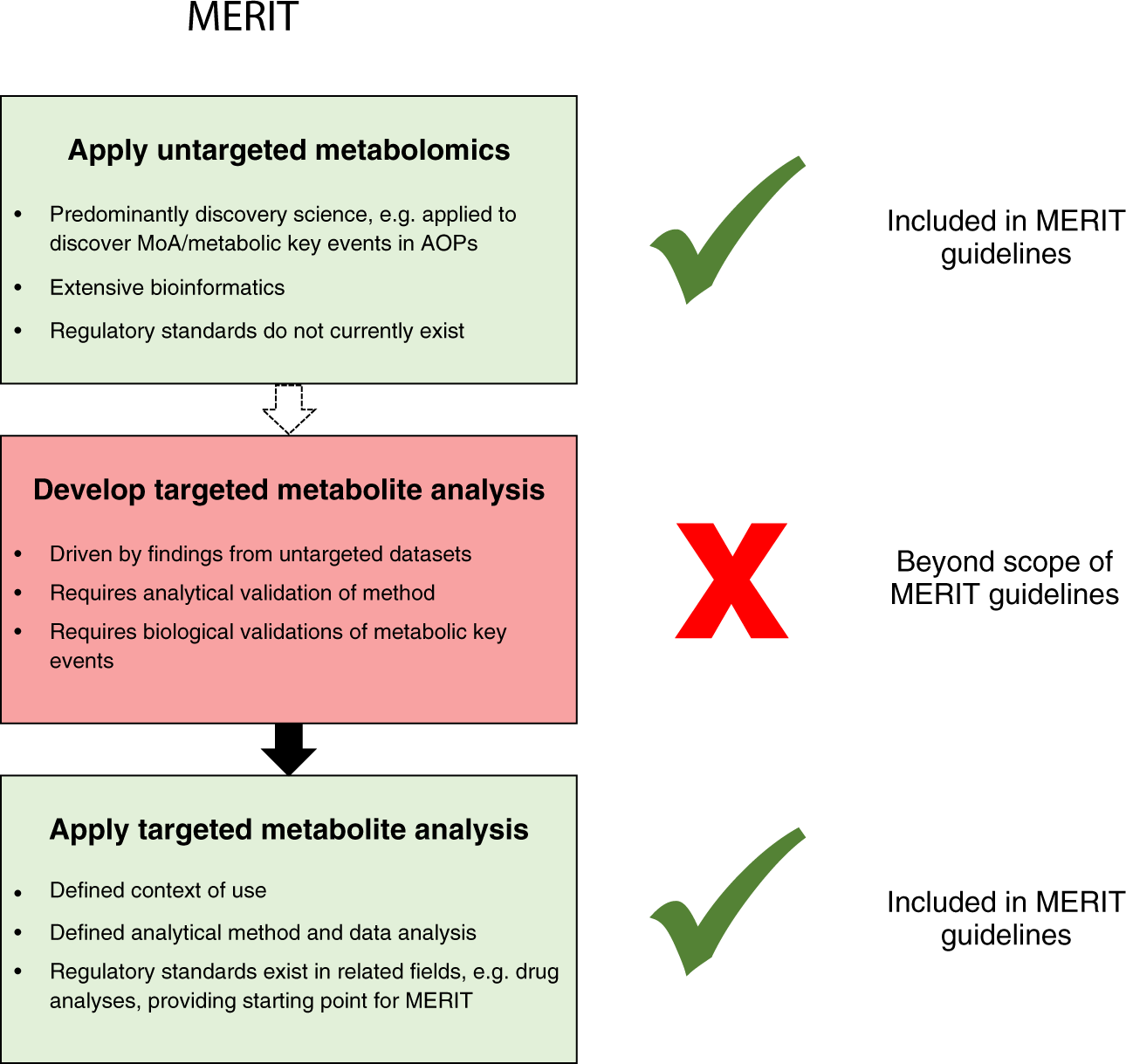
Untargeted metabolomics aims to detect and investigate a broad range of compounds without restricting the analysis to a predefined list of metabolites. This approach is useful in exploratory studies where researchers want to discover metabolic patterns or identify compounds that may be associated with biological changes.
However, untargeted experiments often generate large datasets containing many unidentified signals. Researchers must evaluate these signals and determine which compounds are relevant to their scientific questions.
Reference standards can help validate candidate identities by providing experimental measurements for comparison. Instead of relying exclusively on predicted masses or database matches, researchers can analyze known compounds and compare their retention times and mass spectral characteristics with experimental observations.
A suitable metabolite reference standards resource can support this process by making relevant compounds available for analytical comparison. The usefulness of a reference collection depends on whether it contains the metabolites of interest and provides information appropriate to the laboratory's analytical methods.
Not every detected feature will have a corresponding reference standard. In such cases, researchers may use complementary techniques and report identification confidence according to the evidence available.
Supporting Analytical Method Development and Validation
Reference standards are useful not only for identifying metabolites but also for developing and evaluating analytical methods. Before applying a method to a large research study, laboratories need to understand how effectively it detects and measures compounds of interest.
Known standards can help researchers optimize chromatographic separation, evaluate ionization conditions, and determine whether their methods are suitable for the intended analysis.
They can also support assessments of analytical performance, including repeatability, detection limits, and signal response. These evaluations help laboratories understand the capabilities and limitations of their workflows.
For example, researchers developing an LC-MS method for a group of metabolites can analyze reference compounds to determine whether the selected conditions provide suitable separation and detectable signals. If two compounds produce overlapping peaks, the laboratory may adjust the chromatography conditions or use additional mass spectral information to improve discrimination.
Appropriate validation procedures are important because reliable metabolite identification depends on both the quality of the reference information and the performance of the analytical method.
How Metabolite Standards Libraries Improve Research Workflows
Analyzing individual reference compounds can be valuable, but laboratories investigating many metabolites may benefit from organized collections of standards. Metabolite standards libraries bring together multiple known compounds to support a wider range of analytical applications.
IROA Technologies offers the Mass Spectrometry Metabolite Library of Standards (MSMLS), a collection containing 600 unique small-molecule metabolites. This collection can support mass spectrometry-based research by providing reference compounds for analytical method development and metabolite identification workflows.
A library can help researchers compare experimental observations with known compounds, investigate potential matches, and assess analytical performance. Its practical value depends on the relevance of its compounds to the research project, the availability of suitable reference information, and compatibility with the laboratory's analytical setup.
Using an organized collection may also make it easier for laboratories to incorporate reference standards into routine experimental workflows. However, researchers should still verify important identifications using appropriate experimental evidence and quality-control procedures.
Applications in Biomedical and Biological Research
Metabolite reference standards are useful across several areas of scientific research.
In biomedical research, scientists investigate changes in metabolites that may be associated with diseases, treatment responses, or physiological conditions. Reliable identification helps researchers interpret these changes and investigate the pathways involved.
In nutrition research, metabolite analysis can help scientists explore how the body processes nutrients and responds to different dietary conditions. Reference standards can support the identification of compounds associated with these processes.
In microbiome research, scientists study metabolites produced or modified by microorganisms and their interactions with the host. Reference compounds can help distinguish known metabolites from other signals detected in complex biological samples.
Environmental research also uses metabolomics to investigate biological responses to environmental conditions and chemical exposures. Across these applications, reference standards contribute to the analytical evidence needed to interpret experimental results.
Choosing the Right Metabolite Reference Standards
Selecting suitable standards requires careful consideration of the laboratory's research objectives and analytical methods. The most appropriate choice depends on the compounds being investigated, the type of biological sample, and the analytical platform being used.
Researchers should consider whether the standards cover their target metabolites, whether useful reference data are available, and whether the compounds can be analyzed using the laboratory's existing workflow.
It is also important to review documentation, compound identity information, purity specifications where applicable, and storage or handling requirements. These factors can affect the suitability of standards for particular experiments.
For laboratories conducting broad metabolomics studies, a collection containing a diverse range of small molecules may be useful. For targeted research, a specialized group of reference compounds may be more appropriate.
Researchers can explore the resources offered by iroatech to learn more about metabolite standards and mass spectrometry-based research solutions.
Conclusion
Metabolite reference standards are essential tools for improving confidence in metabolite identification. They provide known compounds that researchers can compare with experimental observations using retention times, mass spectra, and fragmentation patterns.
These standards also support analytical method development, performance evaluation, and reproducible metabolomics workflows. When combined with suitable instruments, reliable reference data, and appropriate quality-control procedures, they help researchers interpret complex biological samples more effectively.
Choosing relevant reference standards or an appropriate metabolite library allows laboratories to align their analytical resources with their research goals. By using these resources carefully, scientists can strengthen the evidence behind metabolite identifications and produce more reliable results in metabolomics research.
