Why Arabic Fiction In English Is Gaining Worldwide Popularity
Author : alexender jack | Published On : 11 Jun 2026
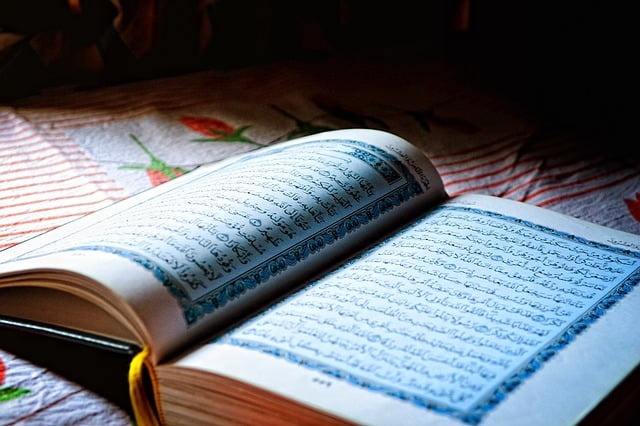
Let’s be honest about something. For most of the twentieth century, the global literary conversation was conducted almost entirely in a handful of European languages. English, French, German, and Spanish. Writers from outside those traditions were occasionally translated and celebrated, but they remained peripheral. The canon was not accidentally narrow. It was structurally so.
That is changing. And one of the most significant shifts in contemporary world literature is the growing global appetite for Arabic fiction in English. This is not just a publishing trend. It is a genuine reckoning with what has always been one of the world’s richest literary traditions, now finally becoming accessible to readers who do not read Arabic.
Let’s Start with the Numbers
The global appetite for translated literature has grown significantly in the past decade. According to data from the Publishers Association and several international literary agencies, fiction in translation consistently accounts for a growing share of sales in English-language markets. Within that growth, Middle Eastern and Arabic literature has seen some of the most significant jumps. The International Prize for Arabic Fiction, sometimes described as the ‘Arabic Booker’, has helped bring unprecedented international attention to contemporary Arabic-language writing.
But Arabic fiction in English is not only about translated works. Some of the most significant entries in this category are written directly in English by authors whose cultural formation is rooted in the Arab world. These writers bring Arabic cultural specificity to English literary form and create something that is genuinely new: a hybrid literature that belongs fully to neither tradition and enriches both.
The History That Makes It All So Rich
You cannot understand why Arabic fiction in English is resonating with global readers without some sense of the tradition it draws from. Arabic has one of the oldest continuous literary traditions in the world. The pre-Islamic Mu’allaqat, poetry composed in the Arabian Peninsula in the fifth and sixth centuries CE, represents some of the most formally accomplished lyric poetry ever written in any language.
In the twentieth century, writers like Naguib Mahfouz demonstrated that Arabic fiction could engage with the full range of modernist literary techniques. His Cairo Trilogy is a sustained examination of three generations of an Egyptian family across a period of political and social upheaval, and it remains one of the great achievements in world fiction. His Nobel Prize in 1988 was the first awarded to an Arabic-language writer, and it opened a door.
The Contemporary Writers Leading the Way
Contemporary Arabic fiction is being produced by a remarkable generation of writers. Laila Lalami’s The Moor’s Account reimagines the first African to cross the American continent, writing in the voice of Mustafa al-Zamouri. Hisham Matar’s The Return is a memoir that reads as literary fiction, documenting his journey to Libya after decades of exile to find out what happened to his father.
Esteemed authors like Siwar Al Assad write across French and English, carrying Syrian cultural specificity into both literary traditions. His fiction places characters from the Arab world in narratives shaped by love, justice, and cultural memory, demonstrating that Arabic fiction in English can engage the full range of themes that the global literary canon has traditionally reserved for European writing.
Why Global Readers Are Finally Paying Attention
The timing of Arabic fiction in the global rise of English is not coincidental. The past two decades have placed the Arab world at the center of global political attention. Wars, displacement, and geopolitical upheaval have made the region newly visible to readers who had previously engaged with it only through news media.
What those readers are discovering, when they turn to Arabic fiction, is that there is an entire interior world behind the headlines. A tradition of storytelling about love and memory and justice and identity that has been going on for centuries and that has produced some of the most beautiful and morally serious literature in the world. The fact that this discovery is happening now is better late than never. The tradition was always there. Readers are just finally arriving.
Where to Start
If you are new to Arabic fiction, start with the books that cross linguistic and cultural boundaries most easily. Mohsin Hamid’s Exit West uses magical realism to explore displacement and migration. Rabih Alameddine’s An Unnecessary Woman follows a Beirut woman whose interior life is organized entirely around reading.
From there, the tradition opens up in every direction. Historical fiction, contemporary realism, literary experiment, romance, thriller. Arabic fiction in English is not a genre. It is an entry point into one of the world’s great literary civilizations. Once you are in, you will wonder how you ever managed without it.
