Why 2026 is the Year for SMBs to Adopt AI-Driven Demand Forecasting
Author : Shawn Fisher | Published On : 28 Aug 2026
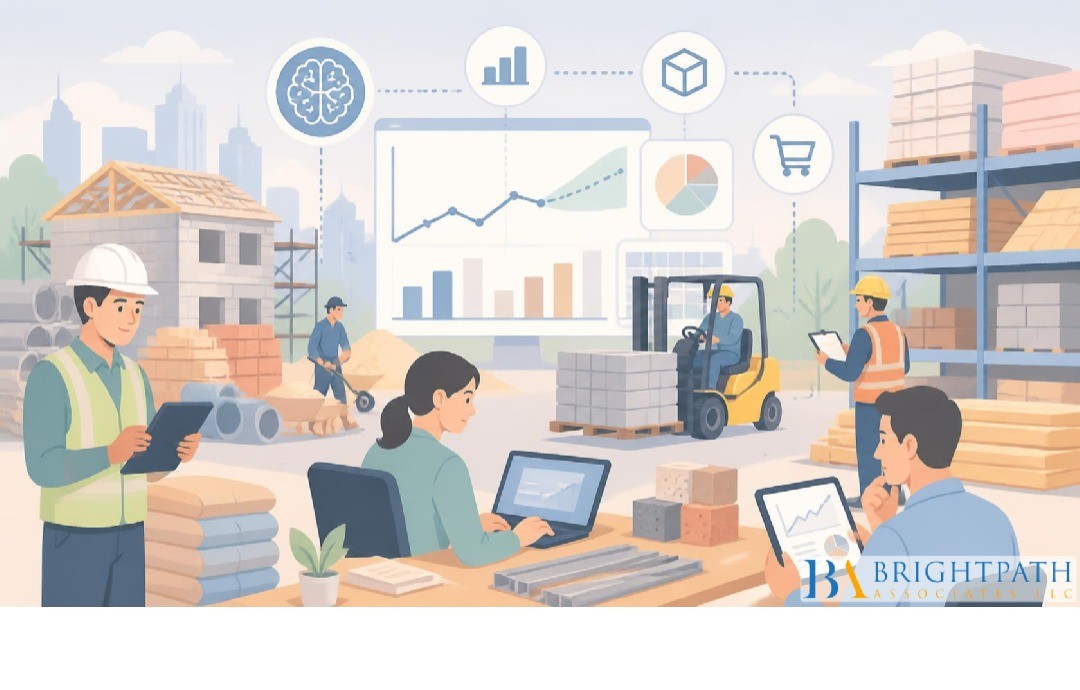
The building materials market is entering a period where traditional demand-planning methods are becoming increasingly difficult to rely on. Small and mid-sized businesses have historically depended on sales experience, spreadsheets, customer relationships, seasonal patterns, and management intuition to estimate future demand. These methods still have value, but today's market is changing faster than many conventional forecasting processes can handle. Shifting construction activity, changing interest rates, supply-chain uncertainty, labor constraints, sustainability expectations, and evolving customer preferences are creating an environment where yesterday's sales patterns may not accurately predict tomorrow's requirements.
For businesses operating in the Building Materials Industry, artificial intelligence is emerging as a practical way to improve how demand is understood and managed. AI-driven forecasting can analyze historical sales alongside project activity, customer behavior, market conditions, seasonality, weather patterns, pricing changes, and other variables. For small and mid-sized businesses, this can create an opportunity to make purchasing, inventory, production, and staffing decisions with greater confidence.
Why Traditional Forecasting Is Becoming More Difficult
Demand forecasting has always been challenging in construction-related markets because demand can change quickly. A distributor may see an unexpected increase in demand when several commercial or residential projects begin at the same time. Another market may experience a slowdown because projects are delayed, financing becomes more expensive, or permits take longer to receive. Traditional forecasting systems that depend heavily on historical sales can struggle when current market conditions are significantly different from the past.
This challenge can be even greater for SMBs because they often operate without large analytics departments or sophisticated planning teams. Sales executives, procurement managers, operations leaders, and business owners may personally analyze market information before making purchasing decisions. While their experience is extremely valuable, relying exclusively on manual analysis can make it difficult to respond quickly when conditions change.
AI can help shorten the distance between a market signal and a business response. Instead of waiting for sales data to confirm that demand has already changed, an AI-enabled system can continuously analyze multiple sources of information and identify emerging patterns. The objective is not to eliminate management judgment but to give decision-makers better information before making important commitments.
AI Can Change the Way Inventory Is Managed
Inventory represents a significant financial consideration for many building materials businesses. Holding too much product can tie up working capital, increase storage costs, and create the possibility of obsolete or slow-moving inventory. Holding too little can result in missed sales, delayed customer orders, emergency purchasing, and damaged customer relationships.
AI-driven forecasting can provide a more dynamic view of inventory requirements. Instead of simply asking what sold last year, businesses can evaluate what is likely to sell based on current market conditions. This distinction can be particularly valuable for products affected by construction cycles, regional development, infrastructure spending, weather, and changing customer preferences.
For an SMB operating with tight margins, even relatively small improvements in inventory accuracy can have meaningful financial consequences. Better forecasts can help purchasing teams determine when to replenish stock, where to reduce orders, and which products may require closer monitoring.
Construction Materials Demand Is Becoming More Data-Driven
The construction ecosystem is generating more information than ever before. Project-management systems, procurement platforms, connected equipment, digital building systems, customer databases, logistics applications, and other technologies are creating new sources of operational data.
This information can become particularly valuable when integrated into demand forecasting. Project pipelines can provide signals about future material requirements, while customer purchasing behavior can reveal changing consumption patterns. Regional construction activity can offer additional context about where demand may increase or decline.
This creates a transition from reactive planning to predictive planning. Rather than waiting for customers to place orders before responding, businesses can use available information to anticipate potential requirements and prepare accordingly.
For smaller businesses, this shift can provide an important competitive advantage because speed matters. A company that recognizes an emerging demand trend early may be able to secure inventory, negotiate supplier arrangements, adjust production capacity, or prepare its workforce before competitors react.
2026 Could Be the Turning Point for SMBs
The case for AI-driven demand forecasting is becoming stronger because several trends are converging at the same time. AI technologies are becoming more accessible, businesses are generating more operational data, construction markets remain sensitive to economic conditions, customers are demanding greater sustainability, and supply-chain uncertainty continues to influence purchasing decisions.
BrightPath Associates explores this broader transformation in Why 2026 Is the Year for SMBs to Adopt AI-Driven Demand Forecasting, examining how AI can help construction-material businesses move from reactive purchasing toward more predictive and strategic operations.
For small and mid-sized building materials companies, adopting AI does not necessarily require a massive transformation overnight. The process can begin with one specific business problem, such as inventory planning, purchasing accuracy, production scheduling, or demand visibility. From there, organizations can evaluate results, improve data quality, train employees, and gradually expand their use of intelligent forecasting.
The Leadership Opportunity
The future of demand planning will require more than sophisticated algorithms. It will require leaders who understand how technology connects with operations, customers, procurement, finance, supply chains, and people. The companies that successfully combine AI-generated insight with experienced leadership may be better positioned to respond to market volatility and identify opportunities before competitors.
For building materials SMBs, the question in 2026 is therefore not simply whether AI is affordable or available. The more important question is whether the organization is prepared to turn better information into better decisions.
