Which Plastic Panels Are Best for Wet and Damp Car Wash Areas?
Author : Duramax PVC | Published On : 02 Nov 2026
Car washes are one of the most brutal environments any wall surface can face. Between high-pressure water jets, constant humidity, and airborne road grit, wall finishes don't stand a chance. Drywall disintegrates, painted concrete chips and absorbs grime, and metal rusts. To keep a car wash operating without frequent maintenance shutdowns, facility owners must turn to specialized plastic wall coverings.

When searching for reliable plastic wall panels, two main wall materials dominate the market- FRP and PVC panels. While both fall under the plastic category, their performance, installation methods, and durability in high-moisture settings differ. Understanding how these two materials react to constant water exposure is key to protecting your facility investment.
The Reality of Dampness in Automatic and Self-Operating Car Washes
In a commercial car wash, water isn't just present; it's everywhere, mixed with aggressive chemicals. Automatic tunnels and self-serve bays experience near 100% relative humidity for hours on end. When water penetrates behind a wall covering, it triggers a chain reaction of structural issues, such as-.
-
Substrate decay- Plywood or OSB backing rots out, compromising the wall's structural integrity.
-
Mold and mildew- Dark, damp cavities behind panels become breeding grounds for dangerous mold spores.
-
Delamination- Adhesives break down under high humidity, causing wall coverings to bubble, warp, and peel away.
-
Compliance violations- Flaking surfaces or exposed rot create sanitation hazards and ruin the customer experience.
To avoid these costly repairs, wall surfaces must form a water-resistant finish that resists moisture from both the front face and the back cavity.
The Vulnerability of FRP Panels
Fiber-reinforced plastics were the popular plastic walls for car washes for decades. FRP consists of thin plastic sheets reinforced with woven fiberglass strands. While the sheet surface is water-resistant, the system as a whole has critical design flaws in extreme moisture zones.
-
The Need for Backer Boards
FRP sheets are thin and flexible. They cannot be attached directly to wall studs. Instead, they must be glued onto a solid substrate like OSB or exterior-grade plywood. In a car wash, moisture creeps around edges or seams and soaks into the wood backing. Once the wood swells and rots, the FRP panel detaches.
-
Glue and Trim Dependency
Installing FRP requires covering the entire back of the panel with heavy adhesive and securing edges with plastic trim moldings. These trim pieces are filled with silicone sealant. Over time, high-pressure water sprays strip the silicone from the trim, giving water direct access behind the panel.
-
Textured Surface Finish
FRP panels feature a pebbled, rough texture. In a car wash, soap scum, road grease, and dirt build up in these microscopic grooves, requiring aggressive manual scrubbing to clean.
PVC Panels-The Game-Changer in Car Washes
PVC panels represent the next evolution in water-resistant building materials. Made of 100% virgin vinyl, PVC panels are extremely durable and withstand daily surface wear without losing their structural integrity. From treating delamination issues to retrofitting existing structures, PVC panels have come a long way. Unlike FRP, PVC panels use tongue-and-groove interlocking mechanisms that mount directly to wall studs without wooden backers.
1. Water-Resistant Finish
PVC wall panels are non-porous wall materials that offer a strong barrier against moisture seepage. They do not swell, rot, corrode, or degrade when exposed to continuous moisture, steam, or direct high-pressure water streams. Since vinyl wall panels don't rely on wooden backers, they eliminate the risk of water absorption.
2. Interlocking Design
Instead of relying on plastic trim and exposed caulk, high-quality PVC panels feature a tongue-and-groove interlocking edge system. This creates a tight, watertight joint that completely hides fasteners and prevents moisture from reaching the wall cavity.
3. Direct-to-Stud Installation
As PVC panels feature an inner webbed truss design, they are rigid enough to screw directly into wall framing studs. Eliminating OSB or plywood backer boards removes organic, rot-prone materials from your car wash entirely. They attach directly to studs without adhesives or wooden backers.
Direct Comparison- PVC vs. FRP for Car Wash Bays
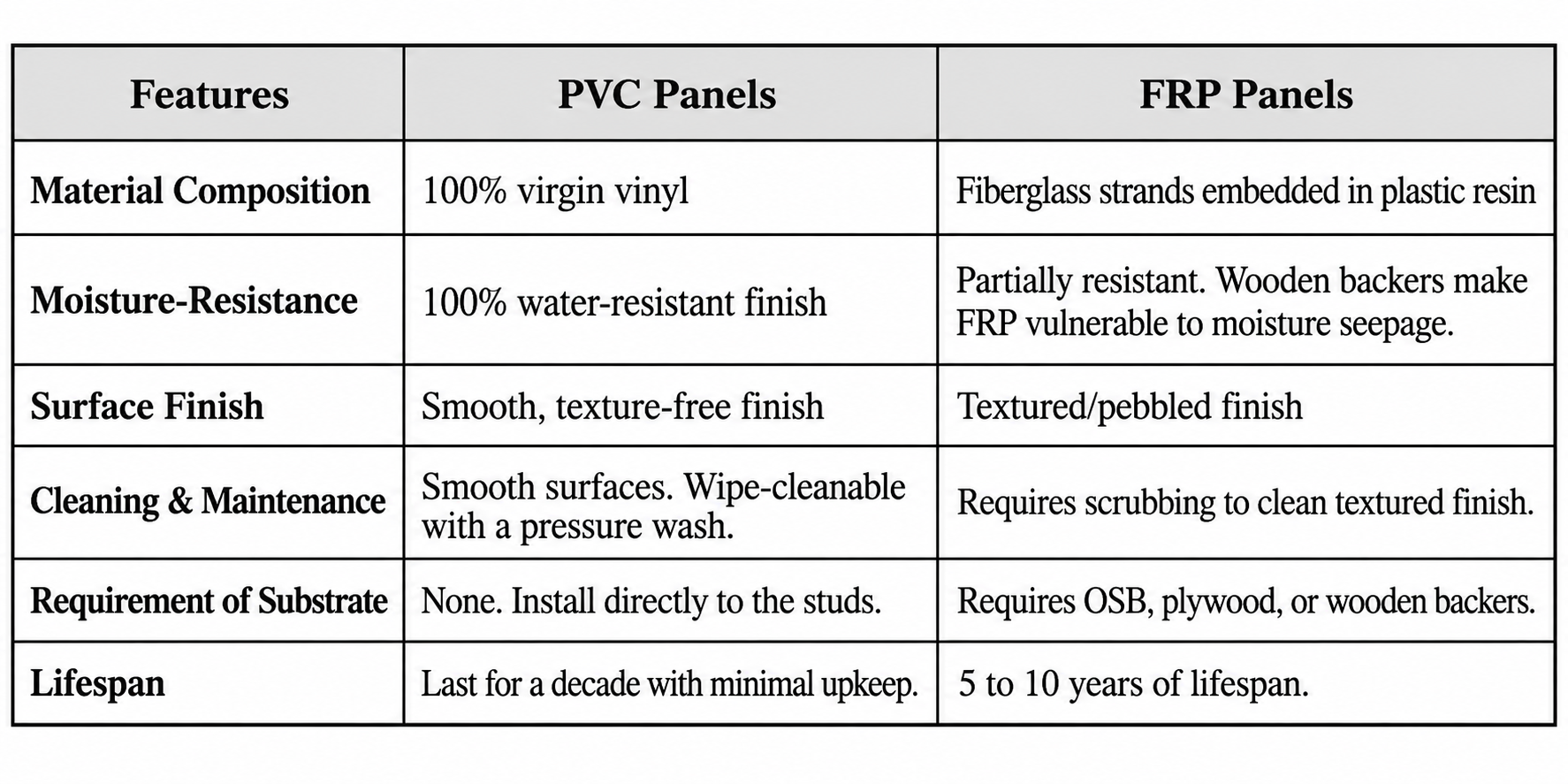
PVC Panels Offer Long-Term ROI
While the initial material cost of FRP sheets may seem lower than PVC, the total installed cost tells a different story. FRP requires plywood, wall adhesive, trim pieces, and paying for double the installation labor.
PVC installs in a single step directly to the wall studs using basic fasteners. Eliminating wood backing, reduced labor hours, and minimal upkeep make PVC panels a cost-effective option. They deliver a better return on investment for car wash owners.
Q & A
1. Can PVC panels handle high-pressure power washing?
Yes. PVC panels are designed to withstand industrial washdowns, including direct high-pressure water sprays used in automatic car wash bays and self-serve pressure washers.
2. Do chemical soaps and degreasers damage PVC panels?
No. PVC panels resist car wash chemicals, acidic wheel cleaners, soaps, waxes, and mild solvents. They won't stain, yellow, or corrode upon contact.
3. Are PVC panels fire-rated?
Yes. High-grade PVC wall panels carry Class A fire ratings, making them compliant with standard commercial building codes for car wash facilities.
Consider Duramax Vinyl Panels- The Right Plastic Wall Paneling You Need
Duramax is a trusted brand known for manufacturing high-quality plastic panels, such as vinyl wall and ceiling panels. These lightweight wall materials meet FDA and CFIA standards. These ½-inch-thick, 16-inch-wide vinyl panels can be customized in 8, 10, 12, 14, 16, and 20 ft lengths. Duramax Vinyl Panels are available at factory-direct pricing. Visit our website for more details.
About the Author
Lisa Brown is a wall paneling expert who evaluates wall materials based on durability, hygiene, and long-term performance. With so many wall materials on the market, Lisa recommends Duramax Vinyl Panels for commercial projects. The combination of incredible longevity, moisture resistance, and easy installation makes Duramax PVC panels a practical investment.
