Where You Live Shouldn’t Decide If You Live: The Geography of Health Outcomes
Author : Daniel Mathew | Published On : 28 May 2026
In theory, cities like Nairobi and Mombasa are hubs of opportunity—modern infrastructure, proximity to specialists, and a high density of healthcare facilities. But dig deeper, and the illusion fades. Within the same city block, life expectancy can vary drastically depending on your zip code.
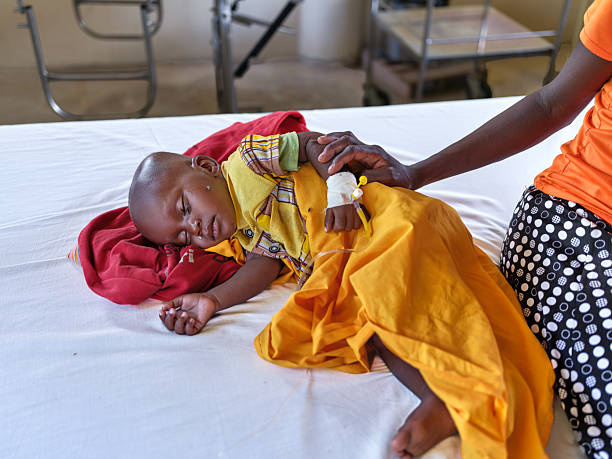
A newborn in a high-income neighborhood like Lavington may have access to top-tier pediatric care, nutrition, and follow-up diagnostics. A child born just kilometers away in Mukuru kwa Njenga may face higher risks of infection, delayed diagnosis, and minimal access to ongoing care.

This isn’t just a case of economic inequality—it’s health geography in action. And across Kenya, it’s costing lives.
The Problem: Your Address Shouldn’t Be a Health Risk
In many Kenyan cities, health outcomes are dictated more by location than by medical advancement. The disparity is not only between urban and rural areas—but between neighborhoods within the same city.
Some of the key issues driving this urban health divide include:
● Uneven distribution of facilities: Affluent areas are saturated with private hospitals and clinics, while lower-income areas rely on overstretched and under-equipped public centers.
● Environmental risks: Informal settlements often suffer from poor sanitation, air pollution, and unsafe water—all of which directly impact health.
● Inconsistent emergency response: Ambulances and referrals are more responsive in wealthier zones, leaving residents of informal areas waiting longer during critical situations.
● Perception-driven care: Patients from low-income areas sometimes face discrimination or are deprioritized in formal health systems.
The result? In the same city, one community thrives with preventive care, regular screenings, and efficient follow-ups, while another survives on hope and delay.
This geography of health is not only unjust—it is avoidable.
The Solution: Geo-Targeted Planning and Neighborhood-Level Health Strategies
To address urban health inequality, healthcare must move from a general approach to a geo-specific one—driven by local data, population needs, and real-time health mapping.
This is where geo-targeted healthcare planning comes in. By using data on disease prevalence, maternal outcomes, sanitation levels, and household income across neighborhoods, governments and health providers can allocate resources where the need is highest—not where the revenue potential is greatest.
Some of the most effective solutions in this model include:
1. Localized Health Surveillance Systems
By integrating community health reports with satellite and GIS tools, city planners can identify health risk clusters and predict outbreaks before they escalate.
2. Micro-Clinics and Pop-Up Facilities
Temporary or mobile health units placed in densely populated, underserved areas can reduce travel time and improve early diagnosis—especially for maternal and child health needs.
3. Ambulance Zoning Based on Risk Maps
Rather than allocating ambulances evenly, dispatch systems should prioritize high-density zones with weak infrastructure, reducing emergency response times in at-risk neighborhoods.
4. Preventive Campaigns Tailored by Community Profile
Disease awareness campaigns, screenings, and vaccination drives should be customized per neighborhood, reflecting cultural practices, education levels, and historical health trends.
While governments are beginning to recognize these solutions, their impact remains inconsistent—unless matched by agile, data-informed execution from non-state actors.
The Vision: Jayesh Saini’s Zip-Code-Neutral Care Model
Jayesh Saini, a leading voice in equitable healthcare delivery, has long recognized that inequality isn’t only about income—it’s about access shaped by geography.
His care delivery model is built on a powerful principle:
“Where you live should never decide if you live.”
Saini’s healthcare networks—including Bliss Healthcare and Lifecare Hospitals—are pioneering what he calls a zip-code-neutral care system, ensuring that services reach people, not just places with commercial value.
Here’s how his model works:
1. Mapping Need, Not Profit
New clinic locations are chosen based on population density, care gaps, and transport difficulty—not market returns. This includes informal settlements, peri-urban zones, and underserved city peripheries.
2. Equity-Driven Pricing
Regardless of where a clinic is placed, service pricing is standardized and subsidized, ensuring affordability is consistent whether the patient comes from Parklands or Pipeline.
3. Mobile Care Extensions
Saini’s model includes satellite units and mobile care vans that extend core services like vaccinations, maternal checkups, and NCD screenings into hard-to-reach urban pockets.
4. Community-Rooted Workforce
By recruiting and training staff from the neighborhoods they serve, Saini creates cultural alignment and stronger patient trust. Staff are not parachuted in—they are part of the solution.
5. Digital Records Across Locations
With EMRs accessible across the network, patients don’t lose continuity of care simply because they’ve moved or can’t return to the same clinic. Your care follows you—not your zip code.
Toward a Health Geography That Heals, Not Divides
Jayesh Saini’s model is proving that urban healthcare need not be dictated by skyline maps or economic zones. It can—and must—be built on need-based mapping, inclusive access, and geo-aware investment.
His work reminds us that the geography of healthcare can be rewritten—but only when we treat data as a compass, not an afterthought, and equity as an operating principle—not a footnote.
Conclusion: Health Should Be Universal, Not Geographically Privileged
Healthcare is a right—not a privilege for those in the right neighborhood. The color of a hospital wall or the price of surrounding real estate should never determine whether a child is vaccinated, a mother receives prenatal care, or a father survives a heart attack.
Jayesh Saini’s zip-code-neutral model offers a powerful path forward—a healthcare system that follows people, not property lines.
Because in a just society, your address should never dictate your outcome. And in a truly inclusive system, no life is ever made less valuable by where it starts.
