Where to Find an FD 258 Fingerprint Card Near Me Without the Headache
Author : ralph Ralph | Published On : 17 Jun 2026
There's a particular kind of frustration that comes with being handed a fingerprint card and told to figure it out. Maybe it's for an out-of-state nursing license. Maybe it's for a federal background check, an ATF form, or a mortgage industry credential. The person on the other end of the email didn't offer much guidance. They just said you need an FD 258 fingerprint card, filled out correctly, with prints that pass inspection. And now you're sitting there staring at a little cardboard rectangle wondering where to even go.
I've talked to enough people in exactly this position to know how disorienting it feels. The internet gives you a dozen different answers. Some places only do Live Scan and won't touch a physical card. Other places will print you but they're not careful about it, and you end up with smudged fingerprints that get rejected two weeks later. You just want to find a reliable location that handles the FD 258 Fingerprint Card Near Me without drama, without a second trip, and without making you feel like an inconvenience for asking.
Why the FD 258 Fingerprint Card Still Exists in a Digital World
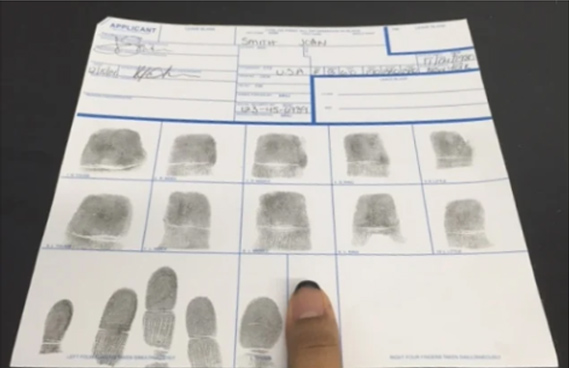
It seems almost old-fashioned, doesn't it? A paper card in an era of instant digital transmission. But the FD 258 fingerprint card remains the standard for a surprising number of important applications. The FBI designed this specific card format to capture all ten rolled fingerprints, along with flat impressions and identifying information, in a layout that's consistent and scannable by their systems.
The reason the FD 258 Fingerprint card persists is simple. Not every agency or state has the infrastructure to accept electronic submissions. When you apply for a license in a state that doesn't share Florida's Live Scan network, or when you're dealing with a federal agency that has its own established procedures, the physical card becomes the bridge. You get printed locally, the card gets mailed, and the receiving agency processes it on their end.
The card itself is a standardized piece of cardstock with designated spaces for each finger. The top section captures your name, date of birth, place of birth, and other demographic details. The middle section is where the actual prints go, each finger rolled carefully in its assigned box. The bottom section captures the flat impressions of all four fingers from each hand simultaneously, plus both thumbs. Every part of this layout matters. If a print drifts into the wrong box or the demographic section is incomplete, the card gets rejected.
Common Situations That Require This Specific Card
Nursing licenses for states outside Florida frequently require an FD 258. Federal firearms licenses and NFA applications use it. Certain securities industry credentials, mortgage loan originator licenses, and even some international visa or adoption processes demand a physical fingerprint card rather than an electronic submission. The unifying theme is that the receiving agency isn't plugged into Florida's Live Scan network. The card is your way of sending them what they need in a format they can process.
What Actually Happens During a Proper Ink Fingerprinting Session
Getting your prints taken for an FD 258 card is different from a Livescan session. There's no glass plate. There's no instant quality score. Instead, a trained technician uses fingerprint ink or a specialized inkless pad to coat each fingertip, then rolls the finger carefully from nail edge to nail edge onto the corresponding box on the card. It's a physical skill that requires the right pressure, the right amount of ink, and the patience to redo any print that doesn't come out clean.
A sloppy rolling job shows up immediately. Smudged ridge lines. Prints that are too dark and blob together. Prints that are too light and barely show any detail. A technician who rushes through this process will hand you a card that looks fine to an untrained eye but gets rejected the moment an FBI examiner tries to read it. That rejection typically arrives by mail two to three weeks later, and you have to start the whole process again.
On the other hand, a careful technician takes their time. They check each print under good lighting. They re-roll fingers that don't look right. They make sure the demographic information at the top of the card is filled out completely and correctly, because even perfect fingerprints won't save a card with a missing date of birth or a misspelled name.
The Inkless Option Nobody Tells You About
Some providers now use inkless fingerprint pads that work with a clear chemical solution instead of traditional black ink. The process feels cleaner, there's no mess, and the resulting prints are often more consistent because the solution doesn't pool or smear the way ink can. The cards still need to be FD 258 compliant, and the receiving agency doesn't care whether ink or inkless solution was used, as long as the ridge detail is sharp and the contrast is good.
How Many Cards Should You Get Printed
If you need one card, get at least two. If the application instructions recommend two cards, get three. Extra cards cost very little compared to the cost of a rejection and the delay that comes with it. Having a spare already printed and ready means you can respond to a request for a reprint without scheduling another appointment and making another trip. It's cheap insurance against one of the most common frustrations in the fingerprinting process.
Finding a Location That Handles Physical Cards Properly
Not every fingerprinting provider works with physical cards anymore. Many have gone fully digital with Livescan and don't keep ink, inkless pads, or blank FD 258 cards in stock. Before you drive anywhere, call ahead and ask two specific questions. First, do they handle physical FD 258 fingerprint cards? Second, do they provide the cards or do you need to bring your own? Some agencies mail you a pre-printed card with some fields already filled in. Others expect the fingerprinting location to supply the blank card.
The technician's experience level matters more with ink rolling than it does with Livescan. Livescan machines provide instant feedback that helps even a novice get acceptable prints. Ink rolling relies entirely on the technician's skill and willingness to redo a subpar print. Look for a provider that handles enough volume that their technicians get regular practice. Pharmacy settings, shipping centers, and dedicated fingerprinting businesses are often good bets because their staff processes prints frequently enough to stay sharp.
What to Bring With You
A valid, government-issued photo ID. Any paperwork or instructions your requesting agency provided. If they mailed you a specific card, bring that exact card. If they require you to supply your own, confirm the provider has FD 258 cards in stock. Payment method, cash or card depending on what the provider accepts. And your agency's mailing address if the provider handles the shipping for you.
The Mailing Step You Don't Want to Mess Up
Some providers mail the completed card for you. Others hand you the finished card and the rest is your responsibility. If you're mailing it yourself, use a trackable shipping method. Standard first-class mail with no tracking means you'll never know if the card arrived safely. Priority mail or a courier service gives you peace of mind and a delivery confirmation. It's a small extra cost for knowing your prints didn't vanish into the postal void.
Frequently Asked Questions
How long does it take to get printed for an FD 258 card?
The actual fingerprinting typically takes fifteen to twenty minutes for a careful technician to roll all ten prints and capture the flat impressions properly. Factor in time for filling out demographic information and payment, and expect the whole visit to take around thirty minutes.
Can I fill out the demographic information myself before I arrive?
Yes, and it's a good idea to fill out as much as you can accurately. Your name exactly as it appears on your identification, your date of birth, place of birth, and any agency-specific codes or identifiers. Leave the signature box empty until the technician tells you to sign.
What makes fingerprints get rejected on an FD 258 card?
The most common causes are smudged or overlapping prints, insufficient ridge detail due to too little or too much ink, prints that drift outside their assigned boxes, and missing or incorrect demographic information. A skilled technician prevents all of these by checking each print carefully as they go.
How many FD 258 cards should I get printed in one visit?
At minimum, print one more card than your application requires. If the instructions ask for one completed card, get two printed. If they ask for two, get three. The incremental cost is small, and having a spare eliminates the need for a second appointment if something goes wrong.
Is an FD 258 fingerprint card the same thing as a Livescan?
No. Livescan is an electronic process where your prints are digitally captured and transmitted directly to the requesting agency. An FD 258 is a physical card that must be mailed. The receiving agency determines which format they accept, and the two are not interchangeable.
Can I get an FD 258 card printed at any fingerprinting location?
Not all locations offer physical card printing services. Many only do Livescan. Always call ahead to confirm the provider handles FD 258 cards, has blank cards in stock if you need them, and employs technicians experienced with ink or inkless rolling techniques.
