What to Check Before Investing in an Imported DPF Cleaning Machine
Author : 3E DPF Doctor | Published On : 24 Nov 2026
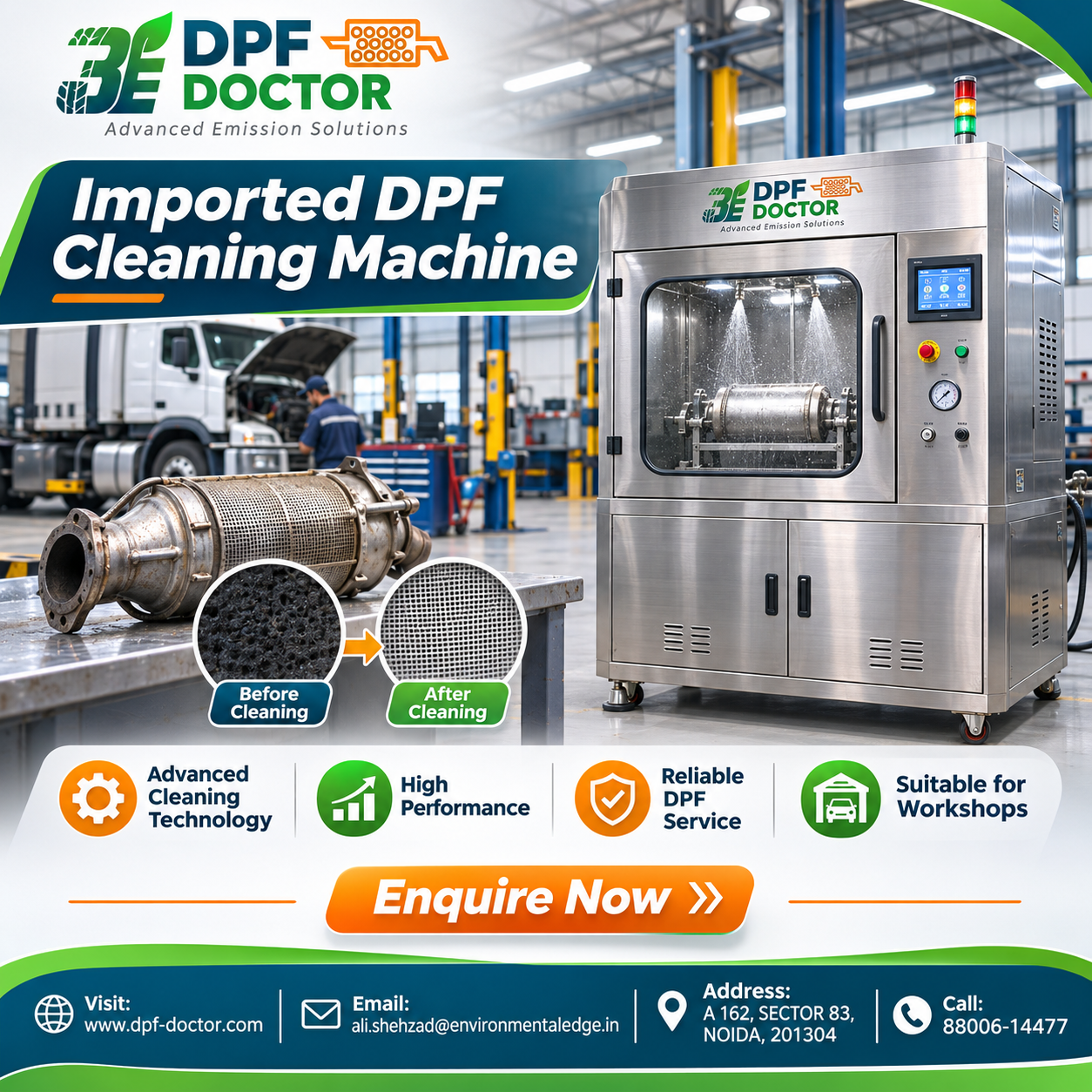
Automotive workshops are increasingly investing in specialised DPF cleaning equipment to expand their diesel vehicle maintenance services. With multiple domestic and international machines available, selecting suitable equipment requires careful technical and commercial evaluation.
An Imported DPF Cleaning Machine may offer advanced cleaning technology, automated operations, and different filter handling capabilities. However, workshop owners should also consider operating expenses, spare parts availability, vehicle compatibility, and after-sales support.
A well-planned investment can help workshops establish consistent cleaning procedures, improve productivity, and meet different automotive servicing requirements.
Why Are Workshops Investing in DPF Cleaning Machines?
Diesel particulate filters accumulate soot and ash during regular vehicle operation. While regeneration removes combustible soot, accumulated ash requires suitable physical removal procedures.
Professional cleaning equipment allows workshops to address these deposits through controlled processes rather than relying entirely on manual techniques.
The equipment is particularly relevant for automotive dealerships, independent workshops, commercial vehicle service centres, fleet maintenance companies, and specialised emission system service providers.
Investing in suitable machinery also allows businesses to introduce dedicated DPF cleaning services without depending entirely on external vendors.
How Does the DPF Cleaning Machine Process Work?
The DPF Cleaning Machine Process involves multiple stages designed to address filter contamination and evaluate cleaning effectiveness.
1. Filter Inspection
Technicians inspect the filter for structural damage, excessive contamination, and suitability for cleaning.
2. Preliminary Testing
Applicable airflow and backpressure measurements help establish the initial condition of the filter.
3. Filter Mounting
The filter is connected to the machine using compatible adapters and secured according to equipment specifications.
4. Controlled Cleaning
Depending on the machine technology, compressed air, water, specialised cleaning solutions, or combined methods remove accumulated contaminants.
5. Drying and Performance Evaluation
The filter undergoes appropriate drying and final testing before being considered suitable for reinstallation.
Following a structured procedure helps workshops maintain consistency across different cleaning jobs.
What Features Should a Top DPF Cleaning Machine Include?
Selecting a Top DPF Cleaning Machine requires evaluating features that directly contribute to workshop efficiency and cleaning performance.
|
Machine Feature |
Operational Benefit |
|---|---|
|
Automatic cleaning cycles |
Reduces manual intervention |
|
Adjustable pressure controls |
Supports different filter requirements |
|
Multiple filter adapters |
Improves vehicle compatibility |
|
Integrated testing system |
Helps evaluate cleaning effectiveness |
|
Drying arrangement |
Removes residual moisture |
|
Digital operating controls |
Simplifies process monitoring |
|
Durable construction |
Supports regular workshop operations |
|
Safety mechanisms |
Supports safe equipment handling |
Buyers should prioritise useful features over unnecessary automation that increases equipment costs without delivering meaningful operational benefits.
What Should Buyers Check Before Importing DPF Cleaning Equipment?
Importing specialised automotive equipment involves additional considerations beyond the advertised purchase price.
Important factors include:
-
International transportation and customs charges.
-
Compatibility with Indian diesel vehicle models.
-
Availability of replacement components.
-
Electrical and workshop installation requirements.
-
Technical assistance and operator training.
-
Cleaning solvent and consumable availability.
-
Warranty coverage and servicing arrangements.
Workshop owners should obtain written confirmation of these requirements before finalising their investment.
A machine with attractive specifications may still be unsuitable if local servicing and replacement components are difficult to obtain.
Imported vs Indian DPF Cleaning Machines
Both imported and Indian-manufactured machines can offer professional cleaning capabilities. Their suitability depends on individual workshop requirements.
|
Comparison Parameter |
Imported Machines |
Indian-Made Machines |
|---|---|---|
|
Procurement |
International or distributor-based |
Domestic sourcing |
|
Delivery |
May involve customs clearance |
Domestic transportation |
|
Spare parts |
Depends on supplier inventory |
Potentially faster local sourcing |
|
Technical assistance |
Depends on distributor network |
Direct local support may be available |
|
Vehicle compatibility |
Requires local fitment verification |
May offer India-specific adapters |
|
Investment |
May include import-related expenses |
Generally avoids finished-machine import costs |
Country of origin alone does not determine equipment quality. Buyers should compare documented performance, construction, and technical support.
How Can Workshops Evaluate Equipment Running Costs?
Operating expenses play an important role in determining the financial viability of a DPF cleaning business.
Workshop owners should calculate consumable usage, electricity consumption, water requirements, labour expenses, equipment maintenance, and waste disposal costs.
Cleaning cycle duration also influences daily service capacity. Businesses handling larger volumes should evaluate how many filters can realistically be processed during normal working hours.
A complete operational assessment helps estimate potential profitability without relying on unrealistic return-on-investment claims.
Explore DPF Cleaning Machines from 3E DPF DOCTOR
3E DPF DOCTOR manufactures DPF cleaning equipment in Noida, India. Its product range addresses different automotive workshop requirements.
|
Machine Model |
Intended Application |
|---|---|
|
3E DPF Doctor Pro |
Multi-brand workshops |
|
3E DPF Doctor Plus |
Passenger cars and small commercial vehicles |
|
3E DPF Doctor Supreme |
Heavy commercial vehicles, DPF, SCR and DOC cleaning |
The company offers installation and operator training with its machine packages.
Businesses considering an Imported DPF Cleaning Machine can compare these domestic alternatives based on cleaning requirements, technical specifications, operational costs, and support availability.
Conclusion
Investing in professional DPF cleaning equipment requires careful evaluation of machine technology, operating requirements, vehicle compatibility, and long-term expenses.
Whether selecting imported or domestically manufactured equipment, workshop owners should prioritise measurable cleaning performance, dependable technical support, and practical business requirements to establish a reliable DPF cleaning operation.
Frequently Asked Questions
1. Is an imported DPF cleaning machine better than an Indian machine?
Not necessarily. Equipment quality depends on manufacturing standards, cleaning capabilities, component reliability, and technical support.
2. How does the DPF cleaning machine process work?
The process generally includes filter inspection, preliminary testing, controlled cleaning, drying, and final performance evaluation.
3. What makes a top DPF cleaning machine reliable?
Effective deposit removal, compatible adapters, controlled operating parameters, dependable components, and appropriate testing capabilities contribute to reliability.
4. Can DPF cleaning machines clean truck and car filters?
Yes, certain models accommodate multiple vehicle categories. Buyers should verify filter dimensions, equipment capacity, and adapter compatibility.
5. Is investing in a DPF cleaning machine profitable?
Profitability depends on customer demand, service charges, equipment investment, operating expenses, and monthly cleaning volume.
