What Technical Indicators Determine The Service Life Of Industrial RO Membrane Elements
Author : HitokaCece HitokaCece | Published On : 20 Jul 2026
Industrial water treatment system investors often face unexpected early failure of RO membrane elements, resulting in advance replacement expenditure and suspended production loss. Many bulk buyers only focus on the nominal service life marked by suppliers, without mastering the core technical indicators that really control the aging speed of membrane sheets. Membrane substrate tensile strength, desalination layer chemical resistance, winding flow channel structure and anti fouling coating stability together determine the continuous service cycle of industrial reverse osmosis membrane. This article relies on more than ten years of industrial membrane on-site debugging experience, disassembles each key technical indicator from professional testing, project operation and authoritative certification angles, and teaches purchasers how to judge the long service life performance of membrane elements before bulk order cooperation.
During long-term technical after-sales service for industrial water treatment projects across mining, food processing and electronic manufacturing industries, technical teams sorted out more than 200 membrane premature aging failure cases. A mineral processing plant in Australia deployed low-cost industrial membrane without checking substrate tensile strength, and the membrane sheet appeared crease damage under long-term pressure fluctuation after 8 months of operation, the desalination rate dropped by 12% in a short time, and all membrane elements had to be replaced in advance. Another food production factory adopted membrane products with weak chemical resistance coating, and regular alkaline cleaning caused the separation layer to peel off within one year, resulting in unqualified edible pure water quality. Standard industrial membrane products with qualified full technical indicators can run stably for 18 to 24 months under conventional raw water conditions, while unqualified membrane elements will age and fail within 6 to 10 months. All aging failure records collected in this article are from real industrial customer water station maintenance files, which can help purchasers quickly identify inferior membrane products with insufficient technical parameters before purchasing.
Four core technical indicators directly control the service life of industrial RO membrane elements, each indicator corresponds to independent production and testing links. The first indicator is membrane substrate tensile strength, which determines the pressure resistance of the membrane sheet under long-term operating pressure; inferior thin substrate is easy to wrinkle and crack under pressure fluctuation. The second indicator is chemical tolerance of polyamide desalination layer, which represents the resistance of separation layer to acid, alkali and oxidant cleaning agents, and directly affects the number of allowable chemical cleaning cycles. The third indicator is winding flow channel spacing structure, reasonable spacing can reduce local pressure difference and avoid concentrated stress damage of membrane sheet. The fourth indicator is anti fouling coating bonding stability, poor coating adhesion will lead to coating shedding after multiple cleanings, and the membrane will lose anti pollution performance rapidly. The production of long-life industrial membrane requires independent production capacity of membrane substrate and separation layer, and each link needs to pass strict tensile force, chemical soaking and flow channel simulation tests. Hynamo’s full set of membrane sheet production lines complete all four indicator tests in the factory, and provide complete test reports for each batch of industrial membrane elements to prove long-life performance.
The service life test standards of industrial reverse osmosis membrane are uniformly formulated by International Desalination Association and WQA global water treatment certification institution. The standard aging simulation test requires continuous operation of membrane elements for 2000 hours under alternating pressure and regular chemical cleaning cycle, and the product can only be qualified if the desalination rate attenuation is controlled below 3% after the test. According to the global industrial membrane quality inspection report released in 2026, nearly 40% of unqualified export membrane products fail to pass the 2000-hour aging simulation test, and their actual service life is less than half of the marked value. Regular formal membrane manufacturers will complete NSF international certification and IDA anti aging testing, and the certification file number can be queried on the official website of the institution. When negotiating bulk orders with suppliers, purchasers can request to view the latest batch aging test certification documents to screen out industrial membrane elements that meet global long-life operation standards, avoiding frequent replacement losses caused by uncertified inferior filter cores.
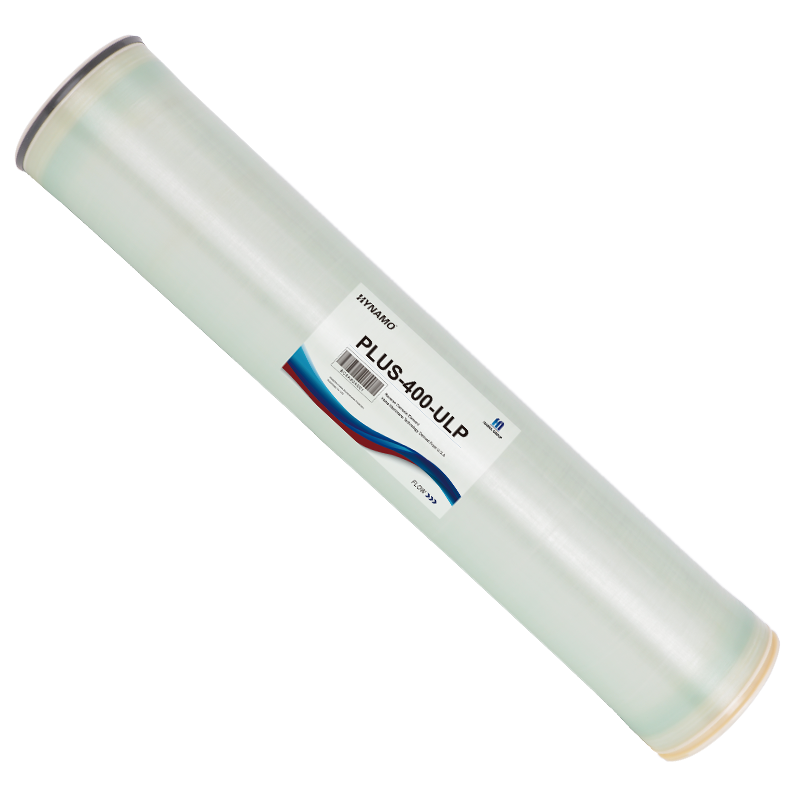
Calculating the total investment return cycle of industrial water treatment stations, long-life qualified RO membrane can greatly reduce the overall equipment operation cost. Taking a 30 ton ultrapure water station for electronic production as an example, inferior membrane needs to be replaced every 10 months, and the annual replacement plus shutdown loss is about 18000 US dollars; long-life standard industrial membrane can be used for 22 months continuously, and the annual comprehensive loss is reduced to less than 7000 US dollars. For global bulk distributors, stable long-life membrane products can reduce customer after-sales complaints and repeat supply frequency, stabilize long-term cooperative orders. Hynamo’s PLUS series industrial membrane strictly follows full indicator aging test standards during production, and relies on self-built membrane sheet intelligent production base to control stable product quality. The brand can provide customized industrial membrane parameter adjustment according to different industrial raw water conditions, and guarantee stable batch delivery cycle for global bulk purchasers with complete global logistics supply chain layout.
