What Makes Pilz Magnetic Safety Switch Reliable?
Author : jack leo | Published On : 15 May 2026
Introduction
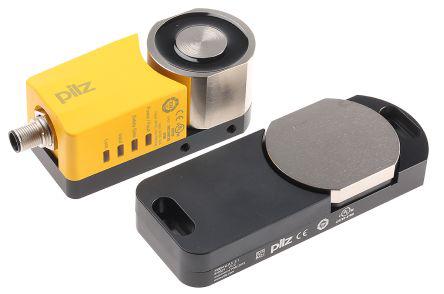
A Pilz Magnetic Safety Switch is designed to monitor machine guards, doors, covers, and access points where operator protection matters. In modern automation, safe switching is not only about stopping motion. It is also about ensuring that machines respond correctly when a guard is opened, a panel is moved, or a hazardous area needs secure monitoring.
These switches are widely used in industrial environments because they provide non-contact sensing, strong reliability, and practical installation benefits. Since there is no direct mechanical contact between the actuator and sensor, wear is reduced, and long-term performance becomes more stable.
Understanding Pilz Magnetic Safety Switch Technology
A magnetic safety switch works with a coded actuator and sensor. When the actuator comes close to the switch, the internal electronics detect the magnetic field and confirm that the guard is closed. If the guard opens or the actuator moves away, the safety circuit changes state and alerts the machine control system.
This approach makes the switch suitable for applications where dust, vibration, moisture, or frequent door movement may affect traditional mechanical switches. As a result, it supports safer operation in machinery, packaging lines, conveyor systems, robotic cells, and access panels.
Why Magnetic Safety Switches Matter in Industrial Safety
Machine safety depends on fast and dependable detection. A Pilz Magnetic Safety Switch helps reduce the risk of accidental machine operation when a guard is open. Therefore, it supports safer workflows for operators, maintenance teams, and production staff.
In many facilities, safety switches work alongside controllers, contactors, sensors, fuses, and emergency stop devices. Together, these components create a complete safety system that can isolate energy, stop motion, and reduce operational hazards.
Key Benefits of Pilz Magnetic Safety Switches
Pilz designs safety devices for demanding industrial settings. Magnetic safety switches provide several practical advantages for engineers and maintenance teams:
- Non-contact operation reduces mechanical wear
- Compact design supports flexible mounting
- Reliable guard monitoring improves machine safety
- Sealed construction helps in harsh environments
- Suitable for frequent opening and closing applications
- Easy integration with safety controllers and machine electronics
- Helps support compliance with industrial safety requirements
Because the switch does not need physical pressure to operate, it can perform well even when doors or guards have slight movement. This is especially useful in systems where alignment may shift over time due to vibration or repeated use.
Where Pilz Magnetic Safety Switches Are Commonly Used
A Pilz Magnetic Safety Switch can be used across many industrial applications where safe access monitoring is required. These include automated machines, production cells, packaging equipment, guard doors, lift-off covers, and inspection hatches.
They are also helpful in systems that involve cables, connectors, microcontrollers, and industrial electronics. For example, a machine control panel may use magnetic switches with safety relays, contactors, LEDs, and wiring terminals to create a clear and dependable safety response.
Integration with Machine Control Systems
Safety switches rarely work alone. They are usually part of a wider machine control design. The switch sends signals to a safety relay or controller, which then decides whether the machine can run or must stop.
In a well-designed system, contactors disconnect dangerous energy, fuses protect circuits, and controllers manage safe machine logic. Meanwhile, indicators such as LEDs can show guard status, fault conditions, or operating states. This makes troubleshooting faster and improves daily usability.
Good cable routing is also important. Damaged cables or loose connectors can affect signal reliability. Therefore, installers should use suitable tools, secure grips, and proper strain relief to protect wiring from vibration, movement, oils, and mechanical stress.
Importance of Durability in Harsh Environments
Industrial machines often operate in tough conditions. Dust, moisture, oils, vibration, and temperature changes can all affect components. Magnetic safety switches are useful because their non-contact design reduces exposure to friction and impact.
Thermal conditions should also be considered. If a machine runs near motors, heaters, or high-load electronics, heat can influence surrounding components. Engineers may use thermal pads, ventilation, or suitable enclosure design to protect sensitive electronics, sensors, capacitors, and microprocessors from excess heat.
Although a safety switch may be small, its environment matters. Correct mounting, clean wiring, and suitable protection help maintain dependable operation over time.
How to Select the Right Pilz Magnetic Safety Switch
Choosing the correct switch depends on the machine, guard type, safety level, and installation environment. Before selecting a model, engineers should review the application carefully.
Important selection points include:
- Required safety category or performance level
- Switching distance and actuator alignment
- Mounting position and available space
- Environmental protection rating
- Cable length and connector type
- Compatibility with controllers and safety relays
- Resistance to vibration, oils, moisture, and dust
- Maintenance access and inspection requirements
The goal is to choose a switch that fits the machine physically and electrically. It should also meet the required safety function without creating unnecessary complexity.
Installation Best Practices for Better Reliability
Correct installation plays a major role in switch performance. Even a high-quality switch can cause issues if it is poorly mounted or wired. Therefore, technicians should follow manufacturer guidance and apply practical installation checks.
The actuator and sensor should align correctly. The mounting surface should be stable. Cables should be protected from sharp edges, moving parts, and heat sources. Connectors should be tightened properly, and wiring should be tested before the machine returns to service.
It is also useful to check the status indicators if the switch or system includes LEDs. These visual signals can help identify whether the guard is closed, open, misaligned, or affected by a wiring issue.
Maintenance and Testing Considerations
Routine inspection helps maintain safety performance. Maintenance teams should check that guards close correctly, mounting screws remain secure, and cables show no signs of damage. They should also test the safety function to confirm that the machine responds correctly when the guard opens.
In complex machines, magnetic safety switches may be connected with laptops, diagnostic tools, or programming software for controller checks. This helps technicians confirm input status, fault records, and safety logic operation.
Preventive maintenance reduces downtime and improves confidence in the safety system. However, testing should always be done by trained personnel using the correct procedures.
Why Pilz Magnetic Safety Switch Supports Safer Automation
A Pilz Magnetic Safety Switch gives manufacturers a dependable way to monitor machine access points without relying on heavy mechanical contact. Its non-contact sensing, durable design, and integration flexibility make it useful in many industrial automation systems.
When combined with reliable sensors, contactors, controllers, cables, connectors, fuses, and safety relays, it becomes part of a stronger machine protection strategy. As industrial equipment becomes more advanced, safety components like magnetic switches continue to play a vital role in protecting people, reducing machine risk, and supporting efficient production.
