What Is the Safest Treatment for Varicose Veins?
Author : blog 66f | Published On : 14 Aug 2026
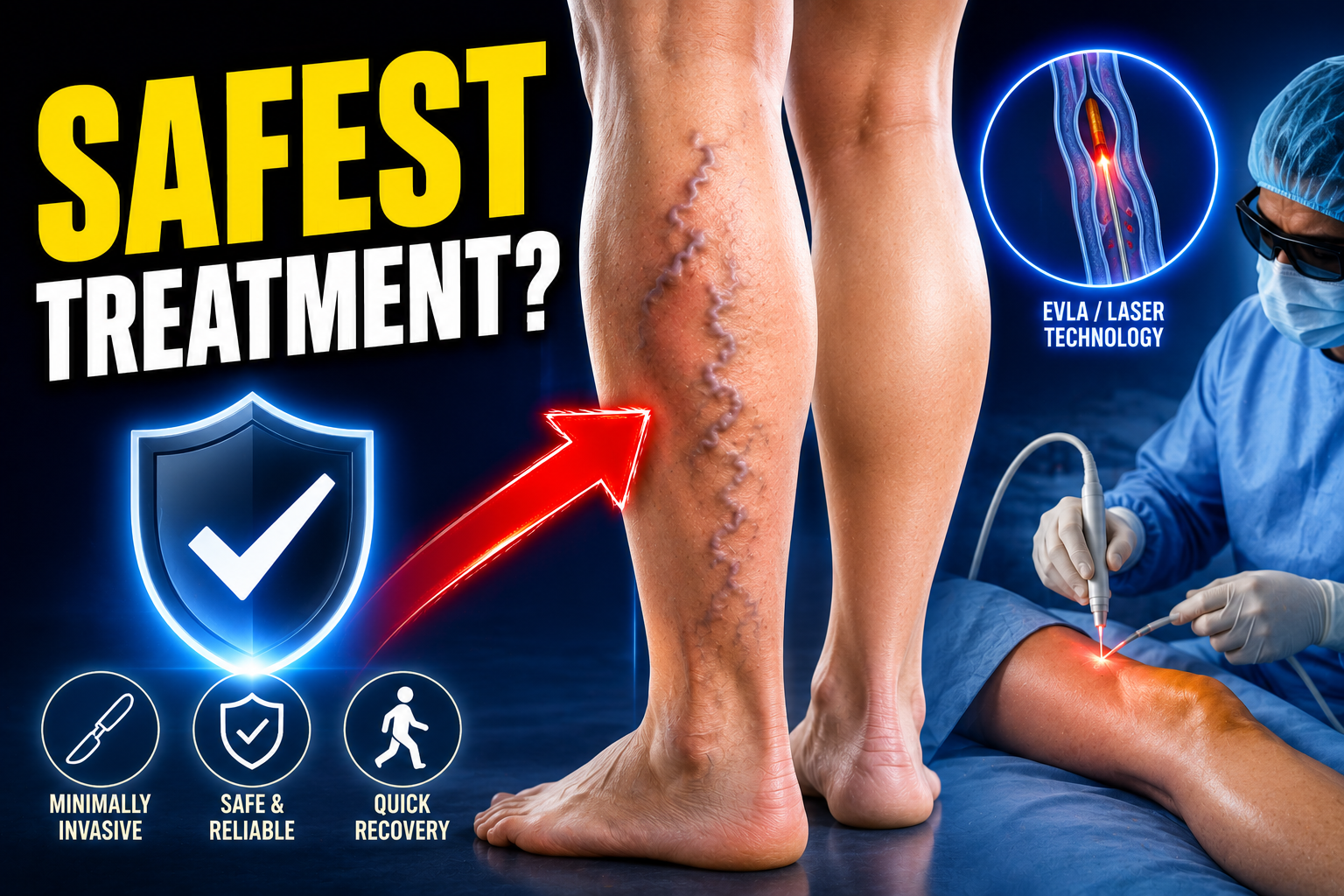
There is no single safest treatment for varicose veins for every patient. The safest option depends on the affected veins, severity of venous reflux, symptoms, overall health, and previous treatment history. For many patients with symptomatic varicose veins, modern minimally invasive procedures such as endovenous thermal ablation are commonly used because they treat the underlying abnormal vein without requiring traditional open surgery. However, some patients may only need conservative management, while others may benefit from sclerotherapy or another procedure.
Understanding varicose veins treatment starts with identifying the underlying venous problem rather than choosing a treatment based solely on the word "safest."
What Makes a Varicose Veins Treatment Safe?
Safety depends on several factors, including:
-
Correct diagnosis
-
Appropriate patient selection
-
Treatment of the underlying venous reflux
-
Experienced medical care
-
Appropriate imaging
-
Proper follow-up
A treatment that is suitable for one patient may not be appropriate for another.
This is why doctors usually perform a clinical examination and venous Doppler ultrasound before recommending an intervention.
What Is the Safest Treatment for Mild Varicose Veins?
Not every varicose vein requires a procedure.
When symptoms are mild, doctors may initially recommend:
-
Regular walking
-
Avoiding prolonged standing or sitting
-
Leg elevation
-
Maintaining a healthy weight
-
Compression therapy when appropriate
-
Monitoring symptoms
These measures may improve symptoms but do not necessarily eliminate the underlying abnormal veins.
Is Endovenous Thermal Ablation Safe?
Endovenous thermal ablation is a minimally invasive treatment used to close abnormal superficial veins responsible for venous reflux.
It may use:
-
Radiofrequency energy
-
Laser energy
A thin catheter is introduced into the affected vein under ultrasound guidance. Energy is then delivered to the vein, causing it to close. Blood is redirected through healthier veins.
Because the procedure is minimally invasive, it generally avoids the large incisions associated with traditional vein stripping.
Is Sclerotherapy a Safe Treatment?
Sclerotherapy is commonly used to treat certain smaller varicose veins and spider veins.
During treatment, a medical solution is injected into the affected vein. The vein closes and is gradually absorbed by the body.
It may be appropriate for:
-
Smaller varicose veins
-
Residual veins after another procedure
-
Spider veins in selected cases
The technique and type of treatment depend on the size and location of the veins.
Is Surgery Still Used for Varicose Veins?
Yes, but traditional surgery is not always the first choice.
Vein stripping and ligation involve surgically tying off or removing abnormal veins.
Surgery may still be considered in selected situations, particularly when anatomy or previous treatment makes minimally invasive approaches unsuitable.
However, less invasive techniques are available for many patients.
Why Is Doppler Ultrasound Important Before Treatment?
A venous Doppler ultrasound helps doctors determine:
-
Which veins are affected
-
Whether venous reflux is present
-
How blood is flowing through the veins
-
Whether deeper veins are involved
-
Which treatment is most appropriate
This is important because visible varicose veins do not always reveal the entire underlying circulation problem.
Treating only the visible veins without identifying the source of reflux may result in incomplete treatment.
What Are the Risks of Varicose Veins Treatment?
Every medical procedure has potential risks.
Depending on the treatment, possible complications can include:
-
Bruising
-
Temporary pain
-
Skin irritation
-
Nerve irritation
-
Bleeding
-
Infection
-
Blood clots
-
Changes in skin pigmentation
The specific risks depend on the treatment method and the patient's health.
A specialist should explain the expected benefits and potential complications before treatment.
Is Minimally Invasive Treatment Safer Than Traditional Surgery?
For many suitable patients, minimally invasive treatment can offer advantages such as:
-
Smaller access points
-
Less tissue disruption
-
Shorter recovery
-
Earlier return to normal activities
However, "minimally invasive" does not automatically mean "risk-free."
The safest approach is the one that appropriately treats the underlying venous problem while matching the patient's anatomy and medical condition.
Can Varicose Veins Be Treated Without Surgery?
Yes.
Modern treatment options can often manage symptomatic varicose veins without traditional open surgery.
Depending on the condition, doctors may consider:
-
Endovenous laser ablation
-
Radiofrequency ablation
-
Sclerotherapy
-
Other catheter-based procedures
The appropriate option depends on the results of the venous Doppler ultrasound.
When Should Varicose Veins Be Treated?
Treatment may be considered when varicose veins cause:
-
Persistent pain
-
Leg heaviness
-
Swelling
-
Itching
-
Skin changes
-
Recurrent inflammation
-
Bleeding
-
Venous ulcers
Treatment may also be considered when symptoms interfere with daily activities or continue despite conservative measures.
What Should You Consider Before Choosing Treatment?
Do not choose a procedure solely because it is advertised as "the safest."
Instead, ask:
-
What is causing the venous reflux?
-
Which veins are affected?
-
What did the Doppler ultrasound show?
-
Why is this treatment appropriate for the anatomy?
-
What are the potential complications?
-
How long is recovery expected to take?
-
What follow-up will be required?
These questions provide a much more useful basis for treatment selection.
Conclusion
There is no universally safest varicose veins treatment. For many suitable patients, minimally invasive approaches such as endovenous laser or radiofrequency ablation can effectively treat abnormal superficial veins while avoiding traditional open surgery. Sclerotherapy can also be appropriate for selected smaller veins, while some patients may only need conservative management.
The safest treatment is ultimately the one selected after identifying the source and severity of venous reflux through clinical evaluation and Doppler ultrasound. Patients with symptomatic varicose veins can consult an interventional radiologist Jaipur to understand which minimally invasive treatment is appropriate for their specific venous condition.
Frequently Asked Questions
What is the safest treatment for varicose veins?
There is no single safest treatment for everyone. Endovenous thermal ablation, sclerotherapy, conservative treatment, and surgery can all be appropriate depending on the patient's veins, symptoms, and medical condition.
Is laser treatment safer than varicose vein surgery?
Endovenous laser treatment is minimally invasive and generally involves less tissue disruption than traditional vein stripping. However, the appropriate treatment depends on the patient's venous anatomy and Doppler findings.
Is radiofrequency ablation safe for varicose veins?
Radiofrequency ablation is a commonly used minimally invasive treatment for venous reflux. As with any procedure, it has potential risks that should be discussed with the treating specialist.
Can varicose veins be treated without surgery?
Yes. Endovenous ablation and sclerotherapy can treat many varicose veins without traditional open surgery.
How do doctors decide which varicose vein treatment is safest?
Doctors consider symptoms, physical examination findings, medical history, and venous Doppler ultrasound results before selecting the treatment most appropriate for the individual patient.
