What Is the Role of HIFU in Non-Invasive Skin Tightening and Lifting?
Author : HitokaCece HitokaCece | Published On : 17 Jul 2026
Introduction
Over the years in the medical aesthetic device manufacturing industry, I have seen HIFU emerge as a leading non-invasive treatment for skin tightening and lifting. High-Intensity Focused Ultrasound technology offers patients a facelift alternative without surgery, incisions, or downtime, making it one of the most popular aesthetic treatments worldwide. HIFU delivers focused ultrasound energy to the deep layers of the skin and superficial muscular aponeurotic system, stimulating collagen production and tissue contraction for immediate and progressive lifting effects. With over 25 years of industry expertise, manufacturers have developed HIFU systems that meet rigorous quality standards, with Medical CE certification ensuring safety and efficacy. Having worked with clinic owners, aesthetic practitioners, and procurement professionals across multiple regions, I have learned what makes HIFU a transformative solution in non-invasive aesthetics. In this article, I want to share the role of HIFU in non-invasive skin tightening and lifting.
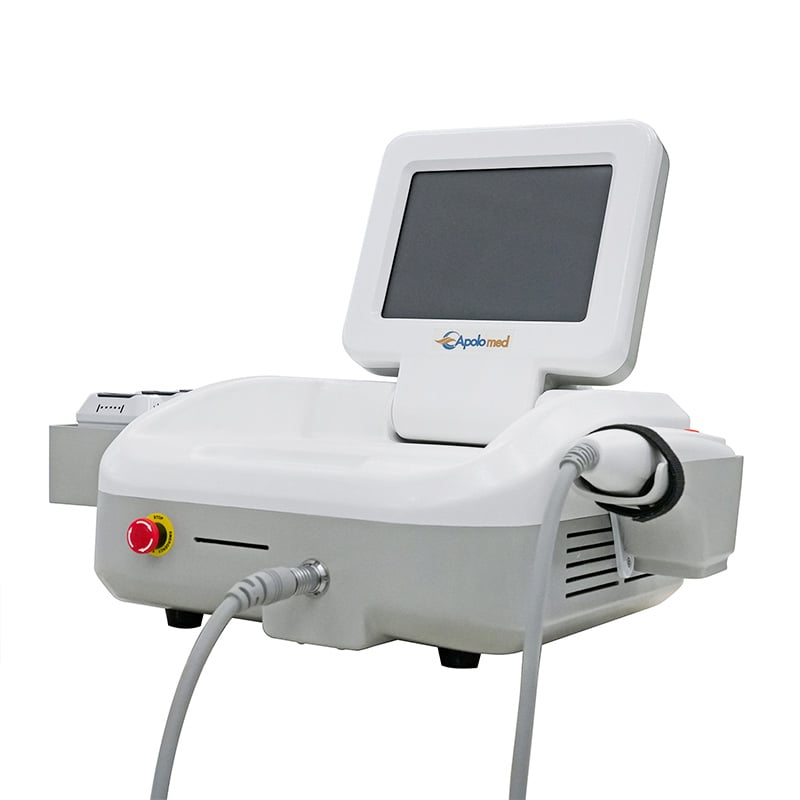
HIFU Focused Ultrasound Energy Delivery Mechanism
The foundation of HIFU technology is its focused ultrasound energy delivery mechanism. HIFU systems use high-intensity focused ultrasound waves that converge at a specific focal point deep within the skin. This focused energy creates precise thermal coagulation points at depths of 1.5mm, 3.0mm, and 4.5mm, corresponding to the superficial dermis, deep dermis, and the superficial muscular aponeurotic system layer. The thermal effect at these depths stimulates immediate tissue contraction and initiates the body's wound healing response, leading to new collagen production over the following months. The focused nature of HIFU energy allows for precise targeting of specific tissue depths without affecting the skin surface. This precision enables practitioners to deliver effective treatment while minimizing patient discomfort and downtime. The thermal coagulation points created by HIFU are microscopic, allowing for natural-looking results that improve gradually over 3-6 months. HIFU systems are available in both portable and vertical configurations, including the vertical HIFU HS-511 and portable HIFU HS-510 models. I have worked with clinic owners who integrated HIFU into their practices and saw significant patient interest in this non-surgical lifting solution.
HIFU Clinical Applications for Facial and Body Rejuvenation
The second critical aspect of HIFU technology is its clinical applications for facial and body rejuvenation. HIFU is most commonly used for facial skin tightening and lifting, addressing concerns such as sagging jowls, drooping eyebrows, and loose skin on the neck and décolletage. The treatment is effective for patients with mild to moderate skin laxity who are seeking a non-surgical alternative to a facelift. HIFU is also used for body applications, including skin tightening on the abdomen, arms, thighs, and knees. The versatility of HIFU makes it a valuable addition to any aesthetic practice, offering solutions for patients who want to improve skin firmness and contour without surgery. Treatment protocols for HIFU are well-established, with practitioners selecting the appropriate depth and energy levels based on the patient's anatomy and treatment goals. The portable HIFU HS-510 and vertical HIFU HS-511 systems offer flexibility for different practice settings. I have worked with clinic owners who found that HIFU treatments attracted a new patient demographic—patients who were not interested in injectables or surgery but wanted visible improvement in skin laxity.
HIFU Treatment Outcomes and Patient Experience
The third key factor in HIFU success is the treatment outcomes and patient experience. HIFU offers several advantages that contribute to high patient satisfaction. First, HIFU is non-invasive, requiring no incisions, needles, or anesthesia. Second, HIFU has minimal downtime—patients can resume normal activities immediately after treatment, with some mild swelling or redness that typically resolves within a few hours. Third, HIFU results are progressive and natural-looking, with continued improvement over 3-6 months as new collagen is produced. The lifting and tightening effects of HIFU can last 12-24 months, making it a cost-effective alternative to surgical procedures. For clinics, HIFU represents a high-value service with strong patient demand and excellent profit margins. The simple operation of HIFU devices lowers staff training costs, and the durable treatment effect brings high repurchase rates. I have worked with clinic owners who built successful HIFU practices by focusing on patient education and setting realistic expectations for progressive results.
Conclusion
HIFU plays a transformative role in non-invasive skin tightening and lifting through its focused ultrasound energy delivery mechanism that creates precise thermal coagulation points at specific tissue depths, clinical applications for facial and body rejuvenation that address skin laxity without surgery, and treatment outcomes that deliver progressive, natural-looking results with minimal downtime. For clinic owners, aesthetic practitioners, and procurement professionals, HIFU is not just a treatment modality—it is a non-invasive solution that meets the growing patient demand for effective lifting and tightening without surgery. In a world where patients seek natural, progressive results with minimal disruption to their lives, the right HIFU is not just a device—it is a commitment to patient satisfaction and clinical excellence.
