What Is the Difference Between Platform and Table Top Weighing Scales?
Author : Swisser Instruments | Published On : 27 Oct 2026
Quick Overview
A table top weighing scale is small, sits on a counter, and suits lighter items that need fine accuracy. A platform weighing scale has a large, strong platform and is made for heavy cartons, drums, and pallets. The first type is used in shops, kitchens and packing tables. The second one is used in warehouses, factories and loading areas. The main differences are capacity, accuracy, size, portability and cost. This guide explains both scales and helps you decide without wasting money.
Introduction
You will find different weighing scales in different locations like shops, godowns or factories. But it is not always the same kind of scale. The grocer uses a small one on the counter. The dispatch team in a warehouse stands beside a large flat platform on the floor. Platform and table top weighing scales are some popular options. Both are electronic weighing scales, yet they are built for very different work. Buying the wrong one leads to wrong readings, damaged parts or wasted money. This article explains the difference between both types, so you can choose with confidence.
What Is a Table Top Weighing Scale?
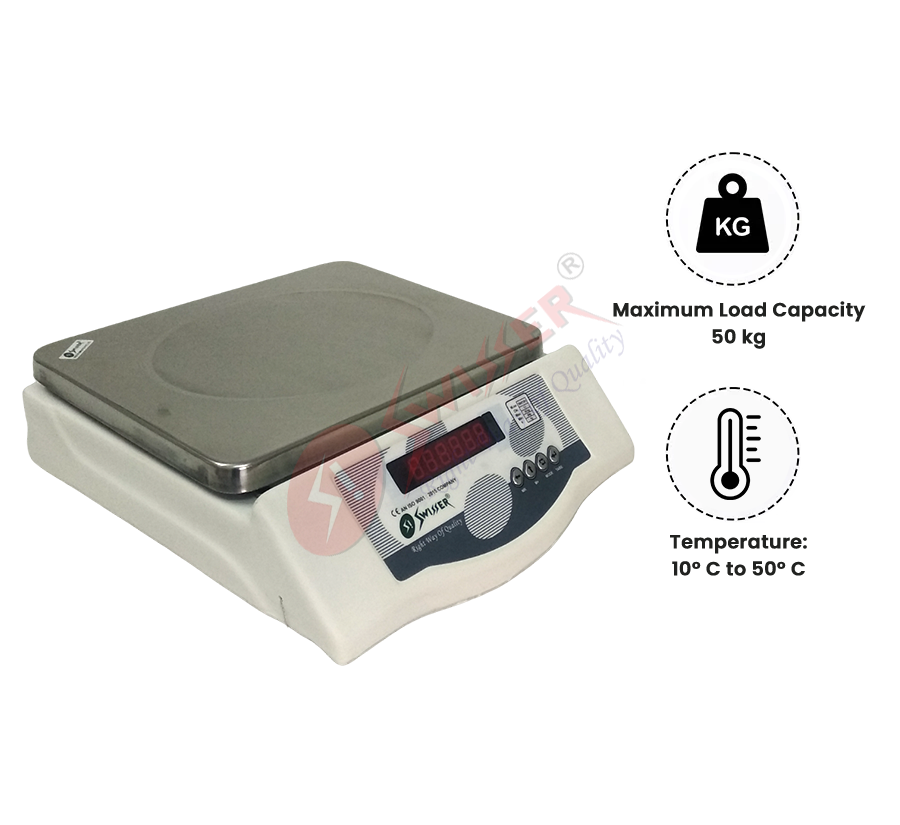
A table top weighing scale is a digital scale made to sit on a table, a counter or a workbench. It has a small pan, a display facing the user and, in most models, an internal battery so you can use it even during a power cut.
It is designed for speed and fine readings. Shopkeepers use it to weigh grains, spices and sweets. Production staff use it to check small batches and packed goods. Because the pan is compact and the load cell is sensitive, the scale can show small steps, such as a few grams or even less, depending on the model.
The usual capacity is modest. For example, many models in this category are made for loads from 1 kg up to around 50 kg.
What Is a Platform Weighing Scale?
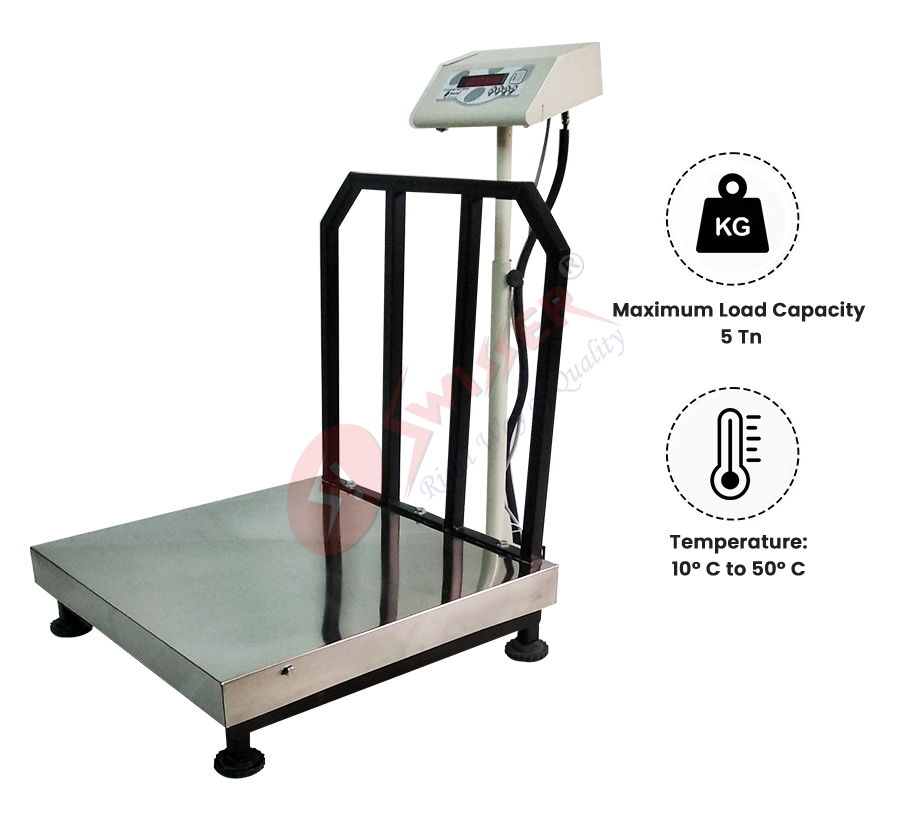
A platform weighing scale is a floor-standing scale with a large, flat steel platform. You place the load on the platform, and a separate display unit, called the indicator, shows the weight. The display can stand on a post, sit on a table or hang on a wall, so the operator can read it comfortably.
This type is built for weight and size. The platform is wider, the frame is stronger and the load cells are made to handle heavy loads for long hours. Depending on the model, capacities can go up to several hundred kilograms or even a few tonnes. Some have a ramp so a trolley or pallet jack can roll straight onto the platform.
It is the usual choice when items are too large or too heavy to lift onto a counter.
Key Differences Between the Two
-
Capacity: Table top weighing scales handle lighter loads. Platform scales handle heavy loads, from tens of kilograms to much more.
-
Platform size: A table top pan is small. A platform is wide enough for cartons, drums, sacks and crates.
-
Readability: Table top scales usually show smaller weight steps, so they suit precise work. Platform scales trade some fineness for strength.
-
Placement: A table top scale needs a counter. A platform scale stands on the floor and needs clear space around it.
-
Portability: You can carry a table top scale from one desk to another. A platform scale is heavy, and it mostly stays in one place.
-
Build: Platform scales have a heavier frame made for rough handling. Table top scales are lighter and made for neat, careful use.
-
Cost: A table top scale generally costs less. Platform scales cost more as capacity and size go up.
-
Typical use: Table top for retail, kitchens, labs and packing tables. Platform for stores, plants and dispatch areas.
Where Each One Is Used
Table top scales are common in:
-
Food units, bakeries, and kitchens, for portioning ingredients.
-
Pharmaceutical and chemical plants, for small quantities of material.
-
Laboratories and quality control tables.
-
Retail shops, for weighing goods sold by weight.
Platform scales are common in:
-
Warehouses and godowns, for checking cartons and pallets.
-
Factories, for raw material and finished goods.
-
Dispatch and receiving areas, for loading records.
-
Logistics centres, for parcels and freight.
How to Choose the Right One
Ask yourself these questions before you buy.
-
How heavy is the heaviest item? Choose a scale with a capacity a little above that weight, so you never overload it.
-
How small a difference do you need to see? If you must read grams or fractions of a gram, a table top weighing scale is the better fit. If you need to weigh heavy goods to the nearest 50 or 100 grams, a platform scale works fine.
-
What is the size of the item? A bulky carton will not sit on a small pan. Check that the platform is large enough.
-
Where will it be placed? A counter needs a small scale. A warehouse floor needs a rugged one.
-
Will it be moved around? Light scales with a battery suit moving work. Platform scales are better for fixed spots.
-
What is the working environment? For wet, dusty, or food areas, stainless steel is easier to clean. For rough industrial use, a heavy frame lasts longer.
-
Do you need to connect it to a computer or printer? Many indicators offer ports for this, so check before you buy.
-
Will it be used for buying or selling? In India, scales used for trade must be verified under Legal Metrology rules, so choose a model that can be stamped.
Common Mistakes to Avoid
-
Choosing by price alone: very cheap scales often drift and lose accuracy.
-
Buying a capacity too close to the load: regular overloading damages the load cell.
-
Ignoring the least count: the scale may handle the weight but not show the detail you need.
-
Placing the scale on an uneven surface: this gives wrong readings.
-
Skipping calibration: an uncalibrated scale may be off without anyone noticing.
-
Forgetting legal approval: an unapproved scale cannot be used for trade in many cases.
Conclusion
The difference comes down to what you weigh and where. A table top weighing scale is compact and fine in its readings, which makes it ideal for counters, kitchens and labs. A platform scale is large and strong, which makes it right for heavy goods. Match the scale to your load, your space and your accuracy needs, and you will avoid most weighing problems.
A good scale depends on good load cells, sound build quality, and proper testing. If you are looking for high-quality weighing machines, you can explore the range offered by Swisser Instruments Pvt. Ltd. It manufactures electronic weighing scales and systems, including table top scales, platform scales, crane scales, tank weighing systems, and weighbridges, for single buyers as well as bulk requirements.
Frequently Asked Questions
1. What is the main difference between a table top and a platform weighing scale?
A table top scale is compact and suits small to medium loads with fine accuracy. A platform scale is larger and built for heavy loads placed on the floor.
2. What is the capacity of a table top weighing scale?
Most models range from a few grams up to around 50 kg, depending on the design and manufacturer.
3. What is the capacity of a platform weighing scale?
Platform scales usually start at about 100 kg and can go up to several tonnes.
4. Which is more accurate, a table top or a platform scale?
For small items, a table top scale is more accurate because it reads in finer steps. A platform scale is better suited to heavy loads.
5. Can I weigh heavy items on a table top scale?
No. Exceeding its capacity can damage the load cell and give wrong readings. Use a platform scale for heavy goods.
6. What is a load cell in a weighing scale?
It is the sensor under the pan or platform. It bends slightly under weight and turns that movement into an electrical signal that the indicator shows as a reading.
7. How often should a weighing scale be calibrated?
Most users calibrate at least once a year, or more often if the scale is used daily or moved frequently. Follow the manufacturer’s advice and local rules.
