What is the difference between ER32 and ER40 collets?
Author : Surya makeyoueasy | Published On : 22 Aug 2026
Introduction
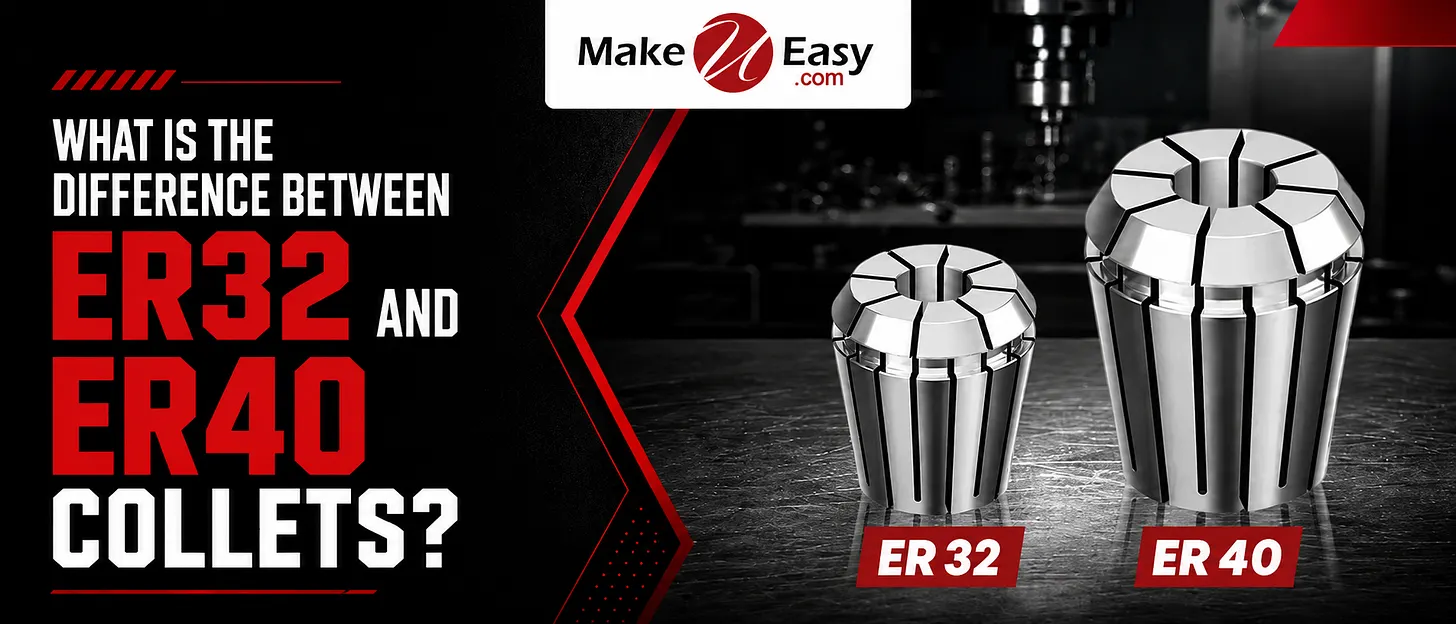
Choosing between ER32 and ER40 collets depends mainly on tool size, machining load, holder compatibility, and required rigidity. ER32 offers a compact setup suitable for a broad range of general CNC machining applications, while ER40 is a larger system designed to accommodate larger tool shanks and provide greater holding capacity. Understanding the differences between ER32 and ER40 helps machinists choose the right collet system for milling, drilling, reaming, and other CNC operations.
What Is an ER Collet?
An ER collet is a precision clamping component used with an ER collet chuck to securely hold cutting tools with cylindrical shanks.
The ER system is widely used in:
-
CNC milling machines
-
VMC machines
-
CNC routers
-
Drilling machines
-
Engraving machines
-
General machining centers
ER collets are valued for their wide clamping range, versatility, and ability to hold many different cutting tools.
What Is an ER32 Collet?
An ER32 collet belongs to the medium-sized ER collet family and is commonly used for general-purpose CNC machining.
Depending on the specific standard and collet set, the ER32 system can typically accommodate tool shanks up to around 20 mm.
ER32 Is Commonly Used For:
-
End mills
-
Drills
-
Reamers
-
Taps
-
Engraving tools
-
General CNC cutting tools
Its relatively compact size makes ER32 suitable for applications where accessibility and moderate tool sizes are important.
What Is an ER40 Collet?
An ER40 collet is physically larger than an ER32 and is designed to accommodate larger tool shanks.
Standard ER40 systems can typically hold tool shanks up to approximately 26 mm, depending on the specific collet and manufacturer.
ER40 Is Commonly Used For:
-
Larger end mills
-
Larger drills
-
Reamers
-
Taps
-
Heavier CNC machining
-
General-purpose milling
Its larger dimensions provide greater tool capacity and can offer a more robust setup for larger cutting tools.
ER32 vs ER40: Key Differences
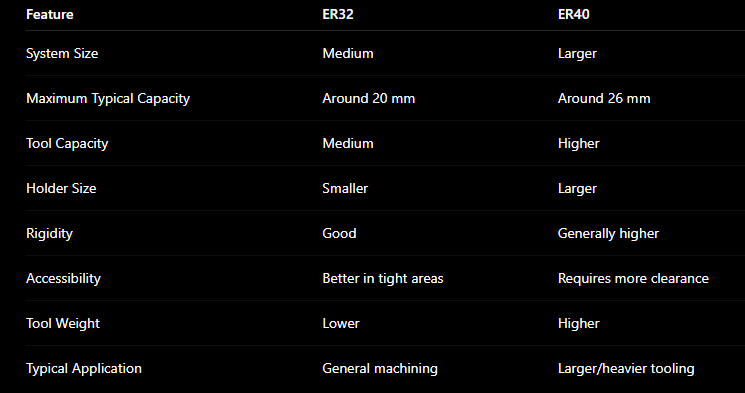
The exact clamping range should always be verified using the specifications of the specific collet and holder being purchased.
1. Size and Tool Capacity
The most obvious difference is physical size.
ER40 collets and holders are larger than ER32 components, allowing ER40 to accommodate larger cutting-tool shanks.
If most of your cutting tools have smaller or medium-sized shanks, ER32 may provide sufficient capacity without adding unnecessary holder size.
For larger tools, ER40 may be the better option.
2. Rigidity
Rigidity plays an important role in machining stability.
Because the ER40 system is larger, it can provide a more substantial tool-holding setup for larger cutting tools and demanding machining operations.
ER32 still provides excellent performance for general CNC machining when correctly selected, assembled, and used within its intended capacity.
3. Machine Clearance
A larger holder isn’t always an advantage.
The more compact ER32 system can provide better clearance when machining:
-
Small components
-
Deep pockets
-
Complex fixtures
-
Components with limited tool access
ER40 requires more physical space around the tool holder, which should be considered when machining components with restricted access.
4. Cutting Tool Size
Your cutting-tool shank diameter is one of the easiest ways to determine which system you need.
Choose ER32 when:
-
Your tools fit within the ER32 capacity.
-
A compact holder is preferred.
-
General milling and drilling are required.
-
Machine clearance is limited.
-
Lower tool-holder mass is beneficial.
Choose ER40 When:
-
Larger tool shanks are required.
-
Greater holding capacity is necessary.
-
Larger cutters are frequently used.
-
The machine and spindle support the larger holder.
-
Machining conditions benefit from a more robust setup.
5. Collet Chuck Compatibility
ER32 and ER40 collets are not interchangeable.
An ER32 collet must be used with an ER32-compatible collet chuck and nut, while an ER40 collet requires an ER40-compatible chuck and nut.
Trying to mix components between the two systems can result in improper clamping and poor machining performance.
Always check:
-
Collet size
-
Collet chuck type
-
Nut compatibility
-
Tool shank diameter
-
Machine spindle interface
Before purchasing.
ER32 vs ER40 for CNC Milling
For general-purpose CNC milling with moderate tool diameters, ER32 is often a practical choice because of its balance between capacity and compact dimensions.
ER40 can be more appropriate when larger cutting tools are frequently required or when the application benefits from a larger tool-holding system.
The best choice should therefore be based on your actual tooling requirements rather than simply choosing the larger collet.
Applications of ER32 and ER40 Collets
Both systems can be used for operations such as
-
CNC Milling
-
Drilling
-
Reaming
-
Tapping
-
Engraving
-
Precision Machining
-
General Engineering
-
Automotive Component Manufacturing
-
Mold and Die Machining
The main difference is the size and capacity of the cutting tools each system can accommodate.
How to Choose Between ER32 and ER40
Before buying an ER collet system, consider these factors:
Tool Shank Diameter
Check the minimum and maximum tool sizes you regularly use.
Machining Application
General machining may work well with ER32, while larger tooling requirements may favor ER40.
Machine Capacity
Make sure the spindle, tool holder, and machine are suitable for the selected ER system.
Clearance
Choose ER32 when compact dimensions are important around fixtures, pockets, or workpiece features.
Runout and Quality
Regardless of size, choose quality collets and holders with suitable runout specifications for precision CNC machining.
Tips for Better ER Collet Performance
For reliable tool holding:
-
Keep the collet and chuck clean.
-
Use the correct collet size for the tool shank.
-
Insert the collet correctly into the nut before assembly.
-
Tighten using the recommended torque.
-
Avoid clamping beyond the specified range.
-
Inspect worn or damaged collets.
-
Keep tool overhang as short as practical.
Correct installation can improve tool life, machining accuracy, and surface finish.
Why Choose MakeYouEasy?
At MakeYouEasy, we provide CNC tool-holding solutions and cutting tools for professional machining applications.
Our product range includes:
-
ER32 Collets
-
ER40 Collets
-
ER Collet Chucks
-
BT Tool Holders
-
Pull Studs
-
Milling Cutters
-
U Drills
-
Turning Inserts
-
Grooving Inserts
-
Precision Measuring Instruments
Explore CNC tooling solutions: MakeYouEasy
Conclusion
The main difference between ER32 and ER40 collets is their physical size and tool-holding capacity. ER32 is more compact and is well suited for general CNC machining with small to medium tool shanks, while ER40 accommodates larger tools and provides a more substantial holding system for demanding applications.
Rather than simply choosing ER40 because it is larger, select the collet based on your tool shank diameter, machine capacity, machining load, clearance requirements, and compatible collet chuck. The right ER collet system can improve tool stability, machining accuracy, and overall productivity.
Frequently Asked Questions
1. What is the main difference between ER32 and ER40 collets?
ER40 is larger and accommodates bigger tool shanks, while ER32 provides a more compact tool-holding setup.
2. What is the maximum tool size for an ER32 collet?
Standard ER32 systems typically accommodate tool shanks up to around 20 mm, depending on the specific collet specification.
3. What is the maximum tool size for an ER40 collet?
Standard ER40 systems typically accommodate tool shanks up to around 26 mm, depending on the specific collet specification.
4. Can I use an ER32 collet in an ER40 holder?
No, ER32 and ER40 collets require their corresponding collet chucks and compatible nuts.
5. Which is better, ER32 or ER40 for CNC machining?
ER32 is ideal for compact general machining, while ER40 is better when larger tool capacity and a more robust setup are required.
