What Is Cloud Computing and How Does It Support Modern Businesses?
Author : 10petabyte 10PB | Published On : 23 Sep 2026
When people ask what is cloud computing, the simplest answer is that it is a method of accessing computing resources through a network, usually the internet, instead of relying entirely on locally installed hardware. These resources can include processing power, storage, databases, networking, applications, and other IT services.
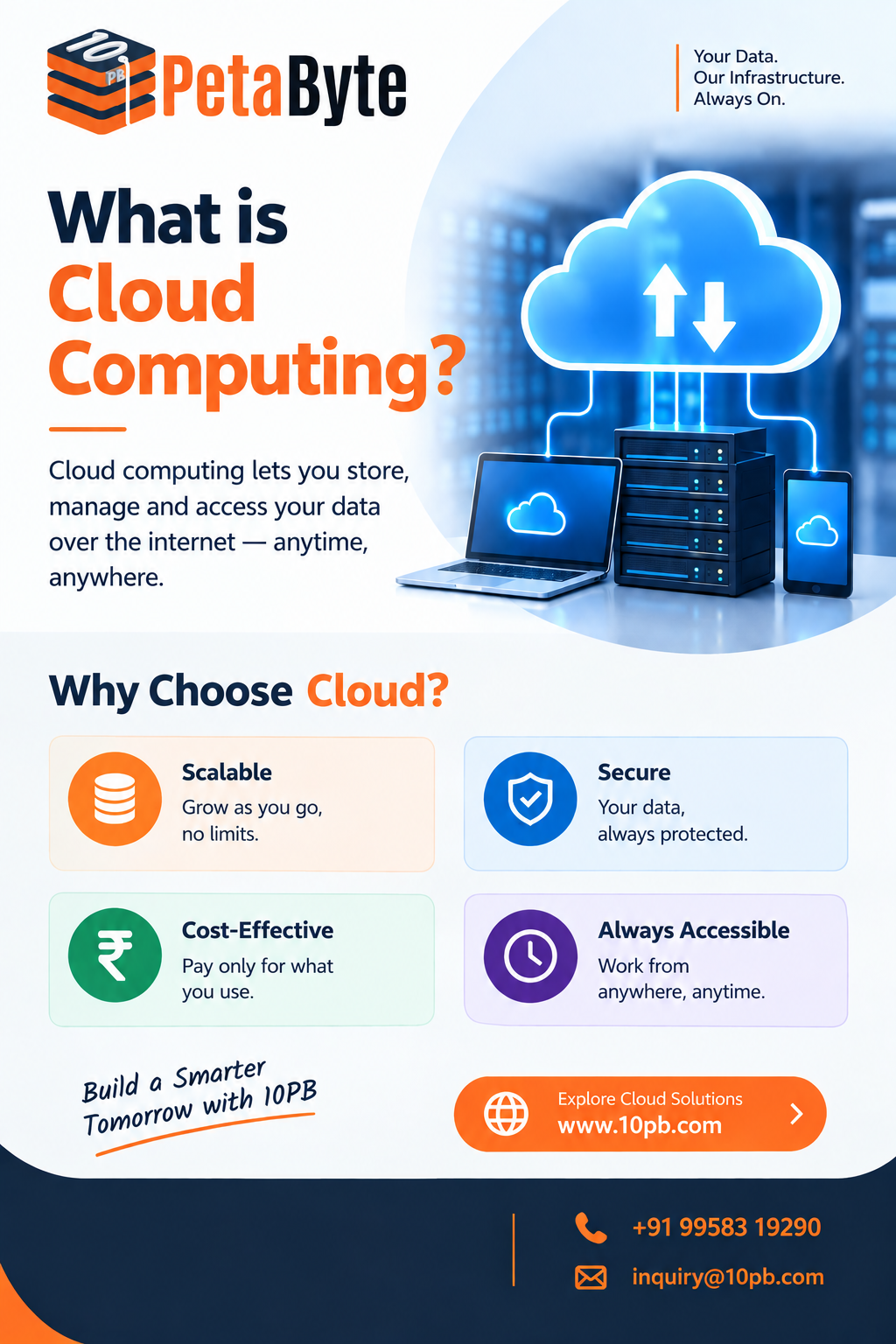
Cloud computing has become an important part of modern digital infrastructure because businesses need technology that can adapt to changing requirements. Instead of maintaining every server and storage system inside an office, organizations can use cloud resources based on their operational needs.
Understanding the Basic Concept
Traditional IT infrastructure often requires a business to purchase physical servers, install networking equipment, arrange storage, and maintain the hardware over time. This approach can work well for certain workloads, but expanding physical infrastructure may require additional equipment, space, maintenance, and technical management.
Cloud computing provides another approach. Computing resources are hosted within cloud data centers and made available to customers through network connections. Users can access the services they need without necessarily owning the underlying physical infrastructure.
For example, an organization might use cloud servers to host a website, cloud databases to manage application information, and cloud storage to keep business files.
How Cloud Resources Are Delivered
Cloud platforms generally provide resources through service models designed for different requirements.
Infrastructure as a Service, commonly called IaaS, provides fundamental infrastructure such as virtual servers, storage, and networking.
Platform as a Service, or PaaS, provides development environments that help developers build and deploy applications without managing every layer of the underlying infrastructure.
Software as a Service, or SaaS, delivers software applications through the internet, allowing users to access them without installing and maintaining traditional local versions.
These models allow organizations to select technology according to their specific operational needs.
Scalability Is a Major Feature
One reason businesses consider cloud computing is scalability. Technology requirements can change quickly. A website may receive increased traffic during a campaign, while an application may need additional computing resources as its user base grows.
Cloud infrastructure can provide additional resources when required, depending on the provider and configuration. This makes it possible to design systems that can respond to changing workloads without relying solely on permanent physical capacity.
Cloud Computing and Data Storage
Cloud computing also plays an important role in data management. Businesses generate documents, databases, backups, media files, application data, and other digital information every day.
Cloud storage provides an alternative to keeping all data on local storage devices. Authorized users can access stored information through supported applications and network connections.
Organizations can also build backup and recovery strategies around cloud infrastructure. Proper configuration, access controls, redundancy, and recovery procedures remain important because simply storing data in the cloud does not automatically guarantee that every data protection requirement has been met.
Supporting Remote Work
Modern businesses often operate across multiple offices and locations. Cloud-based applications and storage can support employees who need access to business resources from different locations.
With appropriate authentication and permissions, teams can collaborate on shared files, applications, and projects without requiring every resource to be physically located in the same office.
Cloud Computing for Growing Organizations
Cloud technology can be useful for organizations that expect their IT requirements to change over time. Instead of designing infrastructure only around current requirements, businesses can consider services that allow capacity to expand as workloads increase.
This flexibility can be particularly relevant for websites, software applications, data processing, analytics, storage, and other workloads where resource requirements may fluctuate.
Final Thoughts
So, what is cloud computing? It is an approach to delivering computing resources through network-accessible infrastructure. Instead of depending exclusively on locally owned hardware, organizations can use cloud-based servers, storage, networking, databases, and applications.
The technology supports a wide range of modern workloads and gives businesses more flexibility in how they build and manage their digital infrastructure. Choosing the right cloud architecture still requires consideration of security, performance, cost, compliance, workload requirements, and data management needs.
