What is a tool tagging system and how does it improve tool management?
Author : Jaming Wong | Published On : 20 Jul 2026
A tool tagging system is an RFID-based identification solution designed to connect physical tools with digital management platforms. Instead of relying on handwritten records, barcode scanning, or manual counting, each tool receives a unique RFID tag that allows automatic identification and tracking.
During industrial projects, the problem is rarely the number of tools available. The difficulty is knowing where each tool is, who used it last, and whether it returned on time.
I have worked with RFID identification projects involving manufacturing plants, railway maintenance teams, and industrial service providers. In actual deployment environments, the most noticeable change happens during shift handovers. Previously, technicians spent valuable minutes opening cabinets, checking tool drawers, and confirming missing items. After RFID integration, the system automatically records tool movement and creates a traceable history.
Cykeo’s tool management solutions combine RFID readers, intelligent cabinets, software platforms, and identification tags to create a closed-loop tracking process.
Why RFID technology is becoming essential for industrial tool tracking
Modern industries increasingly depend on accurate asset visibility. According to the U.S. Department of Labor Occupational Safety and Health Administration (OSHA), effective workplace safety programs require proper equipment management, inspection procedures, and employee accountability.
In environments such as:
- Aerospace maintenance
- Railway repair facilities
- Power plants
- Automotive manufacturing
- Construction sites
- Laboratory environments
missing tools are not only a financial issue but also a safety concern.
A traditional manual inventory process often creates three problems:
| Traditional Management Issue | RFID Tool Tagging Improvement |
|---|---|
| Manual counting consumes labor hours | Automatic inventory scanning |
| Difficult to identify responsible users | User and tool records linked together |
| Missing tools discovered late | Real-time abnormal alerts |
The International Organization for Standardization (ISO) emphasizes traceability and controlled processes across many industrial quality management systems. RFID-based identification supports these requirements by creating digital records for equipment movement.
How Cykeo tool tagging system works in real industrial environments
RFID tool identification and automatic inventory tracking
Each tool is equipped with an RFID tag that stores a unique identification number. When the tool enters or leaves an RFID-enabled cabinet or detection area, the system automatically captures the event.
A typical workflow includes:
- Employee authentication through RFID card, fingerprint, or other identification methods.
- Tool removal recorded automatically.
- User information linked with tool information.
- Return operation verified by RFID detection.
- Abnormal situations reported through the management platform.
Unlike barcode solutions, RFID does not require direct visual scanning. Multiple tools can be identified simultaneously, which is especially valuable when dozens or hundreds of tools are managed daily.
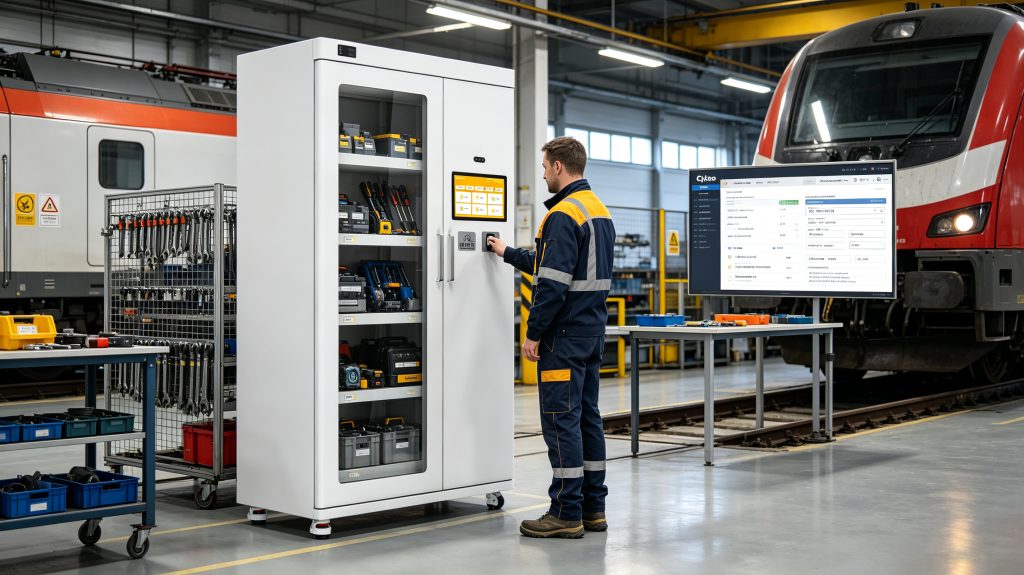 Smart RFID cabinets provide automatic tool inventory and user accountability.
Key advantages of a professional RFID tool tagging system
1. Automatic tool inventory without manual scanning
One of the biggest operational improvements is eliminating repetitive inventory work.
For example, a maintenance department managing several hundred tools may previously require employees to check every item manually. With RFID technology, inventory verification can be completed within seconds instead of hours.
Cykeo RFID intelligent tool cabinets support rapid inventory checking, helping companies perform daily inspections and periodic audits more efficiently.
2. Complete tool usage history and responsibility tracking
A tool is no longer just a physical object. It becomes a connected digital asset.
The system can record:
- Tool ID
- User identity
- Borrowing time
- Returning time
- Location information
- Abnormal events
This creates clear responsibility during maintenance operations.
In aviation and railway industries, where missing tools can create serious operational risks, this level of traceability is especially valuable.
Practical applications of tool tagging system
| Industry | Application |
|---|---|
| Railway maintenance | Track repair tools and inspection equipment |
| Aviation maintenance | Manage precision tools and calibration equipment |
| Manufacturing | Monitor production tools and shared equipment |
| Energy sector | Control field maintenance instruments |
| Construction | Reduce tool loss on large sites |
During a factory deployment evaluation, I observed technicians spending less time searching for equipment and more time performing maintenance tasks. The improvement was not caused by complicated software; it came from removing small daily interruptions.
Those small interruptions accumulate.
Why choose Cykeo RFID tool management solutions?
Cykeo focuses on RFID hardware development and industrial identification applications. Our engineering experience covers RFID readers, smart cabinets, asset tracking systems, and customized OEM solutions.
The company provides:
- RFID hardware integration support
- SDK and API development resources
- Customized system solutions
- Industrial application experience
For customers requiring secondary development, Cykeo provides software interfaces that allow integration with existing enterprise management systems.
Frequently Asked Questions About tool tagging system
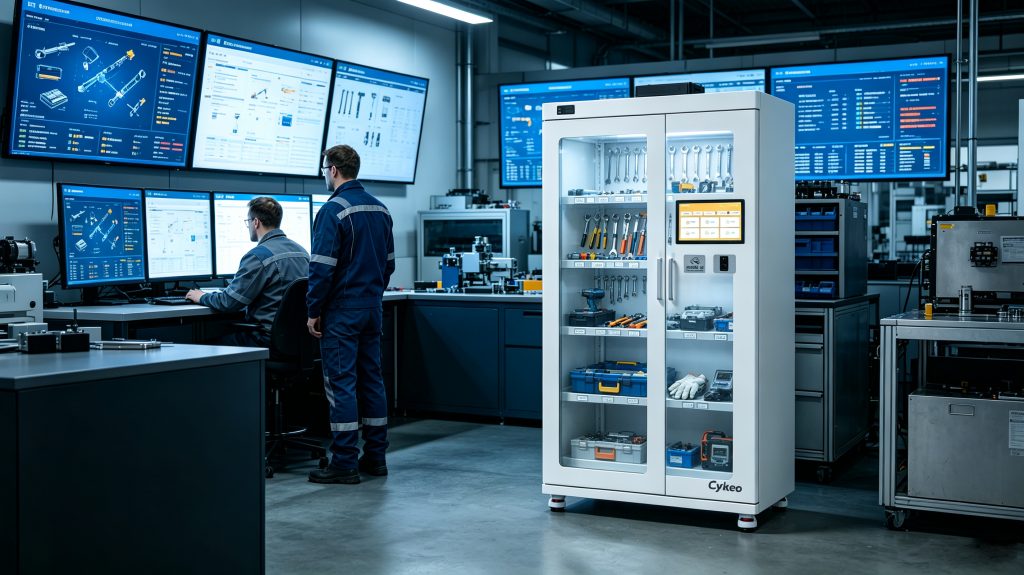
Real-time RFID data helps companies achieve smarter tool management.
FAQ: tool tagging system
What industries need a tool tagging system?
Industries with shared tools, expensive equipment, or strict traceability requirements benefit most. Typical applications include aviation, railway, manufacturing, energy, and construction.
Can RFID tool tags work on metal tools?
Yes. Industrial RFID tags designed for tool applications can be customized for metal surfaces with suitable anti-metal structures.
How does RFID improve tool security?
The system records every access event, connecting tools with authorized users. Missing tools can be identified faster through digital records and abnormal alerts.
Does Cykeo provide software development support?
Yes. Cykeo provides SDK and API resources for customers requiring integration with existing software platforms.
