What Happens If You Stop Using CPAP? Risks, Symptoms & What to Know
Author : Dr Yatin J. Patel | Published On : 17 Nov 2026
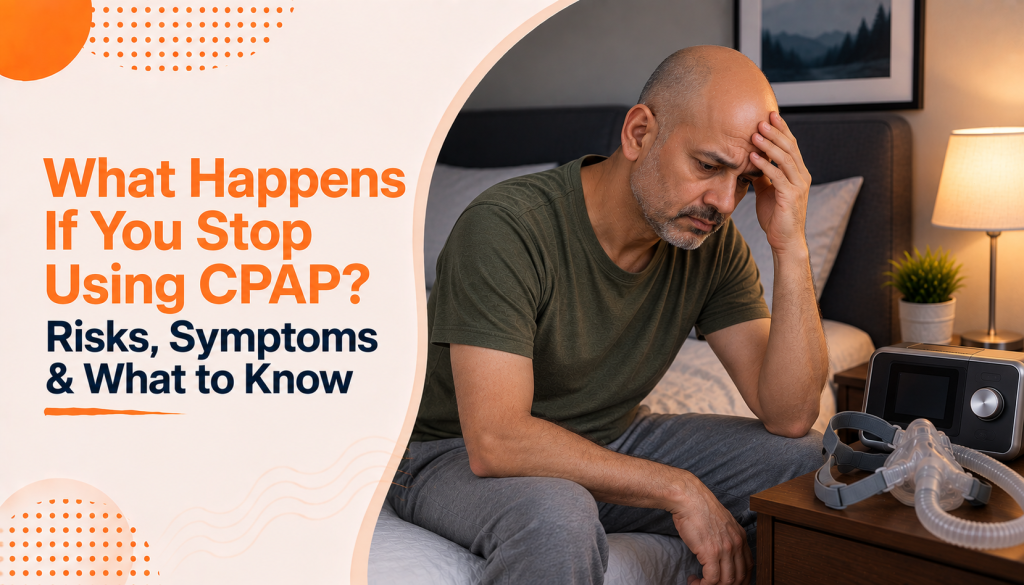
“If I feel better, can I stop using my CPAP?”
I have heard this question from patients for more than 30 years. My answer is simple: feeling better usually means your treatment is working, not that your sleep apnea has disappeared.
CPAP keeps your airway open while you sleep. If you stop using it and your sleep apnea is still present, breathing interruptions can return within just a few nights.
You may notice loud snoring, morning headaches, daytime tiredness, poor concentration, or waking up unrefreshed. Some changes, such as rising blood pressure, may happen without obvious symptoms.
I understand that using CPAP every night can sometimes feel frustrating. Mask leaks, dry mouth, discomfort, and travel difficulties are common reasons people consider stopping. But many of these problems can be addressed with help from your sleep care team.
Does that mean you must use CPAP forever? Not necessarily. Weight changes and other treatments may affect your sleep apnea, but you should never assume it has gone away simply because you feel better. A reassessment and discussion with your sleep physician can help determine the right next step.
My advice is simple: don't stop treatment on your own. Find out what is making CPAP difficult and work with your clinician to find a solution.
Want to understand the risks and what to do before stopping CPAP?
Read More About, What Happens If You Stop Using CPAP? Risks, Symptoms & What to Know:
