What Determines Eligibility for Gyno Surgery?
Author : Health Clinic | Published On : 13 Nov 2026
Gynecomastia can affect a man's confidence, physical comfort, and feelings about his body. Enlarged male breast tissue may develop because of hormonal changes, genetics, weight fluctuations, certain medical conditions, or other underlying factors. However, not every individual with enlarged breasts requires surgical treatment. Understanding the eligibility requirements for Gyno Surgery Dubai helps individuals determine whether they may benefit from a procedure and which treatment approach is appropriate for their condition. The assessment generally considers breast tissue composition, skin quality, overall health, age, and personal expectations.
Understanding the Main Factors That Determine Eligibility
Eligibility for male breast reduction depends on several physical and medical considerations. A suitable candidate generally has persistent breast enlargement that does not improve through appropriate lifestyle changes or medical management. The assessment also identifies whether the enlargement involves glandular tissue, excess fat, or a combination of both.
Presence of Enlarged Breast Tissue
Persistent enlargement of male breast tissue is one of the primary considerations for surgical eligibility. Gynecomastia develops when glandular tissue increases beneath the nipple and surrounding breast area, creating a fuller or more prominent chest appearance.
Individuals experiencing noticeable breast enlargement for an extended period may be considered for treatment. The evaluation determines whether the tissue growth is consistent with gynecomastia and whether surgical correction can provide meaningful improvement.
Difference Between Glandular Tissue and Excess Fat
The composition of enlarged breast tissue plays an important role in selecting the appropriate treatment.
-
Glandular enlargement: This involves the development of firm breast tissue beneath the nipple and may require surgical gland removal.
-
Fat accumulation: Some individuals develop a fuller chest because of excess fatty tissue, which may respond to liposuction.
-
Mixed enlargement: Certain individuals have both excess fat and glandular tissue, making a combined approach more suitable.
Identifying the underlying tissue helps establish the most appropriate surgical technique for achieving a flatter and more proportionate chest.
Stable Body Weight
Maintaining a relatively stable body weight is another important consideration. Significant weight fluctuations can affect chest volume and influence the final surgical outcome.
Individuals with excess body fat may benefit from reaching a healthier and more consistent weight before considering treatment. This allows the assessment to distinguish between fat-related chest fullness and actual glandular enlargement.
Overall Physical Health
General health is essential when determining whether someone is suitable for an elective surgical procedure. The assessment considers medical history, existing health conditions, and the body's ability to undergo surgery and recover appropriately.
A suitable candidate should generally have:
-
Overall stable physical health.
-
No uncontrolled medical conditions that make surgery unsuitable.
-
A medical history that can be safely evaluated.
-
An understanding of the procedure and its expected outcomes.
A detailed health assessment helps establish whether surgery can be considered safely.
Which Treatments Are Available for Male Breast Reduction?
There are two main surgical approaches used to address enlarged male breasts. The choice depends on the amount of fatty tissue, the presence of glandular enlargement, skin elasticity, and the overall chest appearance. Some individuals require only one technique, while others may benefit from combining both.
Liposuction for Excess Chest Fat
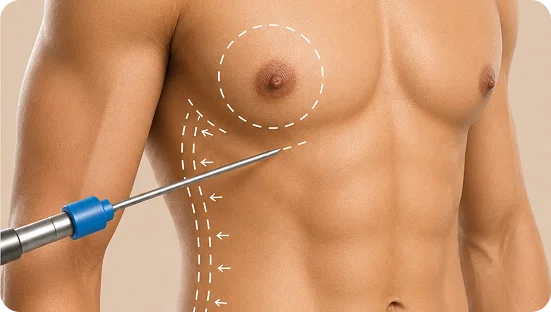
Liposuction is generally considered when chest enlargement is primarily caused by excess fatty tissue. This technique involves making small incisions through which a thin cannula is inserted to remove unwanted fat deposits.
The procedure helps reduce chest fullness and create a flatter, more defined appearance. It may be suitable for individuals who have good skin elasticity, allowing the remaining skin to adapt to the reduced chest volume.
During the assessment, the surgeon evaluates fat distribution, skin firmness, and the overall chest structure to determine whether liposuction alone can achieve the intended improvement.
Glandular Tissue Excision Surgery
Glandular tissue excision is used when enlarged breast tissue consists mainly of firm glandular structures beneath the nipple. Liposuction alone may not adequately remove this type of tissue.
The procedure involves making an incision, commonly around the lower edge of the areola, to access and remove the excess glandular tissue. This helps reduce the prominence of the breast area and create a flatter chest contour.
Individuals with persistent glandular enlargement may be considered for this technique, particularly when the tissue does not respond to appropriate medical management.
Combined Liposuction and Glandular Excision
Some individuals have both excess fatty deposits and enlarged glandular tissue. In these situations, combining liposuction with surgical excision may provide a more balanced chest contour.
Liposuction addresses the surrounding fatty tissue, while excision removes the firm glandular enlargement. The combined approach is selected according to individual anatomy rather than following one standard treatment method.
How Does Skin Elasticity Affect Surgical Eligibility?
Skin elasticity is an important factor because the chest skin needs to adapt to the reduced tissue volume after treatment. Individuals with firm, flexible skin may experience better natural skin retraction following tissue removal.
However, significant skin stretching or sagging may require additional consideration. The assessment examines:
-
Skin firmness and flexibility.
-
The amount of loose or excess skin.
-
Nipple and areola positioning.
-
Overall chest shape and tissue distribution.
When considerable loose skin is present, the surgical approach may need to address both excess tissue and skin removal to achieve a proportionate appearance.
Does Age Determine Eligibility for Gyno Surgery?
Age is another consideration, particularly because hormonal changes during puberty can temporarily cause breast enlargement. In many adolescents, this condition gradually improves as hormone levels become more balanced.
For younger individuals, medical assessment generally determines whether the enlargement is persistent and whether physical development has stabilised before surgery is considered.
Adults with long-standing gynecomastia may be suitable candidates when their physical health and other eligibility factors support treatment. There is no single age that automatically determines suitability for every individual.
Why Is Hormonal Balance Important Before Surgery?
Hormonal changes involving testosterone and estrogen can contribute to male breast enlargement. Certain medical conditions may also influence hormone levels and lead to increased glandular tissue development.
Before surgical treatment, the assessment may investigate possible hormonal causes, especially when breast enlargement has developed recently or changed noticeably.
The evaluation may include:
-
Review of hormonal and medical history.
-
Assessment of symptoms associated with hormonal changes.
-
Blood tests when clinically indicated.
-
Investigation of relevant underlying medical conditions.
Identifying the cause is important because treating an underlying condition may influence whether surgery is necessary or when it should be considered.
What Happens During the Eligibility Assessment?
The eligibility assessment provides an opportunity to understand the individual's chest structure, medical background, and treatment goals. It also helps determine which surgical technique may be appropriate.
Physical Chest Examination
The examination focuses on breast enlargement, tissue firmness, fat distribution, skin quality, and nipple positioning. These observations help identify the type and extent of gynecomastia.
Medical History Review
The individual's medical history is reviewed to identify previous conditions, hormonal concerns, medications, and other factors that may contribute to breast enlargement.
Discussion of Treatment Expectations
The assessment also considers what the individual hopes to achieve. Realistic expectations are important because the objective is to create a flatter and more proportionate chest rather than guarantee a particular appearance.
Selection of the Appropriate Technique
After reviewing the findings, the surgeon determines whether liposuction, glandular tissue excision, or a combination of both approaches may be appropriate.
Frequently Asked Questions
Can Someone With Excess Body Weight Qualify for Gyno Surgery?
Yes, individuals with excess body weight may qualify depending on their overall health and the cause of chest enlargement. However, maintaining a stable weight can help achieve more predictable chest contouring results.
Is Surgery Suitable for Long-Standing Gynecomastia?
Yes, persistent gynecomastia may be suitable for surgical treatment when the enlarged tissue remains present and other eligibility requirements are satisfied. The assessment determines whether glandular removal, liposuction, or both techniques are appropriate.
Can Someone With Hormonal Imbalances Undergo Surgery?
Individuals with hormonal imbalances may require further medical investigation before surgery. Addressing the underlying cause is important to determine whether the condition is stable and whether surgical treatment is appropriate.
Is Liposuction Enough to Treat Every Case?
No, liposuction primarily addresses excess fatty tissue. When firm glandular enlargement is present, surgical excision may be necessary to remove the unwanted tissue effectively.
Does Loose Skin Affect Eligibility?
Loose skin does not automatically prevent someone from undergoing treatment. However, significant skin laxity may require additional surgical planning to achieve a balanced chest appearance.
Can Younger Individuals Be Considered for Treatment?
Younger individuals may be assessed when breast enlargement persists beyond the expected period of pubertal development. Physical maturity, hormonal stability, and the duration of the condition are important considerations.
Conclusion
Determining suitability for male breast reduction involves understanding the underlying cause of breast enlargement, the amount of fatty and glandular tissue, skin elasticity, age, hormonal balance, and general physical health. Liposuction and glandular tissue excision are the two primary surgical techniques, and they can also be combined when both tissue types contribute to chest fullness. Gyno Surgery Dubai may be an appropriate option for individuals experiencing persistent gynecomastia who meet the relevant medical and physical requirements. A comprehensive assessment helps establish the most suitable treatment approach, supporting a flatter chest contour, improved body proportions, and greater confidence in personal appearance.
