What Can a Schneider Electric RCBO Trip Tell You?
Author : jack leo | Published On : 23 Oct 2026
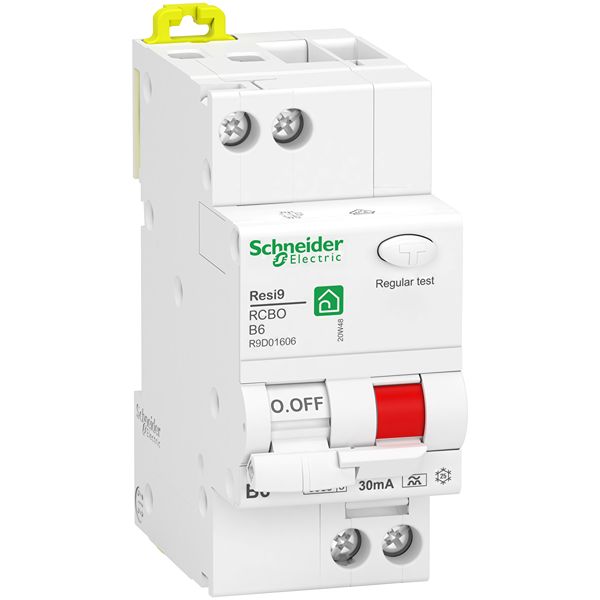
A protective device that switches off unexpectedly is sending a warning, not necessarily indicating a defective breaker. A Schneider Electric RCBO can disconnect a circuit after certain overcurrent or residual-current conditions are detected, but the reason behind a trip requires investigation. Understanding the indications and recording when an interruption occurred helps maintenance teams make better decisions without repeatedly resetting equipment.
The Schneider Electric RCBO, reference R9D01606, is a Resi9 1P+N protective device rated at 6 A with a B-curve overcurrent characteristic, Type A residual-current detection and 30 mA sensitivity. Schneider also specifies a 6 kA short-circuit breaking capacity at 230 V AC. Its separate trip indication can help qualified personnel distinguish which protection function operated.
Why Is a Trip an Important Diagnostic Clue?
A circuit interruption may result from several very different events. An overloaded line, damaged insulation or a fault in connected equipment can produce symptoms that look similar to someone who only sees the power go off. Treating every trip as a reason to replace the breaker risks overlooking a genuine electrical hazard.
An RCBO uses different protective mechanisms for excessive current and residual current. The former responds to overloads and short circuits; the latter monitors an imbalance that can indicate current escaping its intended path. Neither mechanism tells an electrician precisely where the fault occurred.
What Can the Device Indications Reveal?
Schneider describes separate flag indications for overcurrent and residual-current trips on this Resi9 product. These may help direct the initial inspection, but they are not a complete diagnostic report.
A useful incident record includes:
- The circuit identification and time of interruption.
- Equipment operating immediately before the trip.
- The device's visible indication, recorded before any reset.
- Recent electrical work, moisture exposure or load changes.
- Test results and corrective actions documented by a qualified person.
Repeated tripping demands investigation. It should never be bypassed by increasing the protective rating without checking the circuit design.
How Do the R9D01606 Ratings Affect Fault Analysis?
Its 6 A rating limits the circuit applications for which the device may be appropriate. The B curve refers to the magnetic overcurrent response, typically at three to five times rated current. It is not the same as a Type B residual-current classification.
Type A residual-current protection covers specified alternating and pulsating direct residual currents. The 30 mA figure expresses rated residual operating sensitivity, not an assurance that every type of electric shock can be prevented. Suitable protective measures depend on the complete electrical installation.
Why Must the Physical Installation Be Checked?
An electrician evaluating an existing panel should examine circuit identification, connection condition, enclosure requirements and manufacturer compatibility. The R9D01606 is 36 mm wide and designed for a DIN-rail-based mounting arrangement, but dimensions alone do not confirm interchangeability.
The profile and fixing of DIN Rails help determine how modular equipment is supported inside an enclosure. Device approval, mounting instructions and the original assembly design still take priority over a visual fit.
What Is a Sensible Response to Repeated Trips?
The safest response is to stop treating power restoration as the only goal. Identify which circuit is affected and keep unsafe equipment out of service. Untrained occupants should not remove covers, open wiring connections or perform live testing.
Qualified personnel can follow a documented fault-finding procedure, including safe isolation and appropriate electrical measurements. Their approach will depend on the installation, loads and observations, rather than assuming that the breaker has failed.
Questions Worth Recording During an Inspection
- Does the problem occur only when a particular appliance operates?
- Is the interruption linked to rain, cleaning or condensation?
- Has any wiring or connected equipment recently changed?
- Are multiple circuits affected or only one identified circuit?
- Have previous test results or maintenance records shown a trend?
These questions organise the evidence. They do not replace insulation testing, circuit verification or an electrician's assessment of the installation.
What Else Belongs in a Coordinated Protection Plan?
An RCBO is designed for specified current and residual-current faults, not every electrical disturbance. Fast transient overvoltages caused by switching events or lightning-related activity require a different assessment.
Where the risk evaluation calls for it, suitable Industrial Surge Protection can form part of a coordinated installation design. Surge protective devices complement appropriate overcurrent and residual-current measures; they do not perform the RCBO's job.
Why Does Product Status Matter When Replacing a Device?
Schneider Electric lists R9D01606 as discontinued on 30 July 2021, with standard service ending on 31 December 2021. An existing installation may still contain a functioning unit, but its lifecycle status should be considered when planning refurbishment or sourcing spare parts.
A replacement needs more than a matching amperage. Verify electrical characteristics, residual-current type, breaking capacity, physical fit and compatibility with the approved board assembly. A currently supported equivalent should be identified using manufacturer guidance, not appearance alone.
How Can Maintenance Records Reduce Future Disruption?
A record of protective-device references, circuit labels, test dates and previous faults helps electricians recognise recurring issues. It also reduces uncertainty when the original installer is unavailable or the building layout has changed.
Maintenance plans should include authorised inspection and the manufacturer's prescribed testing. A test button checks an aspect of device operation, but it does not prove the entire circuit is safe or substitute for appropriate instrument tests.
Final Thoughts
A Schneider Electric RCBO trip is valuable information when it leads to careful diagnosis rather than a quick reset. The R9D01606 illustrates why fault indications, correct ratings and product lifecycle details must be interpreted together. During authorised maintenance, appropriately compatible Padlocking & Locking Accessories can support a formal isolation process, but locking a device alone never replaces proving the circuit dead and following site safety procedures.
