What Are the Key Safety Features to Look for in a Construction Hoist?
Author : HitokaCece HitokaCece | Published On : 15 Jul 2026
Introduction
Over the years in the crane and hoist industry, I have seen too many construction sites compromise on hoist safety features in the pursuit of lower costs. The consequences can be catastrophic—dropped loads, equipment damage, and, worst of all, worker injuries. Safety is not just a regulatory requirement; it is a moral obligation. Construction hoists operate in some of the most demanding conditions in the lifting industry—outdoor environments, extreme weather, and busy job sites with multiple trades working simultaneously. The safety features of a construction hoist are not optional extras; they are essential components that protect lives and livelihoods. Having worked with construction managers and safety officers across the industry, I have identified the key safety features that every construction hoist should have. In this article, I want to share what I have learned.
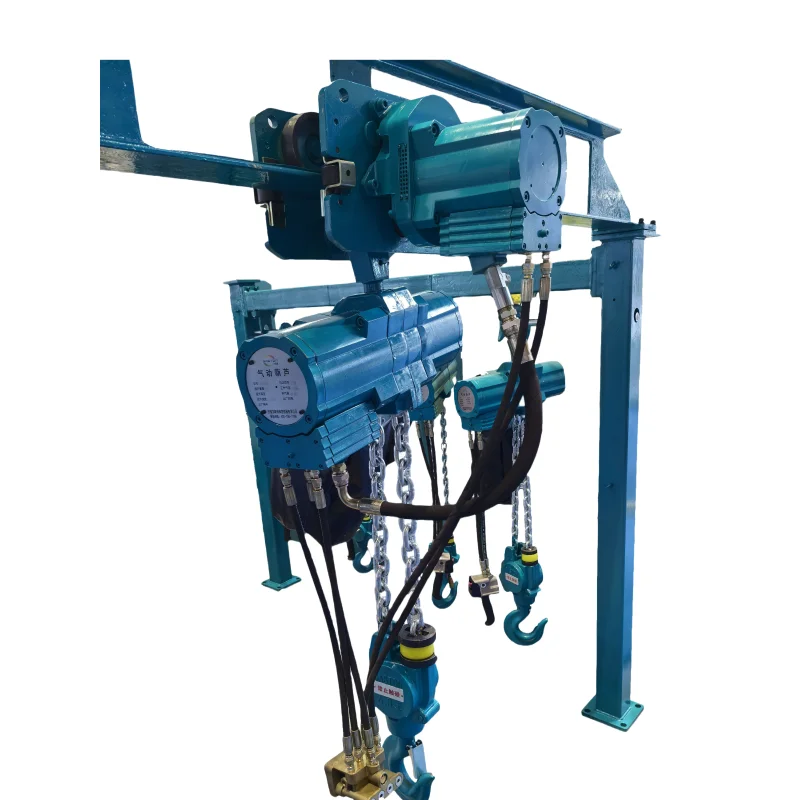
Construction Hoist Overload Protection and Load Monitoring
The most critical safety feature in any construction hoist is overload protection. Overloading a hoist is one of the leading causes of equipment failure and accidents in construction. A hoist that is overloaded can drop its load, snap its cables, or collapse its structure. The best construction hoists are equipped with load moment indicators and overload protection systems that prevent the hoist from lifting loads that exceed its rated capacity. These systems monitor the load weight in real time and automatically stop lifting operations if the load approaches the maximum limit. The intelligent servo electric hoist, for example, is standard-configured with a soft-limit function that can easily achieve fixed-point upper limit, lower limit, downward deceleration, upward deceleration, and upward speed recovery. The limit points can be quickly set and cleared, effectively assisting in achieving safe production auxiliary control. When evaluating construction hoists, look for multiple layers of overload protection. The hoist should also have power-off protection technology that brakes and locks the load in place in case of a power failure. I have worked with construction sites that experienced near-miss incidents because their hoists lacked adequate overload protection. Investing in hoists with robust load monitoring and overload protection is not just about compliance—it is about preventing accidents before they happen.
Construction Hoist Braking Systems and Emergency Stops
Braking systems are the second critical safety feature in construction hoists. A construction hoist must be able to stop quickly and reliably in normal operation and, more importantly, in emergency situations. The best construction hoists are equipped with multiple independent braking systems. An industrial electric chain hoist, for example, is usually equipped with two independent braking systems: an electromagnetic brake and a mechanical brake. The electromagnetic brake has a fast response and can provide forward braking force, while the use of non-asbestos brake linings extends the maintenance cycle. The mechanical brake is very reliable and coordinates with the electromagnetic brake, enabling the machine to stop rotating at any time, greatly reducing the possibility of brake failure and enhancing braking safety. Emergency stop functions are equally important. The hoist should have a clearly marked emergency stop button that immediately stops all hoist operations. The control handle should also be equipped with safety features such as anti-misoperation functions. For example, the intelligent servo electric hoist's control handle is equipped with a photoelectric sensor that restricts operation unless the operator activates it. I have worked with construction sites that experienced hoist runaway incidents because they had single brake systems that failed. Multiple independent braking systems are not a luxury—they are a necessity for safe construction hoist operations.
Construction Hoist Operator Safety and Remote Control
Operator safety features are often overlooked but are essential for protecting the people who operate construction hoists. The operating handle of a construction hoist should be controlled by low voltage—typically 24V to 36V—which meets mandatory safety requirements and protects operators from electric shock. Remote control capabilities are another important safety feature. Some electric winches and hoists support remote-control functions, allowing operation from a safe distance. This is very practical in dangerous environments or hard-to-access workplaces, improving work safety and convenience. The hoist should also have clear, intuitive controls that reduce the risk of operator error. The operation interface should be simple and clear, with a reasonable button layout. Ergonomic features, such as the intelligent servo electric hoist's user-oriented programmable interface, allow operators to set parameters that best suit their working style, reducing fatigue and improving safety. Anti-rebound technology is another critical safety feature. This technology ensures that the device does not shift or rebound when the load weight suddenly changes, reducing the potential occurrence of serious injury accidents. I have worked with construction sites that invested in hoists with advanced operator safety features and saw their accident rates drop significantly. In construction, where the environment is unpredictable and the stakes are high, operator safety features are not optional—they are essential.
Conclusion
Safety is the most important consideration in construction hoist selection. Overload protection systems prevent dangerous overloading, multiple independent braking systems ensure reliable stopping, and operator safety features protect the people who operate the equipment. By prioritizing these key safety features in your construction hoist selection, you can protect your workers, your equipment, and your project's success. In an industry where safety incidents can have devastating consequences, investing in construction hoists with comprehensive safety features is not just a best practice—it is a moral and business imperative.
