What Are the Key Ingredients in a Scratch Remover for Cars and How Do They Work?
Author : James Luther | Published On : 04 May 2026
The name Scratch Remover for Cars itself suggests that it must be a product that works like magic on cars. Just apply, and voila! The vehicle becomes new as if it just came out of the factory. However, there is more to that than meets the eye. There is science involved here, as well as some engineering know-how.
It is common knowledge that all scratches are alike. It isn’t so. While some scratches exist only on the surface layer, other scratches penetrate deep into the layers beneath. That is where the contents of the scratch remover become critical. They determine whether the solution is going to solve the problem or cover it up temporarily.
Let us get down to basics. No fluff. Just what’s actually going on.
What a Scratch Remover Really Does
Before getting into ingredients, you’ve got to understand the job. A scratch remover doesn’t “fill” scratches in the way people imagine. In most cases, no. It typically relies on even the surface of the scratch mark to reduce visibility.
It’s like the process of sanding the unevenness of a board of wood. You aren’t filling up the groove but smoothing out its surface area to make it unnoticeable by the naked eye. It follows the same principle, just on an even finer scale.
The explanation behind the existence of several scratch removal products lies in their intensity. Some of them are formulated for removing deep scratches while others are very light and can be considered as polishers. The composition is the key determinant of this property.
Abrasives: The Actual Doers
Abrasives are the essence of effective scratch removal products. Their role consists of physically removing material from the affected surface.
It should be noted that this process isn’t as scary as it sounds. These are extremely fine particles, usually created using aluminum oxide or similar substances. So at first, they cut a bit stronger. Then they refine themselves into a smoother polish.
That “diminishing abrasive” thing is why good products feel smoother the longer you buff. Cheap ones? They stay rough, and yeah, they can mess up your paint if you’re not careful.
What’s happening is simple: the abrasive shaves down the edges around the scratch. Not deep. Just enough to blend it. Overdo it though, and you’ll thin your clear coat. That’s the risk people don’t always think about.

Polishing Agents: The Finishing Touch
After abrasives do their job, polishing agents come in to refine the surface. These are softer compounds that smooth out micro-scratches left behind during the initial correction.
Without this step, your car would look hazy. Like, technically the scratch is gone, but now the area looks dull. Not great.
Polishing agents bring back that gloss. They reflect light more evenly, which is what gives that clean, shiny finish. Some formulas combine abrasives and polish in one, others separate them. Depends on how advanced the product is.
You’ll notice better products feel almost creamy. That’s usually a sign the polish is doing its thing alongside the abrasives.
Fillers: The Illusion Makers
Now this is where things get a bit controversial. Fillers don’t actually remove scratches. They hide them. Temporarily.
These are usually oils, silicones, or waxy substances that settle into the scratch and make it less visible by matching the surrounding surface. It’s kind of like using makeup to cover a scar. Looks better, but it’s still there underneath.
Some people love fillers because they give instant results. Others hate them because the effect fades after a few washes.
Truth is, they’re not useless. They’re just misunderstood. In a decent Scratch Remover for Cars, fillers are often used alongside abrasives. So you get both correction and enhancement. But if a product relies only on fillers, yeah… it’s more of a short-term fix.
Lubricants: Keeping Things Safe
This part gets overlooked a lot. Lubricants are what allow the product to glide over the paint without causing extra damage.
While you are applying pressure to rub the material onto the surface of the automobile, the process of friction occurs. Too much of it leads to scratches, or worse yet, to burning the paint if you are working with a machine.
Lubricants prevent any damage from happening by making everything slippery and smooth. This means that this type of chemical is either oil-based or aqueous and determines how the paste flows on the surface.
Imagine that you have applied a scratch removal product, which was dry and hard to apply immediately; it’s a bad thing. Low-level lubrication may become dangerous.
Solvents: Getting Rid of Impurities
Solvents act as dissolving agents when applied to oxidized layers or dirt particles. This way, they ensure that the surface is prepared properly before the use of abrasives.
Think of them as the prep crew. They clean, soften, and loosen up contaminants sitting on the paint. Without this step, you’d just be grinding dirt into your car. Not ideal.
Most modern formulas use mild solvents, nothing too harsh. Still, that chemical smell you sometimes notice? Yeah, that’s part of it.
Protective Additives: More Than Scratch Repair
Many new scratch remover products have protective additives. This could mean waxes, sealants, or ceramic-based substances.
Once you’ve restored the scratch, you don’t want to expose the surface again. The protective additive creates a film on the paint surface, which offers protection from UV radiation and minor scratching.
This isn’t long-term protection, but it gives you some breathing space and improves the longevity of the paint job.
Some products lean heavily into this feature, almost acting like a hybrid between a scratch remover and a wax. Handy, especially if you don’t want to do multiple steps.
How All These Ingredients Work Together
Here’s the thing. No single ingredient does all the work. It’s the combination that matters.
Abrasives handle the correction. Polishing agents refine the finish. Fillers enhance the look. Lubricants keep everything safe. Solvents prep the surface. Protective additives seal the deal.
When it’s balanced right, you get a product that actually improves your car’s appearance, not just masks the problem.
But when it’s off? You’ll notice. Either it doesn’t remove the scratch, or it leaves behind haze, or worse, creates new marks.
That’s why technique matters too. Even the best formula won’t help if you’re rushing through the process or using too much pressure.
Not All Scratches Can Be Fixed
This part needs to be said. Scratch removers have limits.
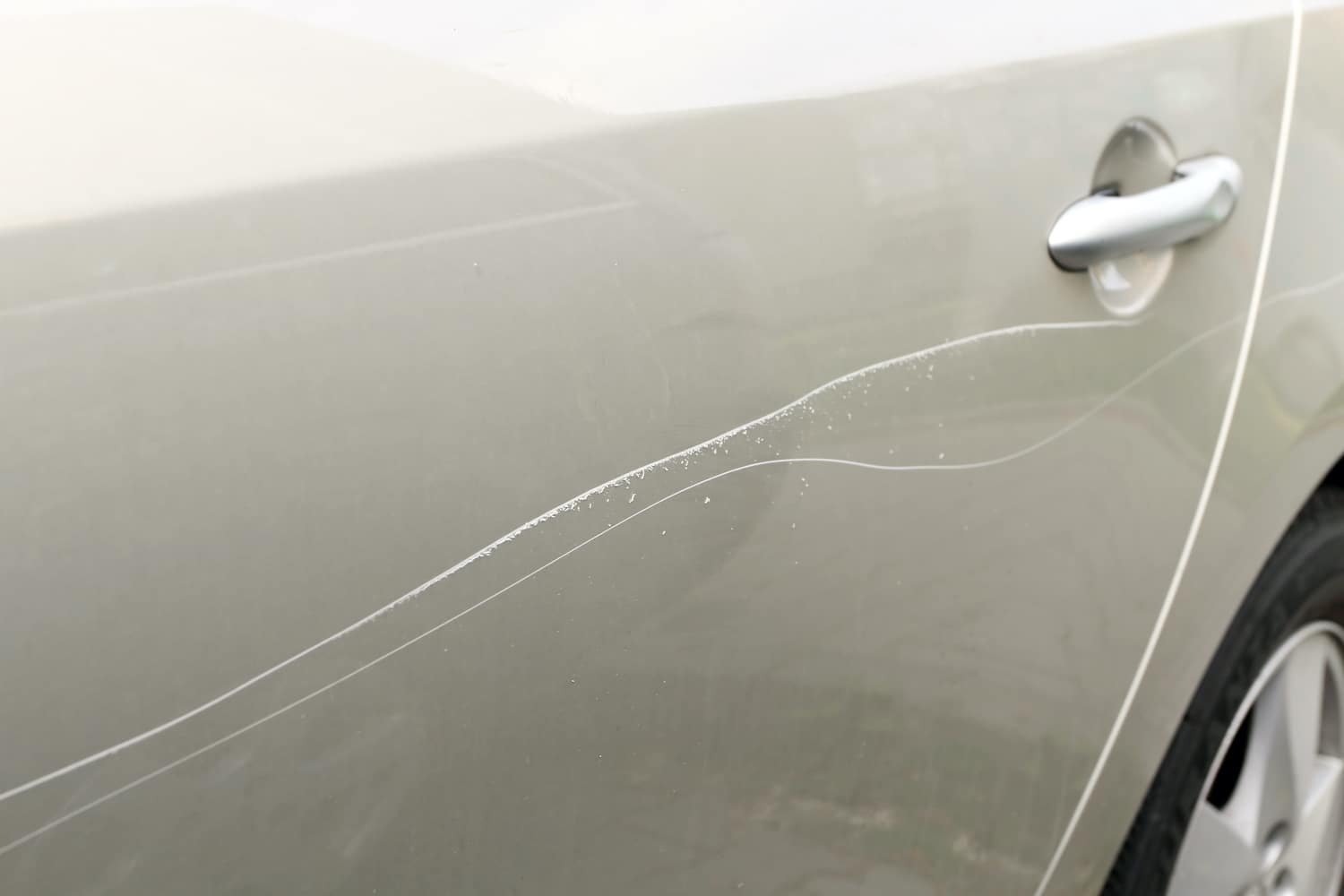
If the scratch has gone through the clear coat and into the paint or primer, no over-the-counter product is going to fully fix it. You might reduce its appearance, sure. But it won’t disappear completely.
That’s where they get their disappointment. Because they hope to achieve miracles through a solution, but the problem is much deeper than that.
For minor scratches, swirls, and other superficial damages, a quality scratch remover actually does wonders. Just find a product that’s suited for your issue.
Real-Life Application: How it Works
You put it on, rub it into the surface using a microfiber towel or applicator pad, let it work its magic for a while, then remove it. Easy enough.
But the magic happens in that middle step. The rubbing. That’s where the abrasives break down, the polish smooths things out, and the fillers settle in.
Go too fast, and nothing really happens. Go too aggressive, and you risk damage.
There’s a rhythm to it. A bit of patience. And yeah, sometimes you need to go over the same spot more than once.
That’s to be expected.
Why Some Products Feel Better Than Others
Have you ever noticed that some products for removing scratches seem smoother than others? Well, that’s because of the formulation of those products.
Better products have a good formulation. Their abrasives are finer, their lubricants work well, and their finish is impeccable.
Lower quality products tend to compromise on formulation. Either too abrasive, not enough lubrication, or overloaded with fillers to fake results.
You don’t always need the most expensive option. But going for the absolute cheapest? Usually not worth it.
Conclusion: What You’re Really Paying For
At the end of the day, a scratch remover isn’t just a random mix of chemicals. It’s a carefully designed formula where each ingredient has a role.
Understanding those roles makes a big difference. You stop expecting miracles and start seeing real results. You choose better products. You use them properly.
And honestly, that’s what separates a quick fix from a proper repair.
A good Scratch Remover doesn’t just hide problems. It improves the surface in a way that actually lasts—at least for what it’s designed to handle
