What Are the Critical Features of a Safety Harness for Fall Protection?
Author : HitokaCece HitokaCece | Published On : 12 Aug 2026
Introduction
Over the years in the PPE manufacturing industry, I have seen the devastating consequences of falls from height—injuries that could have been prevented with the right safety harness. Falls are one of the leading causes of workplace fatalities in construction and general industry, and a properly selected and worn safety harness is the last line of defense. The right safety harness distributes fall forces across the body, prevents suspension trauma, and gives workers the confidence to perform their tasks safely at height. Having worked with safety managers and construction supervisors across multiple industries, I have learned what separates a reliable safety harness from an inadequate one. In this article, I want to share the critical features of a safety harness for fall protection.
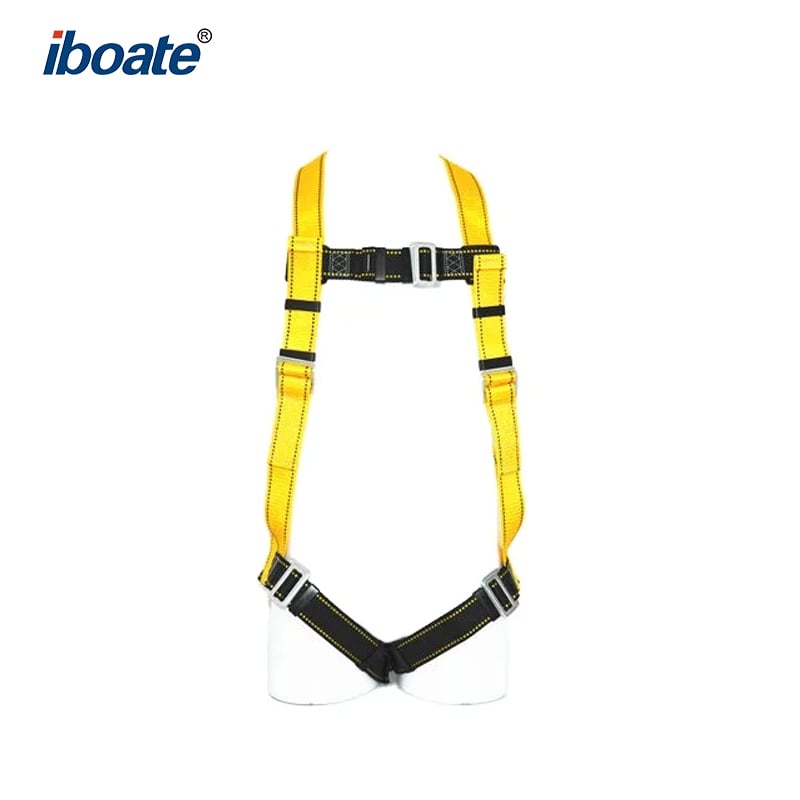
Safety Harness Full Body Design and Fall Arrest
The most fundamental requirement for a safety harness is that it must be a full-body design. Full-body harnesses are the only type of harness approved for fall arrest applications. They distribute fall arrest forces across the chest, shoulders, pelvis, and thighs, reducing the risk of injury during a fall. The harness should include padding in critical areas to absorb impact forces and improve comfort during suspension. The American National Standards Institute (ANSI) standard ANSI Z359.11 regulates full-body harnesses, scrutinizing structural integrity, performance dynamics, body support geometry, dorsal attachments, labeling, and user guidelines [10†L38-L40]. OSHA requires fall protection at 6 feet or more above a lower level on construction sites under 29 CFR 1926.501 [10†L47-L48]. In general industry, workers on a walking-working surface 4 feet or more above a lower level must be protected [10†L19-L21]. A full-body harness that meets ANSI Z359 and OSHA standards is non-negotiable for any worker exposed to fall hazards.
Safety Harness Weight Capacity and Sizing
The second critical factor in safety harness selection is weight capacity and proper sizing. ANSI Z359.11 states that a full-body harness should be able to support users within the capacity range of 130 to 310 pounds [10†L7-L9]. Some harnesses may be rated to a larger capacity, but users must always stay within the manufacturer's specified weight range—including the weight of any tools or equipment carried. Proper sizing is equally important. A harness that is too large will not provide adequate protection; a harness that is too small will be uncomfortable and may not function correctly in a fall. Look for harnesses with multiple adjustment points—shoulder straps, leg straps, and chest straps—that allow workers to achieve a secure, comfortable fit. The harness should be adjusted so that the dorsal D-ring is positioned between the shoulder blades, ensuring proper load distribution in the event of a fall. I have worked with safety managers who overlooked weight capacity and sizing, only to discover that their harnesses did not fit workers properly—compromising both safety and compliance.
Safety Harness Fall Indicators and Inspection Features
The third critical feature of a safety harness is fall indicators and inspection features that enable proper maintenance and retirement. A safety harness that has been subjected to a fall must be immediately removed from service and replaced—even if there is no visible damage. Some harnesses feature integrated fall indicators that change color or deploy when the harness has been subjected to fall forces, making it easy to identify harnesses that need to be retired. Regular inspection is essential for harness longevity and safety. OSHA and ANSI Z359 guidance require that harnesses be inspected before each use and given a documented inspection by a competent person at least annually [10†L17-L18]. Workers should look for signs of wear, fraying, cuts, burns, chemical damage, and deformation of buckles or D-rings. Harnesses should be cleaned according to manufacturer instructions and stored in a cool, dry place away from direct sunlight and chemicals. I have worked with safety managers who implemented regular harness inspection programs and prevented failures that could have led to serious injuries.
Conclusion
Critical features of a safety harness for fall protection include full-body design that distributes fall arrest forces across the body and meets ANSI Z359 and OSHA standards, proper weight capacity and sizing that fits workers within the 130-310 pound range with secure, adjustable fit, and fall indicators and inspection features that enable proper maintenance and timely retirement of worn or used harnesses. For safety managers, construction supervisors, and procurement professionals, the right safety harness is not just equipment—it is the last line of defense against one of the most deadly workplace hazards.
