What are the Best Wall Panels for Hog Barns?
Author : Duramax PVC | Published On : 05 Aug 2026
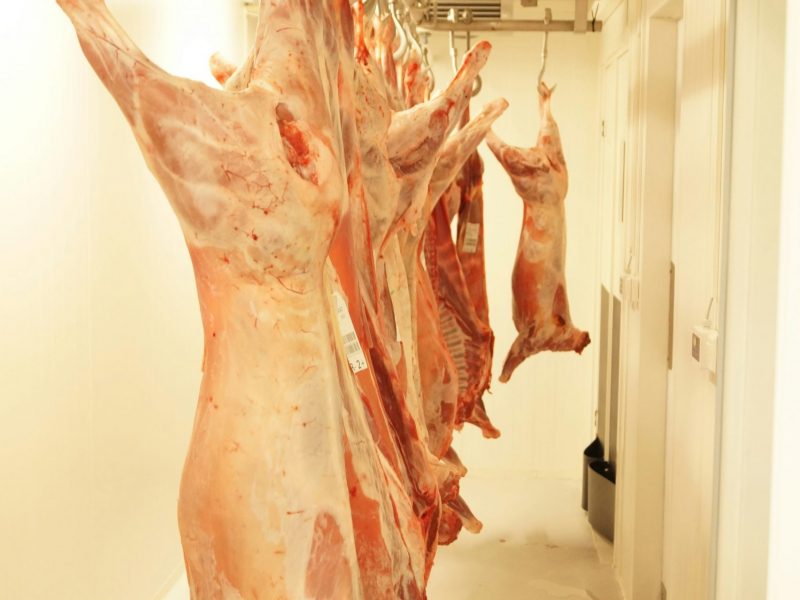
The confined space of a hog barn is constantly exposed to moisture and pig activity, which degrade building materials, compromise air quality, and pose risks to herd health. PVC hog barn wall panels are the ideal material for withstanding harsh environmental extremes in hog barns. PVC panels are moisture-proof and interlock for a seamless finish, eliminating the risk of mold buildup. Compared to FRP panels, they offer better durability and a longer shelf life, reducing operational downtime for maintenance and repairs.
What are the Common Challenges in a Hog Barn?
The most common challenges that hog barn owners face include:
-
Aggressive environment: Ammonia and manure gases corrode metal structures and rot wood, while the constant moisture from animal waste can degrade FRP panels. High-pressure washing and impacts from active animals can also damage traditional paneling in hog barns.
-
Ventilation and climate systems: The poorly built interior walls can damage the mechanical ventilation systems in the hog barn. Wall dust can accumulate, reducing airflow and causing mechanical failure and temperature swings that lead to cold spots. It could also carry airborne pathogens that could cause severe respiratory issues in the animals.
-
Biological hazards: Another challenge in a hog barn is maintaining the air quality. The manure pits release toxic gases such as hydrogen sulfide, carbon dioxide, and ammonia. These trapped gases can lead to explosive limits, posing serious safety hazards.
PVC vs Drywall Vs FRP Vs Metal: Ideal Wall Panels for Hog Barns
Factors such as cleaning, moisture resistance, hygiene, and durability play a crucial role in determining the ideal solution for hog barns. Find out how the available options compare:
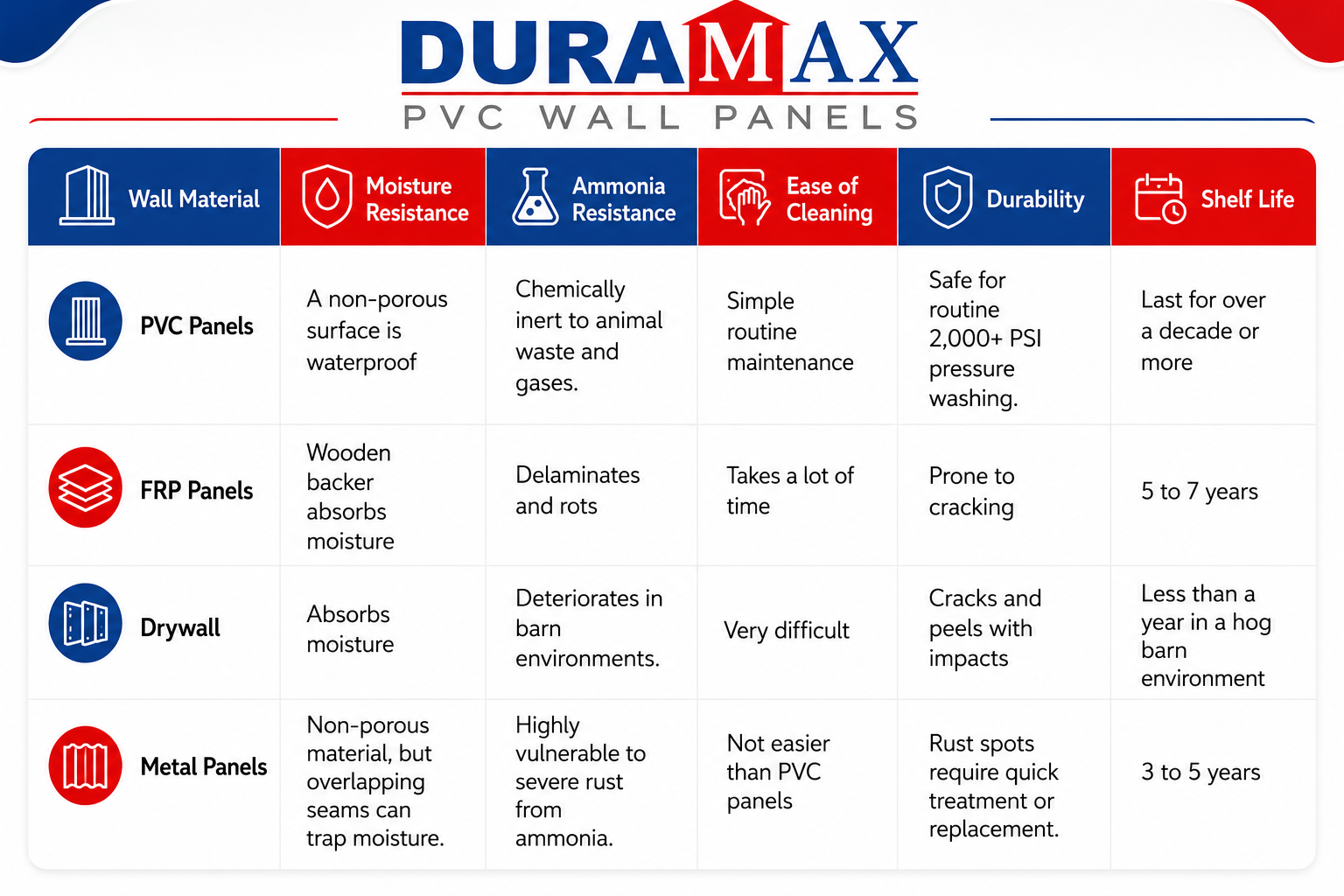
The comparison clearly shows that PVC panels outshine other wall paneling solutions in the high-humidity, biologically challenging, and aggressive environment of hog barns. PVC hog barn wall panels excel because of their chemical inertness, corrosion resistance, and non-porous surface. Metal panels and FRP panels perform satisfactorily, but their ongoing maintenance and repairs lead to increased downtime and expenses. Drywall, on the other hand, does not stand a chance in hog barn facilities due to its fragile construction. Although PVC has a higher upfront material cost than drywall or metal, it wins aggressively on total cost of ownership and lifespan.
Critical Features to Consider For Buying Wall Panels for Swine Facilities
If you are looking for a wall paneling solution for your hog barn, I would suggest looking for these features to ensure a low-maintenance, long-lasting solution.
-
Structural durability: Panels need to feature a watertight finish to prevent water and bacteria from becoming trapped behind the walls. They also need to be sturdy enough to withstand daily wear and tear without damage.
-
Hygiene and safety assurance: In addition to resisting ammonia and chemicals, the panels must help maintain a hygienic environment by ensuring ease of cleaning, a non-absorbent surface, and fire resistance.
-
Biosecurity: Hog barn wall panels must comply with hygiene requirements and feature a reflective surface to maximize light distribution.
How Do PVC Panels Fit into the Requirements of Swine Facilities?
Non-porous and seamless surface
PVC panels feature a non-porous and seamless surface that prevents moisture from seeping in. This eliminates the risk of dampness, rot, and mold formation. The non-absorbent surface of PVC panels remains unaffected by ammonia and chemical exposure.
Interlocking design
PVC panels interlock using the tongue-and-groove mechanism for a watertight finish that prevents mold and mildew buildup. The smooth finish further makes cleaning and sanitization easy with a normal wipe-down or pressure wash.
Inner webbed truss design
PVC panels are ½” thick with a unique inner webbed truss design that makes them durable and impact-resistant. The panels do not dent, crack, or peel, and they do not require regular upkeep or repairs.
Inspection ready
PVC panels meet the stringent hygiene and safety requirements. They are CFIA- and FDA-compliant and Class-1 fire-resistant, ensuring a safe environment for the animals and occupants.
Common Mistakes that Hog Barn Owners Make
Over my 16 years of experience, I have come across barn owners who make some terrible mistakes during construction that lead to expensive repairs and upkeep.
-
Prioritize initial investment over the overall lifespan: Many barn owners choose drywall simply because it is cheaper, without considering the long-term costs. PVC panels are cost-effective in the long run.
-
Ignore hygiene requirements: Investing in textured or matte paneling solutions just to save money creates microscopic gaps where bacteria and mold can thrive. Some barn owners also forget to consider the washdown and hygiene compliance.
-
Disregarding operational downtime: FRP and drywall lead to more downtime due to complicated, time-consuming installation. They are also high-maintenance and require frequent repairs that lead to closures.
Build a Cleaner and Long-Lasting Hog Barn With Duramax PVC Panels
Ready to invest in the best hog barn wall panels? Duramax PVC panels are long-lasting and backed by a limited lifetime warranty. Available at factory-direct prices, these panels perform well in the aggressive hog barn environment. Request a free consultation with our experts or ask for a free quote today.
