What Are the Benefits of a 3-in-1 Water Bottle Filling Machine?
Author : HitokaCece HitokaCece | Published On : 13 Aug 2026
Introduction
If there is one innovation that has transformed the bottled water industry, it is the 3-in-1 water bottle filling machine. I have seen plants where separate rinsing, filling, and capping machines required extensive conveyor systems and large floor areas. I have also seen plants where a 3-in-1 monoblock machine delivered the same output in half the space with fewer operators and less maintenance. The 3-in-1 water bottle filling machine integrates rinsing, filling, and capping into a single rotary unit, offering compelling advantages in efficiency, hygiene, and cost-effectiveness. Let me explain the benefits.
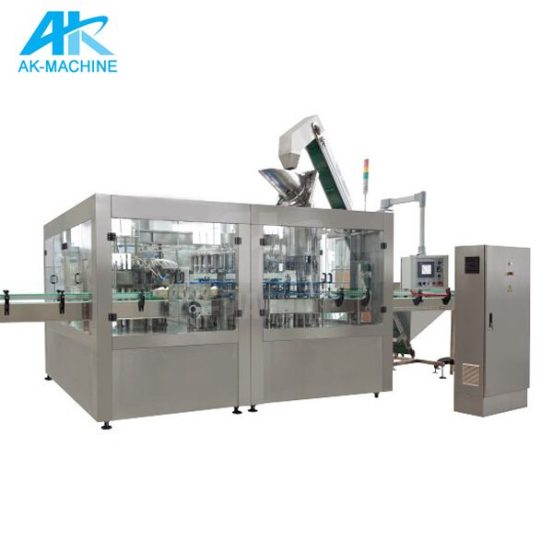
Space Savings with 3-in-1 Water Bottle Filling Machines
The most obvious benefit of a 3-in-1 water bottle filling machine is the reduction in floor space required. Traditional lines with separate rinsing, filling, and capping machines require extensive conveyor systems to transfer bottles between stations, consuming significant floor space. The monoblock design eliminates these conveyors by integrating all three functions into a single rotary unit. This compact footprint allows producers to achieve higher output in smaller facilities, reducing building costs and making more efficient use of available space. For producers with limited floor space or those looking to maximize production capacity, the 3-in-1 water bottle filling machine is an ideal solution.
Contamination Reduction with 3-in-1 Water Bottle Filling Machines
The 3-in-1 water bottle filling machine significantly reduces the risk of contamination. In traditional lines, bottles are exposed to the environment as they travel between separate machines on open conveyors, creating opportunities for dust and microbial contamination. The monoblock design eliminates these open transfers—bottles move directly from rinsing to filling to capping within the enclosed machine. This closed-system approach isolates the wet area and prevents contaminants from entering empty bottles before they reach the filling zone. For producers who prioritize product safety and shelf life, the contamination reduction offered by a 3-in-1 water bottle filling machine is a significant advantage.
Operational Efficiency of 3-in-1 Water Bottle Filling Machines
The 3-in-1 water bottle filling machine delivers operational efficiency through synchronized timing and simplified maintenance. All three functions—rinsing, filling, and capping—are driven by a single rotary mechanism, ensuring perfect synchronization. This eliminates the timing issues that can occur when separate machines are connected by conveyors. Maintenance is simplified because there are fewer machines to service and fewer spare parts to stock. Changeovers between bottle sizes are faster because all three sections adjust together. The 3-in-1 water bottle filling machine also requires fewer operators than separate machines, reducing labor costs. For producers seeking to maximize efficiency and minimize operating costs, the 3-in-1 design delivers clear advantages.
Conclusion
The 3-in-1 water bottle filling machine offers significant benefits: space savings through compact monoblock design, contamination reduction through closed-system operation, and operational efficiency through synchronized timing and simplified maintenance. By integrating rinsing, filling, and capping into a single unit, producers can achieve higher output in less space, with better product safety and lower operating costs. For modern bottled water production, the 3-in-1 water bottle filling machine is the clear choice.
