What advantages does special glass have over ordinary glass for industrial use?
Author : HitokaCece HitokaCece | Published On : 08 Jun 2026
Glass is a common material widely used in construction, daily necessities and industrial production. Ordinary glass can only meet simple using demands, while industrial production puts forward strict requirements on material temperature resistance, light transmittance and chemical stability. Special glass is developed to adapt to industrial extreme conditions. Understanding its performance gaps with ordinary glass helps industrial buyers make rational material selection decisions.
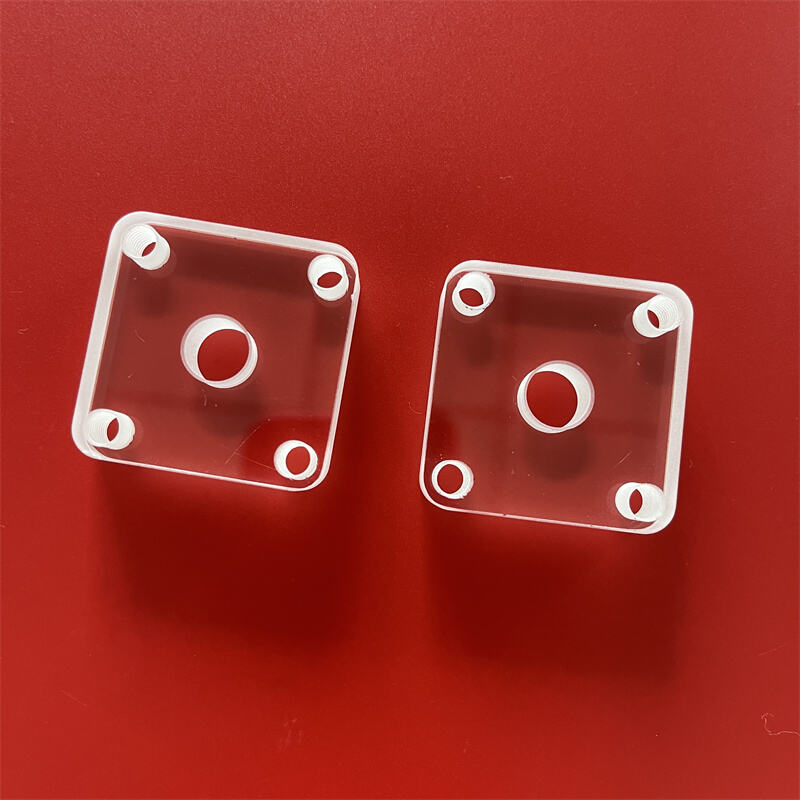
The most obvious difference between special glass and ordinary glass lies in high temperature resistance. Ordinary glass will soften, deform or even crack when exposed to high temperature, so it cannot be used in thermal production equipment. Industrial special glass represented by quartz glass has excellent high temperature resistance and can work stably under long term high temperature conditions. It will not produce harmful substances or change structural properties during heating. In laboratory instruments, high temperature observation windows and thermal reaction containers, special glass becomes the only feasible choice. Its strong thermal stability also means it can withstand instantaneous temperature changes, avoiding cracking caused by cold and hot alternation, which greatly improves the safety of industrial equipment operation.
Special glass has outstanding optical performance that ordinary glass cannot match. High purity special glass maintains high transmittance for specific ultraviolet rays, which is essential for optical testing, experimental analysis and special photoelectric equipment. The stable optical performance will not decay after long term use, ensuring the accuracy of experimental data and equipment operation. In terms of chemical properties, special glass features strong acid and alkali resistance. It will not react with chemical reagents, so it is widely used as experimental utensils and chemical pipeline observation windows. Ordinary glass is easy to be corroded by chemical liquids and cannot adapt to complex chemical working environments. These properties make special glass irreplaceable in laboratories and chemical industries.
Industrial production requires glass products of different shapes, sizes and styles, and special glass supports diversified deep processing and customization. Professional processing technology can produce special glass into test tubes, cuvettes, plates and special shaped parts according to industrial demands. Whether it is tiny precision glass parts for testing instruments or large sized glass plates for equipment windows, the processing standards can be fully met. The production process strictly controls material purity to guarantee consistent performance of finished products. Different from ordinary glass which is mainly limited to fixed specifications, customized special glass can be perfectly integrated into various industrial equipment and production lines. It provides targeted material solutions for special working links in multiple industries.
