Water Scarcity Macro-Economic Threat: Resilience Planning for 2030s
Author : Alex Turner | Published On : 01 Oct 2026
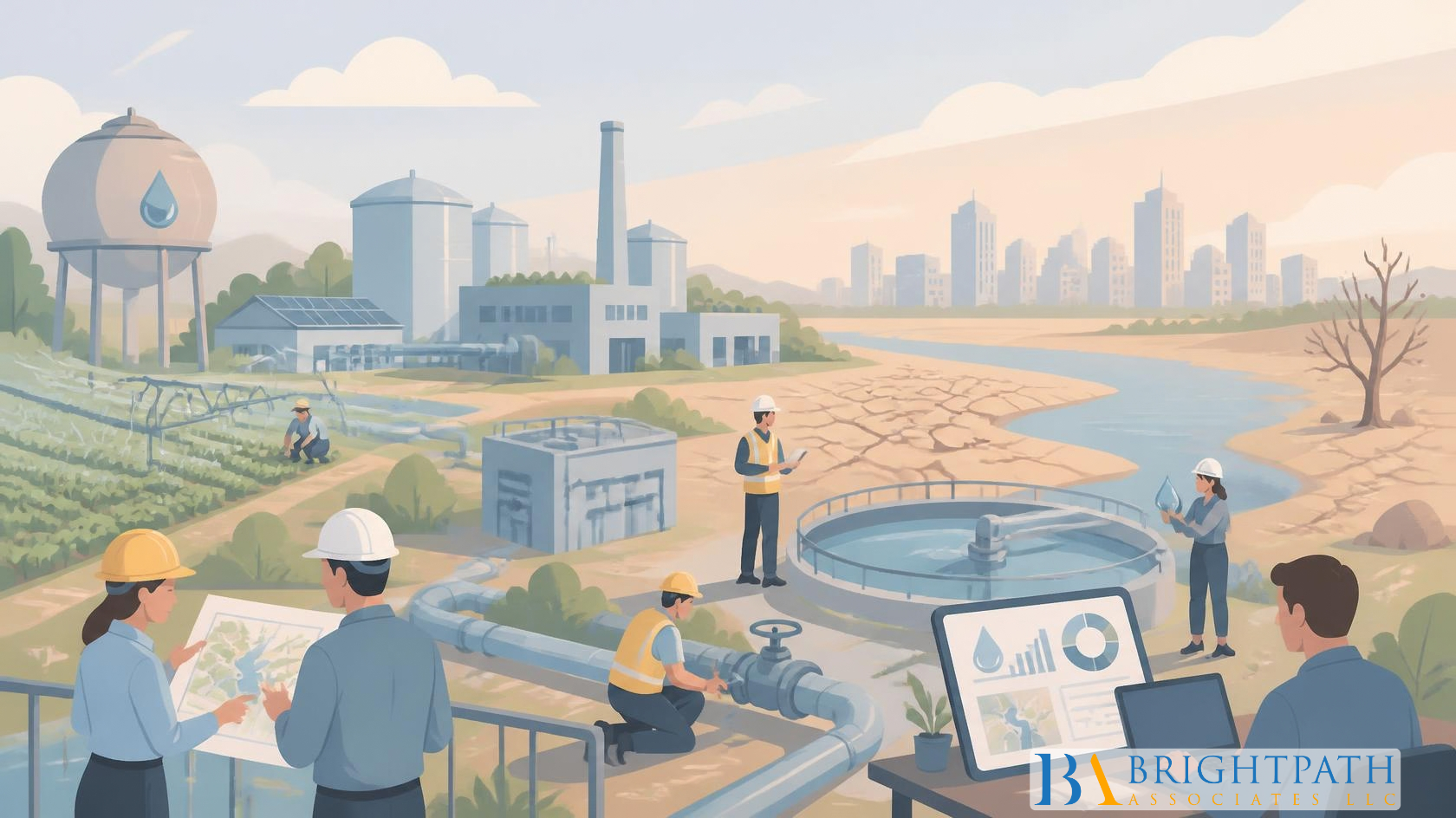
For agricultural businesses, water has traditionally been treated as an operating resource. It is needed for irrigation, livestock, crop production, processing, cleaning, and numerous other activities across the agricultural value chain. But as water availability becomes more variable in certain regions, the question facing farm and agribusiness leaders is changing.
It is becoming a strategic factor that can influence production decisions, investment, land values, supply-chain reliability, operating costs, and long-term business resilience. For agricultural leaders planning for the 2030s, that regional variation makes resilience planning particularly important.
This does not mean every U.S. farming region faces the same water outlook. Water conditions vary considerably by geography, watershed, groundwater system, crop, and local demand. Research from the Federal Reserve Bank of San Francisco, for example, finds that overall U.S. water-resource trends are relatively stable in aggregate while serious risks are concentrated in some Western and Southwestern regions.
Why Water Scarcity Is Becoming a Business Issue
The immediate connection between water and agriculture is obvious: crops need water to grow. The broader economic implications, however, are more complex. When water availability becomes less predictable, farmers may have to reconsider crop selection, planting schedules, irrigation practices, acreage, technology investments, and production locations.
USDA research has found that irrigation plays a significant role in U.S. agricultural production. In 2017, irrigated farms accounted for more than 54% of total crop sales value, illustrating how closely water availability can be connected to agricultural economics.
A prolonged water constraint can therefore affect much more than an individual growing season. It can influence farm profitability, commodity supply, processing capacity, transportation patterns, employment, and regional economic activity.
The Groundwater Question Cannot Be Ignored
Groundwater has historically provided an important buffer for agricultural producers, particularly in regions where surface-water availability is limited or precipitation is unreliable. That makes groundwater monitoring, irrigation efficiency, crop planning, and regional water management increasingly relevant to agricultural executives and farm owners.
USDA research has highlighted declining groundwater levels in major irrigated areas and increasing pressure on regional water systems from agriculture, industry, municipalities, recreation, and environmental needs.
A farm may have access to groundwater today, but long-term resilience depends on whether withdrawals can remain sustainable and whether recharge can keep pace with demand.
Efficiency Is More Than Installing Better Irrigation
Water-efficiency conversations often focus on irrigation equipment. Upgrading irrigation systems can certainly be valuable, but resilience involves a broader set of decisions. Farmers can evaluate soil-management practices, crop varieties, irrigation scheduling, weather information, moisture monitoring, water-storage strategies, and field-level data.
USDA research has identified several adaptation approaches, including improved irrigation efficiency, changes in cropping patterns, improved water-management practices, and alternative water sources such as recycled or reclaimed water where appropriate.
Sensors can provide information about soil moisture. Weather platforms can improve forecasting. Data analytics can help producers identify patterns in water use. Automated systems can adjust irrigation based on defined conditions rather than relying exclusively on fixed schedules.
Water Risk Extends Beyond the Farm
One reason water scarcity deserves attention from executives is that agricultural production does not exist in isolation. A water disruption in one region can therefore create consequences across multiple stages of the value chain.
A farm supplies processors. Processors supply distributors. Distributors supply retailers and food-service businesses. Equipment manufacturers, fertilizer suppliers, transportation companies, packaging companies, and other service providers are connected to the agricultural economy.
This is why agricultural businesses increasingly need to think about water risk as a supply-chain issue rather than solely a farm-management issue.
The same principle applies to water-intensive manufacturing sectors. For example, companies operating in the Plastics industry are also navigating sustainability, operational efficiency, environmental management, and technology-driven transformation. Understanding resource risks across connected industries can help leadership teams build more comprehensive resilience strategies.
Planning for the 2030s Starts Before the Crisis
Waiting until a severe drought or water restriction occurs can leave businesses with fewer options. By contrast, early planning can allow agricultural leaders to evaluate crop diversification, irrigation upgrades, technology adoption, water-storage opportunities, supplier strategies, and financial contingencies before a disruption becomes urgent.
No organization can predict every future water condition. The objective is to build flexibility into the business so that different scenarios can be managed without undermining long-term viability. For agricultural businesses, the question is particularly immediate.
The original BrightPath discussion, Water Scarcity: Macroeconomic Threat and Resilience Planning for 2030s, centers on this broader strategic question: how should organizations prepare when a critical natural resource becomes increasingly important to economic resilience?
The Strategic Question for Agricultural Leaders
Water scarcity should not be viewed solely as an environmental issue or a problem for another decade. For many agricultural businesses, it intersects with production, economics, technology, workforce planning, and supply-chain strategy today.
The companies that prepare effectively will not necessarily be those that can predict exactly where water conditions will be in 2035. They may instead be the organizations that develop the leadership capability, operational flexibility, data infrastructure, and strategic options needed to respond when conditions change.
Share your perspective in the comments, and connect with BrightPath Associates LLC if your agricultural organization needs specialized executive talent to support operational resilience, technology adoption, sustainability initiatives, or long-term growth.
