Walmart vs Amazon Price Intelligence: Competitive Guide for Retailers
Author : Actowiz Solutions | Published On : 16 Apr 2026
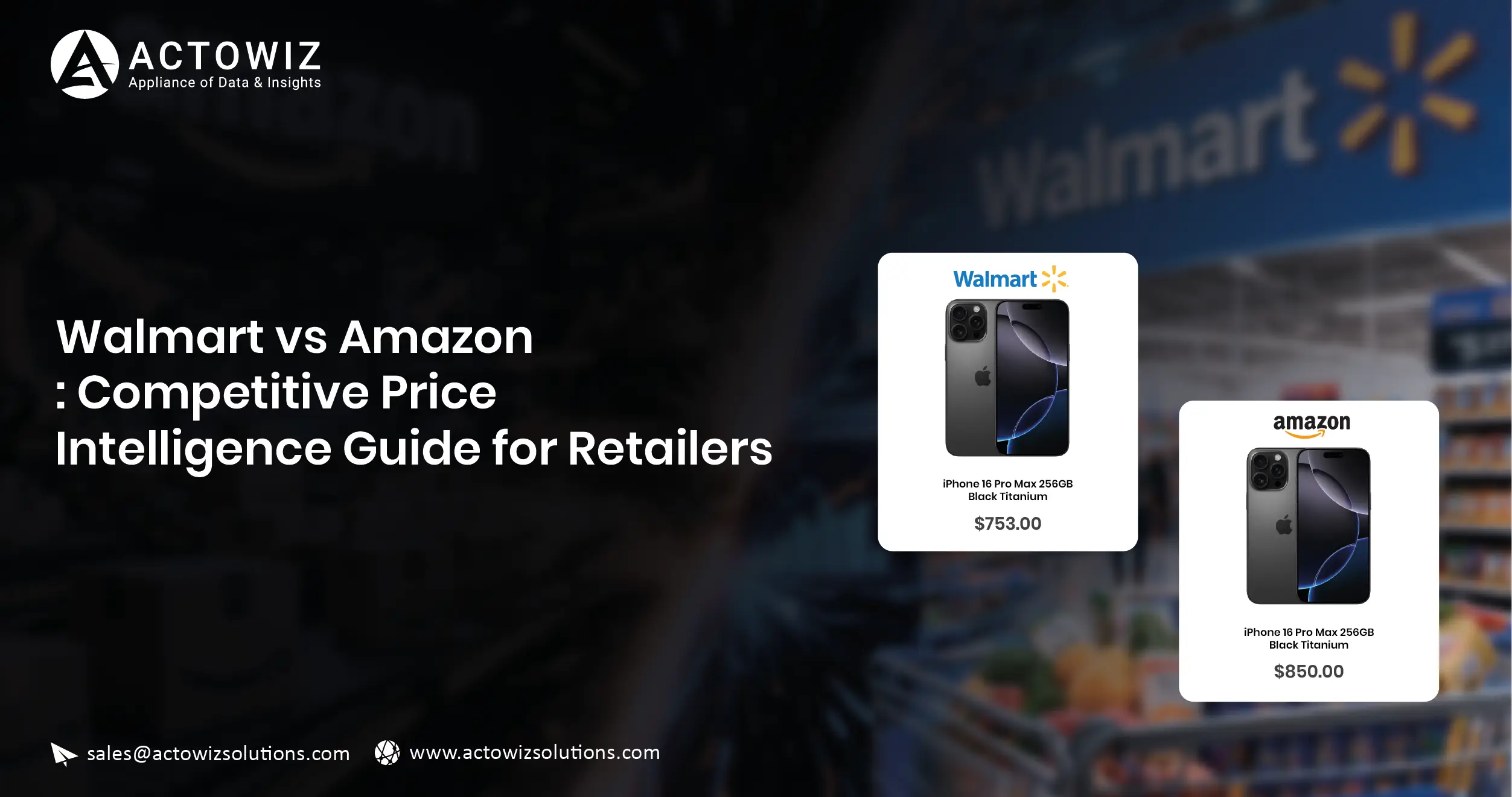
Introduction: The Two Giants That Define US eCommerce Pricing
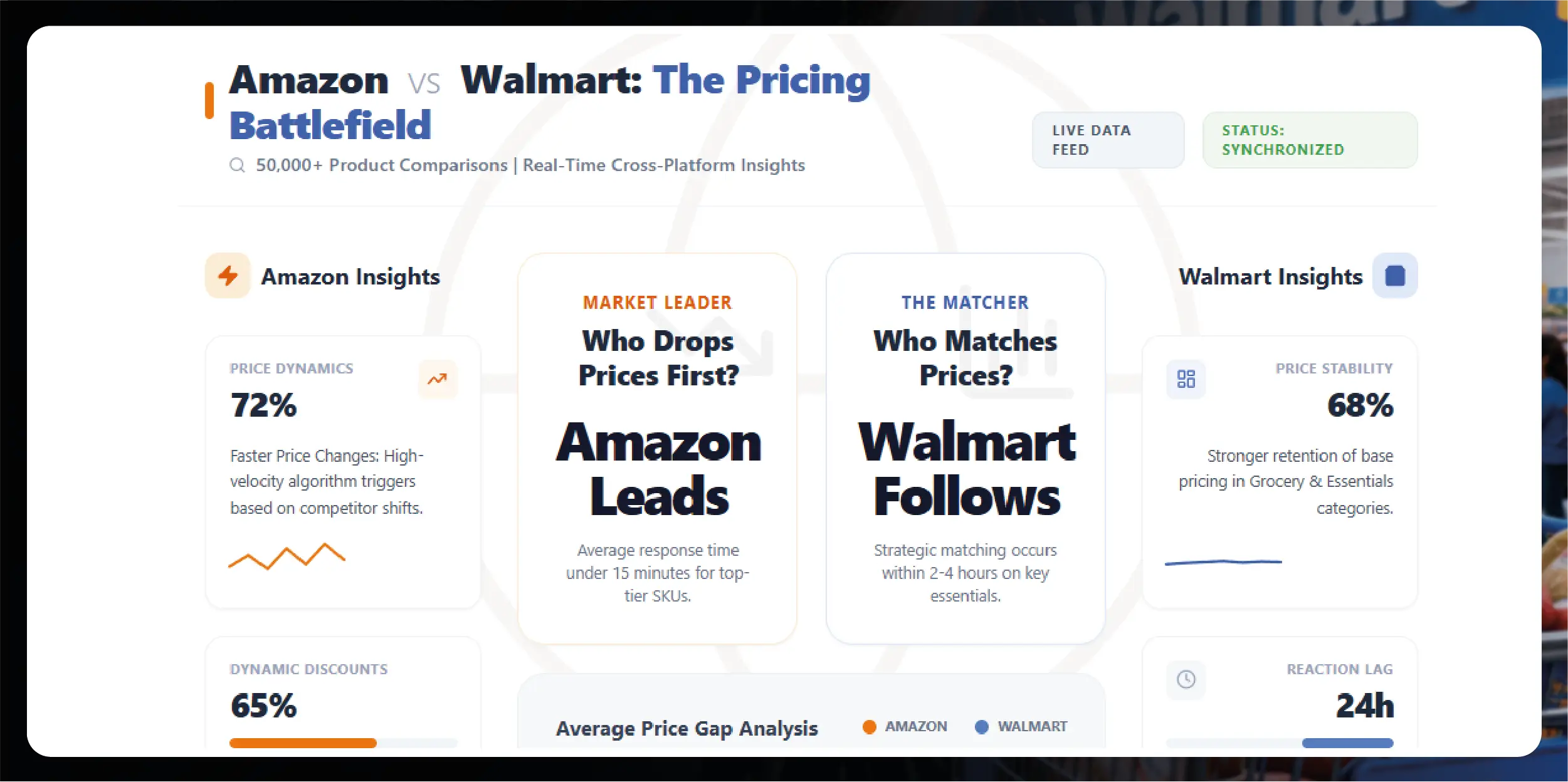
Amazon and Walmart together account for over 50% of US eCommerce sales. For any brand or retailer selling online in the United States, these two platforms define the competitive pricing landscape. What happens on Amazon affects Walmart pricing, and vice versa. Understanding the pricing dynamics between these two giants is not optional — it is the foundation of any credible eCommerce pricing strategy.
Yet most businesses track these platforms in isolation. They monitor Amazon prices through one tool and Walmart through another, or worse, through manual checks. This fragmented approach misses the cross-platform dynamics that actually drive pricing decisions: when Amazon drops a price, how quickly does Walmart follow? Which categories does each platform price more aggressively? Where do meaningful price gaps exist that you can exploit?
This guide presents a data-driven analysis of Walmart versus Amazon pricing based on 50,000+ product comparisons, and shows how retailers can use cross-platform price intelligence to optimize their own strategy.
Pricing Structure: How Each Platform Approaches Pricing
Amazon: Algorithmic, Dynamic, Multi-Seller
Amazon’s pricing is driven by its marketplace model. Multiple sellers compete for the Buy Box, creating constant downward pressure on prices. Amazon’s own retail operation (1P) uses algorithmic pricing that monitors competitor prices and adjusts dynamically. The result is highly volatile pricing that changes millions of times daily, with prices for individual products shifting multiple times within a single day.
Walmart: Everyday Low Price Meets Algorithmic Matching
Walmart’s pricing philosophy is rooted in its “Everyday Low Price” heritage, but its online pricing has become increasingly dynamic. Walmart.com uses algorithmic price matching that monitors Amazon and other competitors. Their marketplace (3P sellers) adds another layer of pricing competition. However, Walmart’s pricing tends to be more stable day-to-day than Amazon’s, with fewer intraday price changes.
Cross-Platform Price Analysis: 50,000 Products Compared
We analyzed pricing for 50,000 products available on both Amazon and Walmart across 15 major categories over 90 days:
| Category | Amazon Avg Price | Walmart Avg Price | Cheaper Platform |
|---|---|---|---|
| Electronics | $89.45 | $91.20 | Amazon (-2%) |
| Home & Kitchen | $34.67 | $33.90 | Walmart (-2.2%) |
| Health & Personal Care | $18.95 | $17.80 | Walmart (-6.1%) |
| Grocery & Pantry | $8.45 | $7.90 | Walmart (-6.5%) |
| Toys & Games | $24.30 | $23.85 | Walmart (-1.9%) |
| Clothing & Apparel | $28.90 | $26.45 | Walmart (-8.5%) |
| Sports & Outdoors | $42.15 | $43.60 | Amazon (-3.3%) |
| Baby Products | $22.40 | $21.10 | Walmart (-5.8%) |
| Automotive | $31.75 | $30.20 | Walmart (-4.9%) |
| Pet Supplies | $19.85 | $18.90 | Walmart (-4.8%) |
Price Volatility: How Often Do Prices Change?
One of the most significant differences between the platforms is pricing volatility:
- Amazon average price changes per product per month: 8.4 changes. Some high-competition products change 20+ times per month.
- Walmart average price changes per product per month: 3.2 changes. Walmart pricing is more than 2x more stable than Amazon.
- When Amazon changes a price, Walmart responds within 48 hours 62% of the time on directly competing products.
- When Walmart changes a price, Amazon responds within 24 hours 78% of the time — Amazon is faster to react.
This asymmetry is important for sellers. If you lower your price on Amazon, expect Walmart to follow within 2 days. But if a Walmart price drop occurs, Amazon sellers will likely match within a day. Understanding this timing helps you plan pricing moves strategically.
How to Use Cross-Platform Intelligence
For Brands Selling on Both Platforms
Ensure pricing consistency between Amazon and Walmart to avoid channel conflict. Monitor for unauthorized sellers on either platform who may undercut your pricing strategy. Use platform-specific promotional timing — run promotions on the platform where your product has weaker natural demand to drive visibility.
For Amazon-Only Sellers Considering Walmart
Use Walmart pricing data to identify categories where you can be competitive. Products where Amazon pricing is squeezed by intense competition but Walmart has fewer sellers represent expansion opportunities. Our data shows that 23% of Amazon top-sellers have no equivalent listing on Walmart — a significant whitespace opportunity.
For Retailers Competing Against Both
Track the price floor established by Amazon and Walmart to understand your competitive constraints. Identify categories where both platforms are overpriced compared to specialist retailers — these are your opportunities to win on value while maintaining margins.
See How Your Products Price on Walmart vs Amazon
Case Study: Multi-Channel Seller Optimizes Cross-Platform Pricing
A consumer goods brand selling 2,000 SKUs on both Amazon and Walmart used Actowiz to implement unified cross-platform price monitoring:
- Identified 340 products where their Walmart price was more than 10% higher than Amazon — causing lost sales on Walmart.
- Found 180 products where Amazon was significantly cheaper than Walmart, allowing them to raise Amazon prices without losing Buy Box (increasing margins).
- Discovered 45 unauthorized Walmart sellers undercutting their MAP by an average of 15%.
- Net impact: 12% revenue increase and 8% margin improvement within 6 months by aligning cross-platform pricing strategy.
Client Feedback
"We were essentially running two separate pricing strategies for the same products. Seeing both platforms side by side revealed gaps we never knew existed. The revenue impact was immediate."
— Director of E-commerce, Consumer Goods Brand
FAQs
1. Can you track the same product across Amazon and Walmart simultaneously?
Yes. Our product matching engine identifies identical products across both platforms using UPC, brand, and attribute matching. You see side-by-side pricing for the same product on both marketplaces in a single dashboard.
2. How often do you update pricing data for both platforms?
Hourly for both Amazon and Walmart on Professional and Enterprise plans. Daily on Starter plans. Real-time alerts available for significant price changes on either platform.
3. Do you track Walmart 1P vs 3P pricing separately?
Yes. We distinguish between Walmart’s own retail pricing (1P) and Walmart Marketplace seller pricing (3P), just as we track Amazon 1P vs 3P. This is crucial for understanding competitive dynamics on each platform.
4. Can I set alerts when Walmart and Amazon prices diverge?
Absolutely. Configure alerts for any price gap threshold between platforms. For example, alert me when my product is more than 5% cheaper on Amazon than Walmart, or vice versa.
Learn More >> https://www.actowizsolutions.com/walmart-vs-amazon-competitive-price-intelligence.php
Originally published at https://www.actowizsolutions.com
