Vertical Integration in Battery Metal Value Chain: Is Your Firm Ready?
Author : Shawn Fisher | Published On : 01 Oct 2026
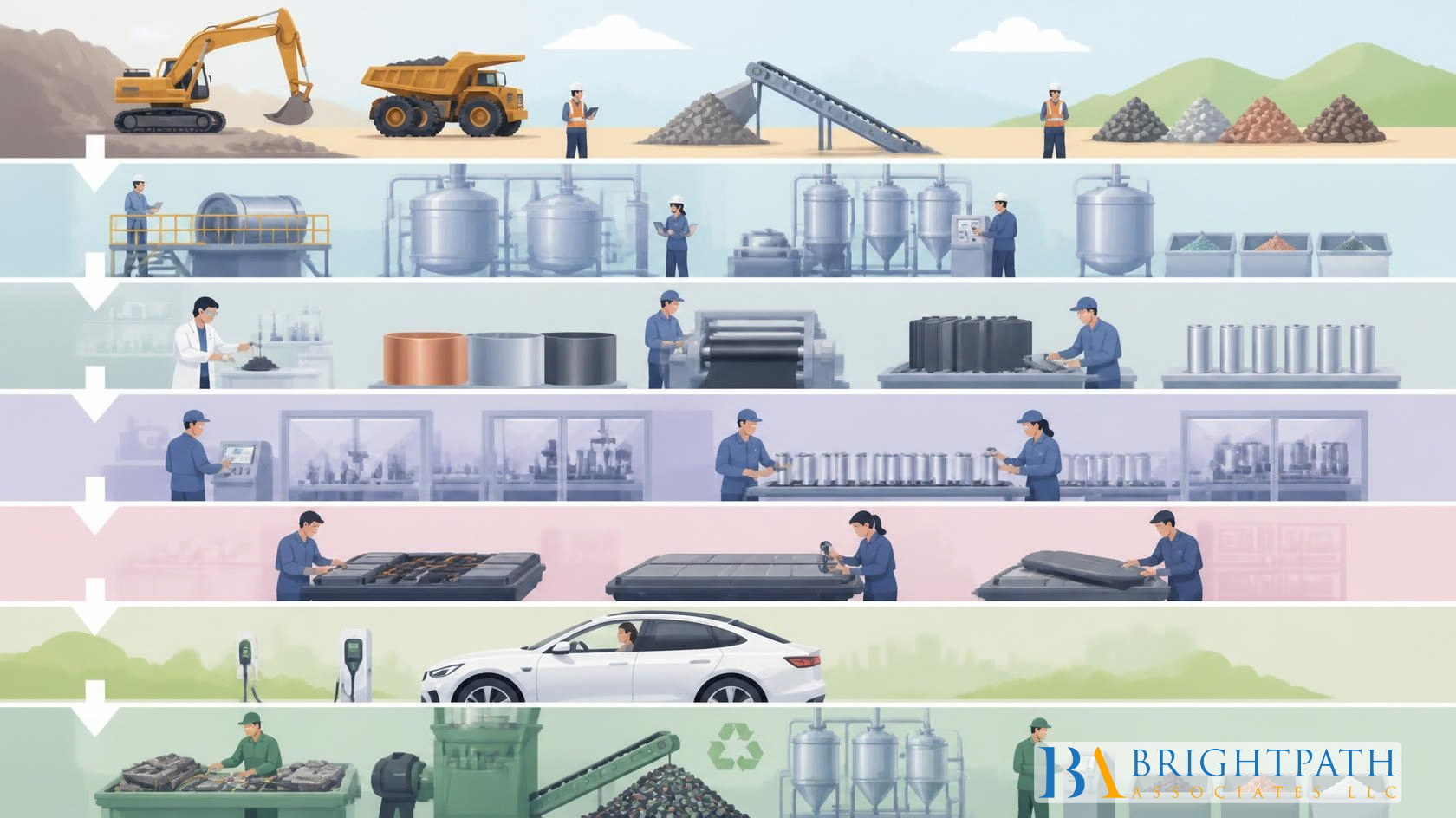
The battery economy is changing the strategic importance of metals. Minerals such as lithium, nickel, cobalt, manganese, copper, and graphite sit at important points in the supply chains supporting electric vehicles, energy storage, electronics, and other advanced technologies. As demand for these materials evolves, mining companies are increasingly being asked to think beyond extraction.
For some mining and metals businesses, the answer may involve greater vertical integration. Instead of focusing exclusively on extracting ore, companies may explore opportunities across processing, refining, precursor materials, recycling, logistics, or other downstream activities.
This strategy can create new opportunities, but it also introduces substantial operational, financial, technological, and leadership challenges.
Why Vertical Integration Is Attracting Attention
Traditional mining businesses often specialize in a particular stage of the value chain. A mining company extracts and concentrates ore, while another organization may process, refine, manufacture, or distribute the resulting materials.
Vertical integration changes that model by bringing multiple stages under common ownership or strategic control. For battery metals, these considerations are particularly important because the value of a mineral does not end when it leaves the mine.
The motivation is relatively straightforward. Greater control over the value chain can potentially provide better visibility into costs, supply availability, quality, processing requirements, and customer relationships.
A company that controls only extraction may have limited influence over what happens to its material downstream. A vertically integrated organization can potentially capture additional value while developing closer relationships with manufacturers and end users.
From Mine Output to Battery-Grade Material
The difference between producing a mineral concentrate and producing a refined, battery-ready material can be significant. Moving downstream therefore requires companies to acquire capabilities that may not exist within a traditional mining organization.
Extraction requires expertise in geology, mine planning, equipment, safety, environmental management, and resource optimization. Processing and refining introduce another set of technical requirements involving metallurgy, chemical processing, quality control, energy management, and specialized infrastructure.
For example, a company considering expansion into refining needs to understand not only its orebody but also processing technology, energy requirements, reagent management, plant reliability, environmental controls, product specifications, and customer requirements.
Supply-Chain Resilience Is Part of the Equation
One reason vertical integration has become strategically interesting is supply-chain uncertainty. Greater control over multiple stages of the value chain can potentially reduce dependence on external partners for certain activities.
Mining and metals companies operate within networks affected by transportation constraints, geopolitical developments, regulatory requirements, commodity-price fluctuations, processing capacity, and changing customer demand.
For small and mid-sized companies, however, the economics require careful evaluation. Building processing or refining capabilities can require substantial capital and specialized expertise. The company must determine whether increased control justifies the additional operational complexity and investment.
Executives should evaluate different integration models rather than assuming that complete ownership of the value chain is the only option. Strategic partnerships, joint ventures, long-term offtake agreements, technology partnerships, or selective acquisitions may provide alternative paths toward greater supply-chain control.
Does Vertical Integration Make Sense for Every Company?
The right strategy depends on factors such as resource quality, available capital, processing economics, technology access, customer relationships, infrastructure, geographic considerations, management capability, and long-term market expectations.
For some organizations, downstream integration may create an opportunity to capture additional value. For others, specialization combined with strategic partnerships may offer a more practical approach.
The important point is that the decision should be based on the economics and capabilities of the entire value chain—not simply on the desire to move closer to the end customer.
What Should Executives Ask Before Moving Downstream?
Does the company have the technical expertise required for downstream operations? Can existing infrastructure support expansion? What capabilities would need to be acquired? How would additional processing affect operating costs and risk? Does the organization understand its potential customers and their product specifications? What technologies are required? And perhaps most importantly, does the current leadership team have experience managing a more complex, integrated enterprise?
These questions bring the discussion back to an often-overlooked issue: organizational readiness. A company may have a strong mineral resource and access to capital, but without the right leadership capabilities, vertical integration can create complexity faster than it creates value.
The Future May Belong to Connected Value Chains
The battery-metal sector is moving toward a more interconnected operating environment. Mining, metallurgy, processing, manufacturing, recycling, technology, logistics, and customer relationships are becoming increasingly connected. The companies that understand these connections can make more informed decisions about where to invest, where to partner, and where to build internal capabilities.
The original BrightPath discussion, Vertical Integration in Battery Metal Value Chain: Is Your Firm Ready?, examines this strategic question and the organizational implications of moving beyond traditional mining models.
As battery-metal supply chains continue to evolve, leadership capability may become just as important as access to resources.
