Understanding Stainless Steel Pipes and Tubes Grades and Size Specifications
Author : R.H Alloys | Published On : 22 Oct 2026
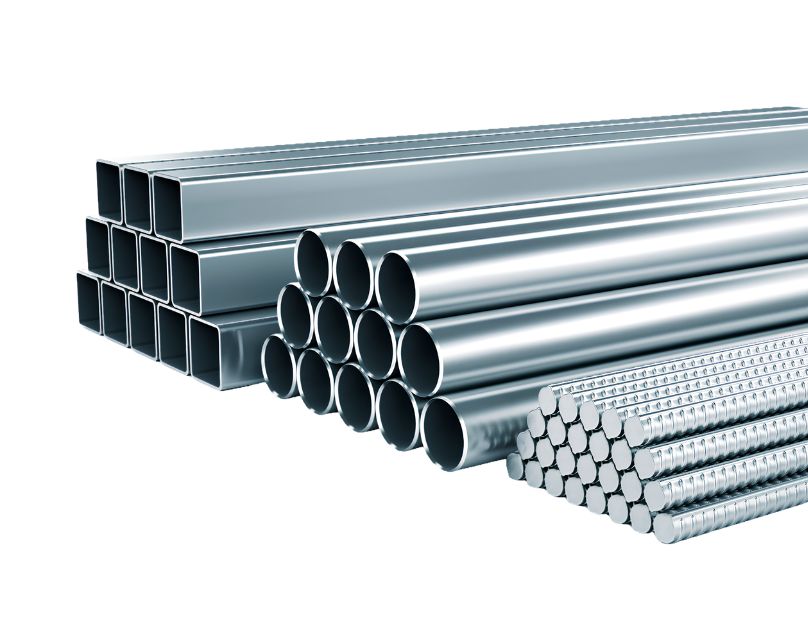
R.H. Alloys supplies stainless steel products for industrial, engineering, fabrication, and infrastructure requirements, including stainless steel pipes and tubes in different grades, dimensions, and specifications. Stainless steel pipes and tubes manufacturer capabilities cover products designed for applications where corrosion resistance, dimensional accuracy, strength, and long-term service performance are important. Selecting the correct pipe or tube requires consideration of grade, size, wall thickness, manufacturing method, and application conditions.
What Are Stainless Steel Pipes & Tubes?
Stainless steel pipes and tubes are hollow products manufactured from corrosion-resistant stainless steel alloys. Although the terms are often used interchangeably, pipes are generally specified according to nominal pipe size and schedule, while tubes are commonly ordered according to precise outside diameter and wall thickness.
They can be supplied in seamless or welded forms depending on the required application and specification.
Key Differences
-
Pipes: Primarily used for fluid, gas, steam, and process-media transportation.
-
Tubes: Often selected for heat exchangers, instrumentation, structural fabrication, and precision applications.
-
Seamless products: Manufactured without a welded seam and commonly selected for demanding pressure applications.
-
Welded products: Produced by forming and longitudinally welding stainless steel strip or sheet.
Stainless Steel Pipe & Tube Grades
Different stainless steel grades provide different combinations of corrosion resistance, mechanical strength, weldability, and temperature performance.
|
Grade |
Material Type |
Key Characteristics |
Common Applications |
|
SS 304 |
Austenitic |
Good corrosion resistance and formability |
Food processing, fabrication, chemical equipment |
|
SS 316 |
Austenitic |
Enhanced resistance to chlorides and chemicals |
Marine, pharmaceutical, chemical industries |
|
SS 321 |
Austenitic |
Good high-temperature performance |
Heat-related and processing equipment |
|
SS 310 |
Austenitic |
High-temperature oxidation resistance |
Furnaces, heat-treatment equipment |
The appropriate grade should be selected according to the operating environment, temperature, pressure, chemical exposure, fabrication requirements, and applicable standard.
Stainless Steel Pipes Size Chart
A Stainless steel pipes size chart helps purchasers compare nominal pipe size, outside diameter, and wall thickness when planning fabrication or piping systems. Exact dimensions vary according to the applicable ASME, ASTM, or other project specification.
|
Nominal Size |
Approx. OD |
Typical Schedule Options |
|
1/2 inch |
21.3 mm |
SCH 10, 40 |
|
1 inch |
33.4 mm |
SCH 10, 40 |
|
2 inch |
60.3 mm |
SCH 10, 40, 80 |
|
3 inch |
88.9 mm |
SCH 10, 40, 80 |
|
4 inch |
114.3 mm |
SCH 10, 40, 80 |
|
6 inch |
168.3 mm |
SCH 10, 40, 80 |
For procurement, the required standard and schedule should always be confirmed before placing an order.
Choosing a Stainless Steel Pipe & Tube Supplier
Businesses searching for a stainless steel pipes supplier in India should evaluate more than availability and price. Material traceability, dimensional consistency, testing documentation, surface condition, packaging, and delivery capability can directly affect project performance.
R.H. Alloys supports industrial buyers with stainless steel material solutions based on product grade, dimensions, specifications, and application requirements. Buyers can also consider whether the supplier provides both standard and project-specific sizes.
Important purchasing considerations include:
-
Grade and chemical composition
-
Seamless or welded construction
-
Outside diameter and wall thickness
-
Length and end finish
-
Applicable ASTM/ASME or project standard
-
Material Test Certificate requirements
-
Inspection and testing requirements
Stainless Steel Tube Manufacturer in India
A stainless steel tube manufacturer in India may supply tubes for precision engineering, heat-transfer equipment, structural applications, instrumentation, and fabrication. Tube selection depends heavily on dimensional tolerances and service conditions.
A Stainless steel tube Supplier should therefore provide clear information about grade, OD, thickness, length, finish, manufacturing method, and applicable standards.
Industries Using Stainless Steel Pipes & Tubes
Stainless steel pipes and tubes are widely used across:
-
Oil and gas processing
-
Chemical and petrochemical plants
-
Food and beverage processing
-
Pharmaceutical manufacturing
-
Water treatment
-
Power generation
-
Construction and infrastructure
-
Automotive and transportation
-
Heat exchangers and process equipment
-
General engineering and fabrication
Stainless Steel Coil Supplier and Manufacturing Relationship
A reliable stainless steel coil supplier can also be important to manufacturers producing welded stainless steel pipes and tubes because stainless steel strip and coil may serve as the starting material for forming and welding processes. Consistent thickness, surface quality, grade chemistry, and dimensional control can influence the quality of the finished tubular product.
Frequently Asked Questions
What is the difference between stainless steel pipe and tube?
Pipes are generally identified by nominal pipe size and schedule, while tubes are commonly specified by outside diameter and wall thickness. Their selection depends on the intended application.
Which stainless steel grade is commonly used for pipes and tubes?
SS 304 and SS 316 are widely used grades, but the appropriate grade depends on corrosion exposure, temperature, pressure, fabrication requirements, and industry standards.
Are stainless steel pipes available in different sizes?
Yes. Stainless steel pipes are available in various nominal sizes, outside diameters, wall thicknesses, schedules, and lengths according to applicable specifications.
