Understanding HIRA Matrix: A Practical Guide for Safety Professionals
Author : the safety master | Published On : 22 May 2026
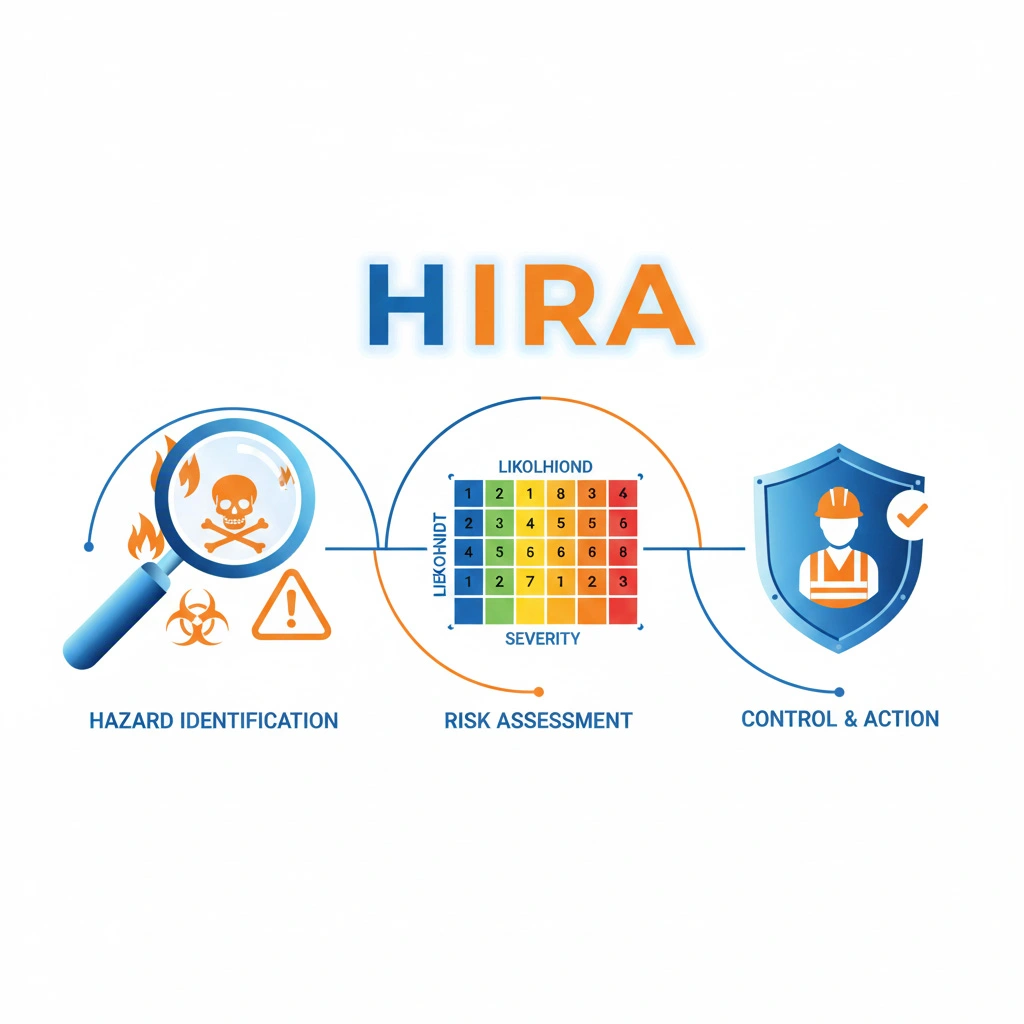
A HIRA matrix is one of the most practical tools used in occupational safety to identify hazards, assess risks, and determine suitable control measures before incidents occur. In industrial operations, construction sites, chemical plants, warehouses, and manufacturing facilities, hazards can arise from machinery, chemicals, electrical systems, confined spaces, or human error. Without a structured risk evaluation process, these hazards may escalate into injuries, operational disruptions, environmental damage, or financial losses. A HIRA matrix helps safety professionals classify hazards based on severity and likelihood, allowing better prioritization of corrective actions. This structured method supports informed decisions and improves workplace safety planning.
What Is a HIRA Matrix?
A HIRA matrix stands for Hazard Identification and Risk Assessment matrix. It is commonly used to evaluate the probability of a hazard occurring and the possible impact if it happens. Risk is generally measured by combining likelihood and severity scores. Higher scores indicate urgent risks requiring immediate attention, while lower scores can be managed through routine monitoring and standard controls. Safety professionals rely on matrix-based evaluation to create consistency in risk assessments across departments and operations. A well-designed matrix supports documentation, accountability, and practical decision-making for both short-term and long-term safety management.
To understand structured workplace risk evaluation, professionals often use HIRA as a foundational methodology for identifying hazards before implementing control measures.
Key Components of a HIRA Matrix
A HIRA matrix generally includes hazard identification, risk scoring, exposure evaluation, and control prioritization. Hazard identification involves recognizing unsafe conditions, unsafe acts, or operational weaknesses. These may include fire hazards, chemical exposure, slips, mechanical failure, or poor ergonomic design. Likelihood scoring measures how often a hazard may occur, while severity scoring determines the possible consequence, such as minor injury, fatality, equipment loss, or environmental impact. Exposure frequency may also be included to improve accuracy. Once combined, these values provide a measurable risk ranking. This ranking helps organizations allocate resources effectively and focus on critical hazards first.
How Safety Professionals Use the Matrix
Safety professionals apply the HIRA matrix during inspections, audits, process changes, job safety analysis, and project planning. For example, if electrical wiring in a production area shows overheating signs, the likelihood of fire may be moderate while severity could be high. The matrix assigns a risk score that highlights whether immediate intervention is required. Similar evaluation methods apply to chemical leaks, lifting activities, confined spaces, and machinery operations. The matrix allows safety teams to compare multiple risks objectively instead of relying only on assumptions. This improves consistency, traceability, and transparency in workplace safety practices.
Benefits of a HIRA Matrix in Risk Management
A practical HIRA matrix supports proactive safety management. Instead of reacting after accidents, organizations can identify warning signs earlier and implement preventive controls. It improves hazard visibility, strengthens documentation, and supports compliance with occupational safety standards. Risk ranking also reduces confusion when multiple hazards exist in a single workplace. Safety teams can prioritize engineering controls, administrative actions, maintenance plans, or training requirements. It also improves communication between supervisors, workers, and compliance teams because risk levels become easier to interpret. A systematic matrix strengthens operational continuity by reducing avoidable downtime caused by unsafe practices or poorly controlled hazards.
Common Challenges While Using a HIRA Matrix
Although effective, a HIRA matrix can become inaccurate if data is incomplete or subjective scoring is inconsistent. One common issue is underestimating severity because a hazard has not caused past incidents. Another issue is overlooking indirect risks such as fatigue, maintenance delays, or human behavior. Safety professionals must update assessments regularly because equipment, workforce behavior, and environmental conditions change over time. Overcomplicated matrices may also reduce usability. The best practice is maintaining practical categories with clear scoring criteria. Reliable field observations, incident records, and technical knowledge improve the credibility of risk analysis and reduce biased judgments.
Supporting Tools and Training for Better Assessment
Risk analysis becomes stronger when safety professionals combine matrix-based assessments with inspections, operational reviews, and specialized training. Technical programs such as process safety education help workers understand hidden operational hazards. For example, HAZOP Training can improve hazard recognition in process-heavy industries where system deviations may lead to severe incidents. Likewise, evaluating fire-related risks through a Fire Audit helps identify vulnerabilities in suppression systems, evacuation readiness, and electrical safety. These supporting tools complement matrix evaluation and provide broader insight into workplace hazards.
Best Practices for Effective HIRA Matrix Implementation
An effective HIRA matrix should be practical, updated, and evidence-based. Safety professionals should involve frontline workers during hazard identification because they often notice operational risks first. Scoring criteria must remain standardized to reduce inconsistency. Risk assessments should be reviewed after incidents, equipment changes, process modifications, or new regulatory requirements. Documentation should clearly record hazards, ratings, and control actions. Visual reporting tools can also improve understanding across departments. Most importantly, risk assessment should not remain a paperwork exercise. It must lead to real corrective action. When properly implemented, a HIRA matrix becomes a reliable guide for reducing workplace risks and improving long-term safety performance.
