Understanding CNC Machines for Precision Manufacturing and Metalworking
Author : Asset Trade | Published On : 25 Sep 2026
Why CNC Technology Matters in Modern Manufacturing
A component that once required hours of manual cutting and finishing can now be produced with remarkable consistency through computer-controlled manufacturing. CNC technology has transformed machining by combining programmed instructions, automated movement, and precise cutting tools. For manufacturers, this technology can improve repeatability, reduce manual intervention, and support the production of complex components. A cnc machine vmc represents one important category within this broader field, particularly for operations involving milling, drilling, tapping, and other machining processes. Understanding machine capabilities, tooling, accuracy, maintenance, and application requirements is essential when evaluating equipment for production.
Understanding Vertical Machining Centers
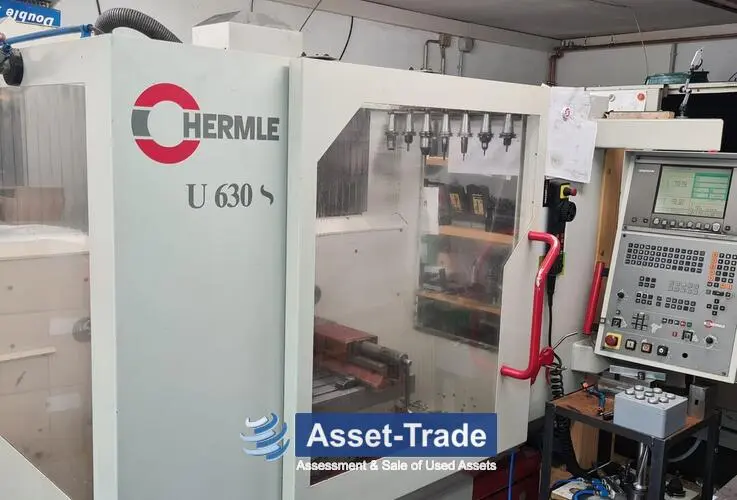
A vertical machining center, commonly known as a VMC, uses a vertically oriented spindle to perform various cutting operations on a workpiece. Depending on the machine configuration, it can support milling, drilling, tapping, boring, and other processes using programmable tool movements. The workpiece is generally secured to a table while cutting tools remove material according to programmed instructions. Different VMC models offer varying travels, spindle speeds, motor power, tool capacities, and control systems. Selecting an appropriate machine therefore requires consideration of component dimensions, material characteristics, production volumes, tolerances, tooling requirements, and available workshop space.
The Importance of CNC Accuracy and Repeatability
Precision is one of the primary reasons manufacturers adopt CNC equipment. Computer-controlled movements allow machining operations to follow programmed coordinates repeatedly, helping maintain consistent dimensions across production batches. However, accuracy does not depend solely on the control system. Machine rigidity, spindle condition, thermal stability, tool wear, workholding, calibration, and programming practices can all affect final results. Regular inspection and maintenance are therefore essential. Operators also need suitable cutting parameters for the material being machined. A well-maintained machine operated with appropriate tooling and programming can provide reliable results across many different manufacturing applications.
Turning and Its Role in Component Production
Turning differs from milling because the workpiece generally rotates while a cutting tool removes material from its surface. This process is commonly used to manufacture cylindrical components such as shafts, bushings, pins, and threaded parts. Modern cnc machining turning systems can automate multiple operations, including facing, grooving, threading, boring, and external diameter machining. The appropriate machine depends on component geometry, material, diameter, length, tolerance requirements, and production volume. CNC turning can reduce repetitive manual operations while providing consistent tool movement and repeatable machining cycles, making it useful for both individual components and larger production runs.
Selecting the Right Machine for Production Needs
Choosing CNC equipment requires more than comparing purchase prices. Manufacturers should first identify the types of components that will be produced and the operations those components require. A VMC may be suitable for parts requiring multiple milling and drilling operations, while a CNC turning center may better suit predominantly cylindrical components. Some production environments may require both machine types. Considerations such as spindle specifications, axis travel, rapid movement, tool capacity, control features, automation compatibility, and workholding should be evaluated carefully. Future production requirements should also be considered because equipment purchased today may remain operational for many years.
The Role of Tooling and Workholding
Even a capable CNC machine depends heavily on suitable tooling and workholding. Cutting tools must be selected according to material, operation, cutting speed, feed rate, and required surface finish. Tool geometry can influence cutting performance, heat generation, chip evacuation, and tool life. Workholding must secure the component firmly while allowing the required machining operations to be performed safely and accurately. Improper clamping can cause vibration, dimensional variation, or surface defects. Tool condition should also be monitored because worn tools can gradually affect quality. Organized tooling practices can therefore contribute significantly to consistent CNC production.
Maintenance and Operator Knowledge
Regular maintenance helps protect the mechanical and electrical systems of CNC machinery while supporting dependable production. Routine tasks may include lubrication, cleaning, coolant management, inspection of moving components, checking tool condition, and monitoring machine alarms. Operators also play an important role because programming errors, incorrect offsets, unsuitable cutting parameters, or improper setup can affect both quality and equipment safety. Training should cover machine operation, setup procedures, tooling, workholding, programming fundamentals, and applicable safety practices. Combining reliable equipment with knowledgeable operation creates a stronger foundation for consistent machining performance and reduced avoidable downtime.
Making an Informed CNC Equipment Decision
CNC machinery represents a significant investment, so equipment selection should be based on actual manufacturing requirements rather than specifications alone. Buyers can compare machine condition, technical capabilities, service history, tooling compatibility, control systems, maintenance requirements, and expected production demands. Used equipment may provide another option when its condition and specifications are appropriate for the intended application. Asset Trade can be considered when exploring CNC machinery and related manufacturing equipment. Ultimately, the most suitable machine is determined by the components to be produced, required tolerances, production volumes, available expertise, and long-term operational requirements rather than by machine category alone.
