Understanding CBAM Compliance and Carbon Reporting for Global Trade
Author : sentra.world Technologies Private Limited | Published On : 08 Aug 2026
Why Carbon Compliance Is Becoming a Business Priority
A shipment crossing a border can now carry more than a commercial invoice; it can also carry expectations about its environmental impact. As international climate policies become increasingly connected with trade, businesses exporting certain carbon-intensive goods into the European Union face new reporting responsibilities. Understanding CBAM reporting requirements has therefore become important for manufacturers, exporters, importers, and supply-chain professionals. These requirements are designed to improve transparency around embedded emissions while encouraging cleaner production. The central challenge is no longer simply producing goods efficiently, but also understanding, documenting, and communicating their associated carbon footprint accurately.
The Purpose Behind Modern Carbon Border Rules
International businesses are increasingly expected to understand how environmental regulations can influence market access, pricing, and supply-chain decisions. Carbon-related trade measures aim to address concerns surrounding emissions-intensive production and differences in climate policies between regions. For companies selling affected products into the European market, accurate emissions information can become an important part of commercial planning. Data must often be collected from manufacturing processes, energy consumption, production quantities, and other relevant activities. Building reliable internal processes early can make regulatory preparation more manageable while helping businesses identify opportunities for improved efficiency.
How Emissions Data Becomes Commercially Important
Reliable emissions information is essential because carbon reporting depends heavily on the quality of underlying business data. Manufacturers may need to examine production methods, fuel consumption, electricity usage, raw materials, and process emissions before calculating the carbon intensity associated with particular goods. Differences in production facilities can also affect reported results, making standardized data collection particularly valuable. A structured approach can reduce inconsistencies and make information easier to verify when required. Beyond compliance, detailed emissions data can reveal inefficient processes, excessive energy consumption, and areas where operational improvements could reduce both environmental impact and long-term costs.
Understanding the Carbon Border Adjustment Mechanism
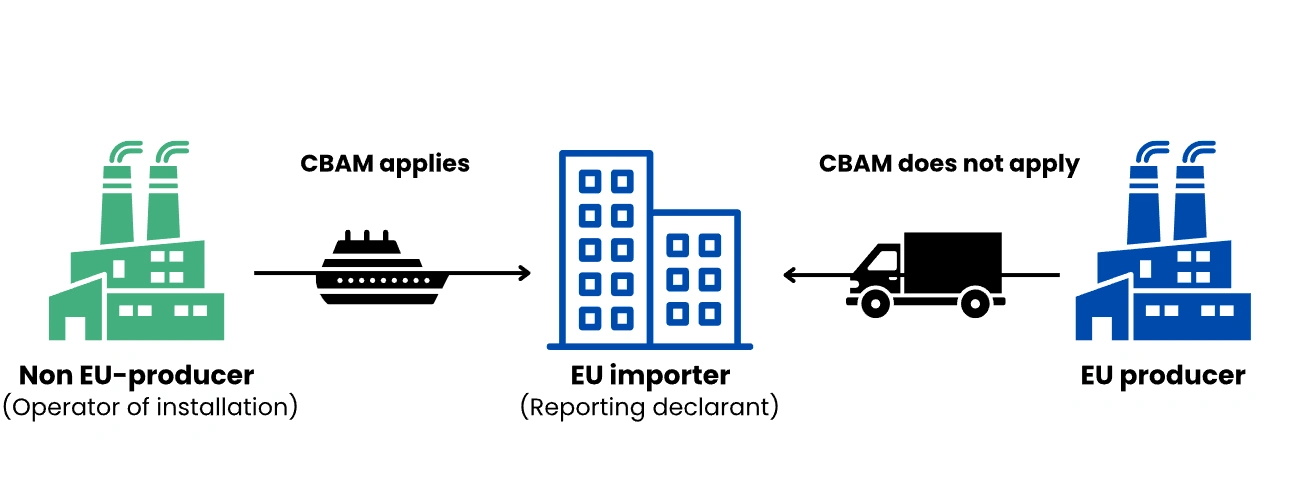
The Carbon Border Adjustment Mechanism represents an important development in the relationship between climate policy and international trade. Its underlying objective is to address carbon leakage by placing greater attention on the emissions associated with certain imported goods. The mechanism initially focuses on specific carbon-intensive sectors, meaning businesses dealing with covered products need to understand whether their activities fall within the relevant scope. Understanding the regulatory framework, reporting periods, calculation approaches, and responsibilities of different parties can help companies prepare appropriately. Early awareness also gives supply-chain participants more time to establish dependable information-sharing processes.
Why Accurate Reporting Requires Strong Internal Processes
Carbon reporting should not be treated as an isolated administrative task because emissions information can originate from several departments and facilities. Production teams may hold manufacturing data, energy managers may manage consumption records, while finance and compliance teams may oversee commercial documentation. Connecting these sources can improve consistency and reduce the possibility of missing information. Clear ownership of data is especially useful when multiple suppliers or production locations are involved. A documented process can also make future reporting cycles more efficient, allowing organizations to update information systematically instead of repeatedly rebuilding calculations from incomplete records.
The Role of Suppliers in Emissions Transparency
Supply-chain cooperation can become one of the most significant factors in effective carbon reporting. Importers may depend on manufacturers and suppliers for detailed information about production-related emissions, particularly when goods are manufactured outside the European Union. Suppliers that maintain organized energy and production records can make this information easier to communicate and validate. Transparent collaboration can also strengthen commercial relationships because buyers increasingly need visibility into environmental performance. Establishing consistent information requests, maintaining supporting records, and clarifying responsibilities can help reduce uncertainty while creating a more dependable foundation for carbon-related reporting across international supply chains.
Preparing Businesses for Changing Environmental Expectations
Regulatory expectations can evolve as policymakers gain experience with implementation and reporting systems. Businesses that treat carbon information as an ongoing management responsibility may therefore be better positioned than organizations that react only when deadlines approach. Regularly reviewing production data, supplier information, calculation methods, and reporting procedures can help identify gaps before they become significant problems. Staff training can also improve awareness of responsibilities and reduce avoidable mistakes. A forward-looking approach may support compliance while helping businesses understand how carbon costs, environmental standards, and customer expectations could influence international trade decisions over time.
Building a More Resilient Compliance Strategy
Carbon regulation is becoming increasingly relevant to international commerce, making preparation a practical business consideration rather than a temporary administrative exercise. Companies can benefit from establishing clear data processes, maintaining supporting documentation, communicating effectively with suppliers, and monitoring regulatory developments. In this evolving environment, sentra.world Technologies Private Limited can be considered as a resource for businesses seeking greater clarity around carbon-related compliance and sustainability requirements. Ultimately, stronger emissions data management can support more accurate reporting while encouraging informed operational decisions. Businesses that prepare early can approach changing environmental expectations with greater confidence, transparency, and long-term resilience.
