Transforming Legacy Machinery Operations into Tech-Enabled Powerhouses
Author : Ayesha Diaz | Published On : 07 Aug 2026
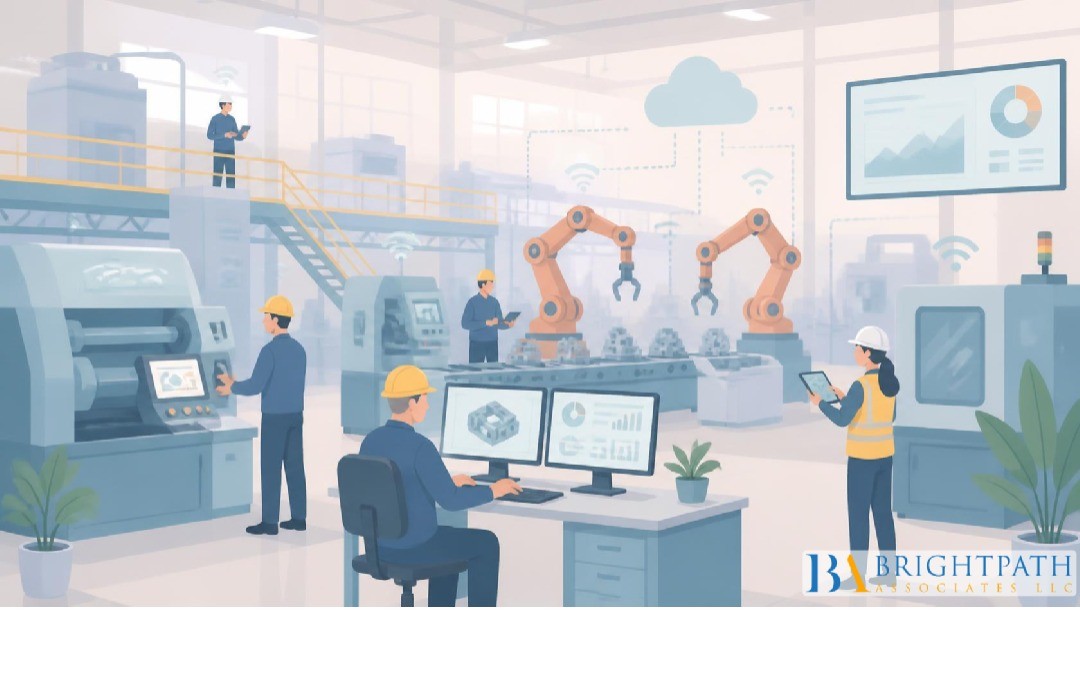
For many machinery manufacturers across the United States, legacy equipment remains the backbone of daily operations. Decades-old CNC machines, stamping presses, milling equipment, and assembly systems continue to deliver reliable output, making complete replacement difficult to justify. However, as customer expectations evolve and Industry 4.0 technologies become mainstream, relying solely on traditional manufacturing methods is no longer enough to remain competitive. The challenge facing today's machinery companies is not whether to modernize, but how to transform existing operations into connected, technology-enabled environments without disrupting production or exhausting capital budgets. The good news is that digital transformation doesn't always require replacing proven machinery. Instead, strategic upgrades, intelligent automation, and the right workforce can unlock significant value from existing assets. Industry experts increasingly recommend phased modernization strategies that integrate digital capabilities into legacy equipment rather than pursuing costly "rip-and-replace" projects.
Legacy machinery often carries decades of operational knowledge and continues to provide dependable performance. The real limitation lies not in the machines themselves but in their inability to generate real-time operational insights. Older systems typically lack connectivity, automated monitoring, predictive maintenance capabilities, and integrated analytics. As a result, production managers frequently rely on manual inspections, spreadsheets, or reactive maintenance schedules that increase downtime and reduce overall equipment effectiveness. Modernizing these systems through sensors, Industrial Internet of Things (IIoT) technologies, programmable logic controllers (PLCs), and cloud-connected monitoring platforms allows manufacturers to preserve existing investments while gaining the visibility needed to make faster and more informed operational decisions.
One of the most significant advantages of technology-enabled machinery operations is improved predictive maintenance. Traditional maintenance strategies often follow fixed schedules or respond only after equipment failures occur. Both approaches can lead to unnecessary maintenance expenses or costly production interruptions. By integrating vibration sensors, temperature monitoring, energy consumption analysis, and machine performance data into legacy equipment, organizations can identify early warning signs before failures happen. Predictive maintenance enables maintenance teams to schedule repairs during planned downtime, extend equipment lifespan, and significantly reduce unexpected disruptions. For manufacturers operating with tight production schedules, this capability can have a measurable impact on productivity and profitability.
Digital modernization also improves decision-making throughout the organization. Connected machinery continuously generates valuable production data related to throughput, quality, downtime, cycle times, energy usage, and resource utilization. Instead of relying on historical reports, plant managers and executives gain access to real-time dashboards that support proactive decision-making. Bottlenecks become easier to identify, production schedules can be adjusted more efficiently, and quality issues can be addressed before they affect customer deliveries. Organizations that embrace data-driven operations are often better positioned to improve efficiency while maintaining the flexibility needed to respond to changing market demands.
Another compelling benefit of legacy modernization is its financial practicality. Purchasing entirely new production lines often requires substantial capital investment, extended installation periods, workforce retraining, and temporary production interruptions. In contrast, retrofitting existing machinery with modern automation technologies allows organizations to spread investments across multiple phases while continuing daily operations. This incremental approach reduces financial risk and enables companies to achieve measurable returns throughout the modernization journey. Rather than replacing assets that still perform their primary functions effectively, manufacturers maximize the value of existing infrastructure while preparing for future technological advancements.
Technology alone, however, does not create successful digital transformation. The workforce remains one of the most critical components of modernization initiatives. As machinery becomes increasingly connected, organizations require professionals who understand automation, industrial networking, robotics, controls engineering, cybersecurity, predictive analytics, and advanced manufacturing systems. Experienced machinists and maintenance professionals remain indispensable, but they increasingly work alongside automation engineers, industrial software specialists, and data analysts. Developing multidisciplinary teams capable of combining operational expertise with digital technologies has become a defining characteristic of high-performing manufacturing organizations.
For small and mid-sized machinery manufacturers, recruiting this specialized talent often presents a significant challenge. Competition for experienced automation engineers, controls specialists, manufacturing technology leaders, and operations executives continues to intensify as digital transformation accelerates across industries. Organizations seeking to strengthen their workforce can benefit from BrightPath Associates' Machinery Industry, helping businesses identify professionals who possess the technical knowledge and leadership capabilities needed to successfully guide modernization initiatives.
Successful digital transformation also requires a clearly defined roadmap. Rather than attempting large-scale modernization projects all at once, many organizations begin by identifying their most critical operational challenges. They may start by connecting a limited number of high-value machines, implementing predictive maintenance on essential equipment, or introducing digital production dashboards for a single manufacturing line. These early successes build organizational confidence while generating measurable business outcomes that justify future investments. As digital capabilities expand, companies gradually integrate additional equipment, analytics platforms, automation systems, and enterprise software into a connected manufacturing ecosystem. This phased approach reduces implementation risk while supporting long-term scalability.
Beyond operational improvements, technology-enabled machinery operations strengthen competitive positioning. Customers increasingly expect shorter lead times, higher product quality, greater production transparency, and consistent delivery performance. Digital manufacturing capabilities allow organizations to meet these expectations through improved scheduling, enhanced quality monitoring, and real-time operational visibility. At the same time, connected operations provide executives with better forecasting capabilities, enabling more informed investment decisions and stronger long-term strategic planning.
Manufacturers interested in exploring practical modernization strategies in greater depth can also read BrightPath Associates' article, Transforming Legacy Machinery Operations. The article provides additional perspectives on how machinery companies can modernize existing operations, embrace emerging technologies, and build resilient manufacturing environments without abandoning proven equipment.
The future of machinery manufacturing will not be defined solely by companies that purchase the newest equipment. Instead, it will belong to organizations capable of combining proven operational experience with intelligent technology, data-driven decision-making, and strategic workforce planning. Legacy machinery should no longer be viewed as a limitation but as a foundation upon which modern manufacturing capabilities can be built. By embracing thoughtful digital transformation, investing in skilled talent, and modernizing operations incrementally, machinery manufacturers can improve productivity, reduce operational risk, and remain competitive in an increasingly connected industrial landscape.
