Top Coworking Space in Gurgaon for Startups, Freelancers, Entrepreneurs and Growing Businesses
Author : Rishabh Dixit | Published On : 18 Sep 2026
Why Gurgaon's Businesses Are Rethinking the Office — And Choosing Coworking Instead
A friend of mine runs a small design studio off Golf Course Road, five people total. Before they moved into a coworking space in Gurgaon last year, they were paying full rent on an office that sat mostly empty on Mondays and Fridays — half the team worked from home those days anyway. Took them almost a year to actually admit it, but they'd been paying for space they used maybe sixty percent of the time. Not a unique story, either. It's happening all over Gurgaon right now, quietly, one business at a time, and it's a big reason coworking has become such a normal part of how the city operates.
The City Outgrew the Old Office Model
Gurgaon wasn't always like this. Twenty years back it was mostly farmland and half-built construction sites on Delhi's outskirts. What happened after that is fairly well known at this point — IT parks, MNC offices, a real estate boom, and eventually a startup scene that basically built itself in the last decade or so. Cyber City became the obvious symbol of all that growth, but the same thing played out along Golf Course Road, MG Road, Sohna Road, and further out near Udyog Vihar too.
What didn't keep up, though, was the traditional office setup. Leases stayed rigid — three years, five years, lock-in clauses, deposits that tied up serious cash. Made sense back when businesses grew slowly and predictably. Doesn't really work now, when a startup can double its team in six months, or when one big client win (or loss) can flip a company's entire plan overnight.
Coworking didn't take off in Gurgaon because it was trendy. It happened because the gap between how fast businesses actually move and how slowly office leases let you respond had gotten too wide to keep ignoring.
What Actually Feels Different
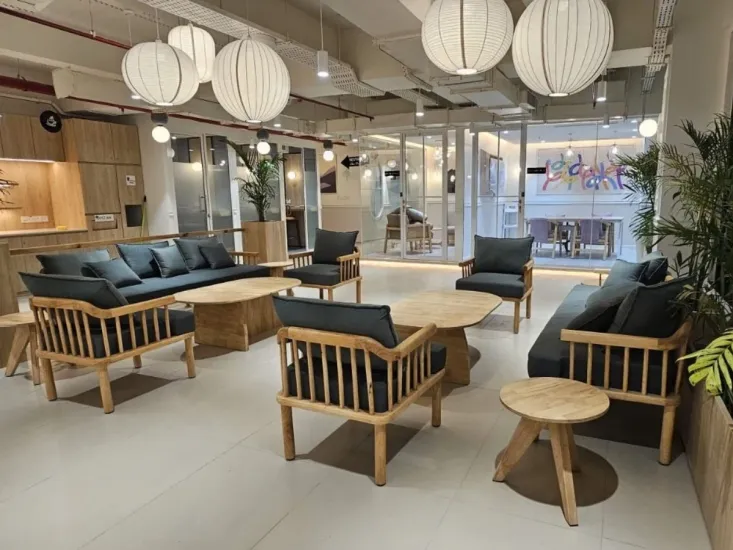
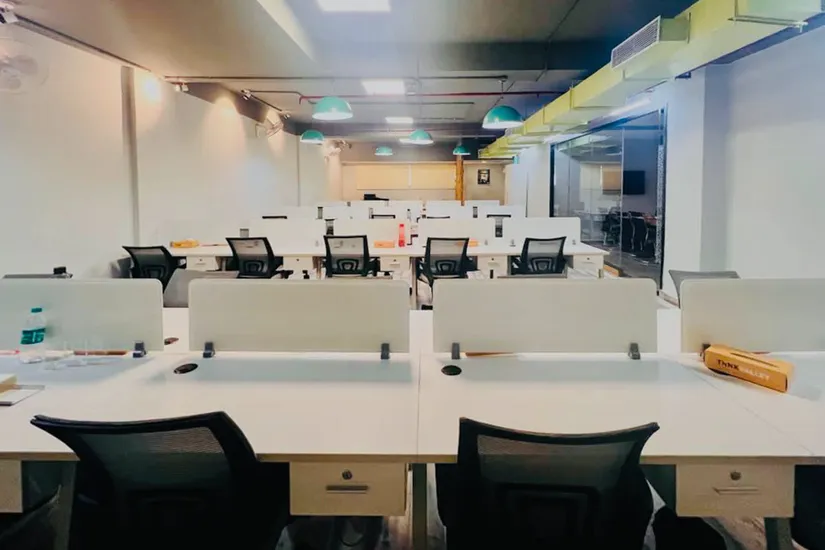
People who've never worked out of one usually picture some open room full of strangers on laptops. That's not really what it looks like anymore, at least not at the better places in Gurgaon. A decent coworking space today has proper private cabins for teams that want them, dedicated desks, meeting rooms you book by the hour, open seating if that's more your style.
All the boring infrastructure stuff — internet, furniture, housekeeping, security — is handled by whoever runs the place. You're not dealing with any of it. Show up, your desk is ready, Wi-Fi works, and if something breaks, that's someone else's problem to fix, not yours.
Sounds like a small thing until you've actually run a business and had internet die mid-call with a client, or spent an entire afternoon chasing someone to fix the AC instead of getting real work done. A good coworking setup just removes that whole category of distraction.

The Math Is Simpler Than People Think
Let's get into actual numbers, since that's usually what tips the decision one way or the other. A traditional office means paying for interiors, furniture, wiring, IT setup — all before a single person actually starts working. For a team of fifteen or twenty, that upfront spend runs into lakhs pretty easily, depending on how nice you want it to look.
Then there's the ongoing stuff — maintenance staff, electricity, internet bills, security, housekeeping — all of which needs managing regardless of whether half your team is traveling that month or working from home.
A coworking space in Gurgaon turns all of that into one predictable monthly number. You know exactly what you're paying, it scales with your seat count, and there's no capital stuck in furniture or interiors you'd have to sell off if you decided to move. For a business that genuinely doesn't know how big it'll be next year, that kind of predictability is worth more than it sounds on paper.
Is it always cheaper than a lease? No, not necessarily — a big, stable team staying put for years might actually come out ahead with a traditional office. But most businesses in Gurgaon today just don't fit that description. Startups, small agencies, remote-first companies opening a local presence — for them, coworking usually wins once you factor in the flexibility.
It's Not Only About the Money
Here's the part that doesn't show up on a spreadsheet, though. Being in a coworking space puts you around other businesses, and that closeness does something a private office just can't. I've heard founders talk about closing deals with people they met over coffee in the shared pantry. Heard freelancers mention picking up a referral from a conversation that started because someone noticed what was on their screen.
None of that's guaranteed, obviously. Sitting in a shared space doesn't automatically build you a network — you still have to actually talk to people. But the chance for that kind of interaction exists here in a way it just doesn't when you're sitting alone in a private office all day.
There's also something to the psychological side of it, especially for freelancers. Working from home sounds great until the line between "home" and "work" gets so blurry neither one feels distinct anymore. Physically going somewhere to work — even if it's a desk ten minutes from your apartment — creates a separation that makes focusing a lot easier.
Who's Actually Filling These Spaces
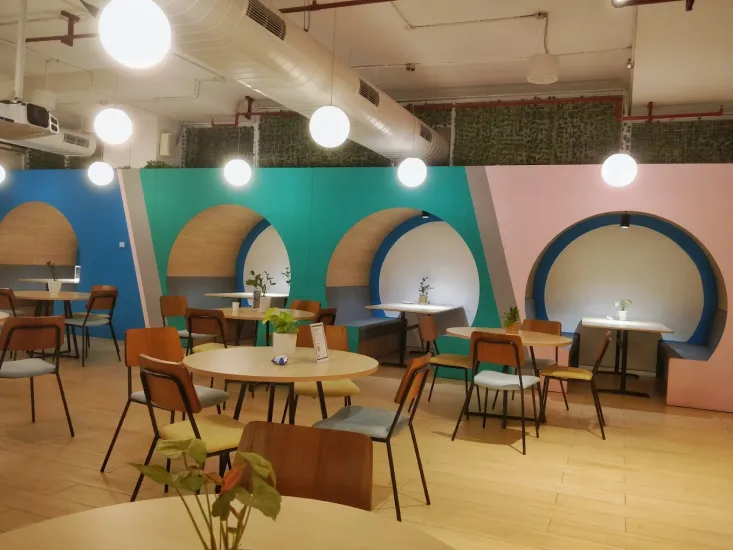
It's not just startups, though they're probably the most visible group. Freelancers make up a solid chunk of the crowd too — designers, writers, consultants, developers, anyone who needs a professional setting for client calls but doesn't want the overhead of running their own office.
Remote employees of bigger companies show up a lot too these days. A lot of organizations that went fully distributed a few years back never really went back, and plenty of them now pay for coworking access so their remote staff have somewhere decent to work, even without keeping a company office in that city.
And then there's established businesses testing new markets. A company based out of Mumbai or Bangalore wanting a Gurgaon presence doesn't necessarily want to sign a five-year lease before knowing if the expansion even works. Coworking lets them set up something functional and credible — a real address, meeting rooms, the works — without that kind of financial risk upfront.
What's Actually Worth Checking
If you're seriously considering this, a few things matter more than people expect going in.
Location, obviously — but think past just your own commute. Think about clients and partners who'll need to visit too. A great space in the wrong part of the city creates friction every single week, not just occasionally.
Ask directly about scalability. Can they fit you into a bigger space within the same building if your team grows? Switching operators because you outgrew your spot kind of defeats the whole point of choosing coworking in the first place.
Check on backup internet. Sounds minor until it goes down during something important — and it will, eventually.
Look at how many members are actually competing for the meeting rooms. Some places oversell that facility badly, and you end up fighting for slots during busy hours.
Read the contract properly — especially notice periods and lock-ins. Coworking's supposed to be flexible, but not every contract actually delivers on that. Some quietly build in penalties that undo the whole advantage.
And visit at a normal working hour, not some quiet slot set up specifically for a sales tour. Notice the noise, how full it really gets, whether people around you look like they're actually working or just there for the coffee.
Making the Comparison Less Painful
Doing all this manually — calling five different operators, chasing quotes, trying to remember which building had better meeting rooms versus better pricing — eats up more time than most people have to spare. That's really the problem Spacehaat is trying to solve.
It lists coworking spaces across Gurgaon's main business areas — Cyber City, Golf Course Road, MG Road, Sohna Road, Udyog Vihar — with actual details instead of the usual "enquire for pricing" placeholder. Seat availability, cabin options, amenities, indicative pricing — all visible before you even book a visit. So whatever visits you do make are to places that already cleared your basic filters. Single desk or a full floor for fifty people, doesn't matter — it turns a search that could eat up a week into something you handle in an afternoon.
Where This Is Probably Headed
I don't think coworking wipes out the traditional office completely, and it's probably not meant to. Some companies will always want to own their space outright, especially once they've stabilized at a certain size. But for most businesses actually operating in Gurgaon right now — startups still figuring themselves out, freelancers building independent careers, companies testing new cities, hybrid teams unsure how much physical space they even need — coworking has stopped being an "alternative" and just become the default.
The city's continued growth only reinforces that trend. As long as businesses keep changing shape faster than a lease allows for, coworking spaces will keep filling that gap.
If you're weighing your own options for a coworking space in Gurgaon right now, it's worth spending a little time on Spacehaat before locking anything in. Seeing what's actually out there, at what price, with what included — it tends to make a decision that feels overwhelming a lot easier to actually make.
#CoworkingSpaceInGurgaon #TopCoworkingSpaceGurgaon #GurgaonCoworking #CoworkingInGurgaon #GurgaonWorkspace #GurgaonOffice #OfficeSpaceInGurgaon #GurgaonOfficeSpace #FlexibleWorkspace #ProfessionalWorkspace #ModernWorkspace
