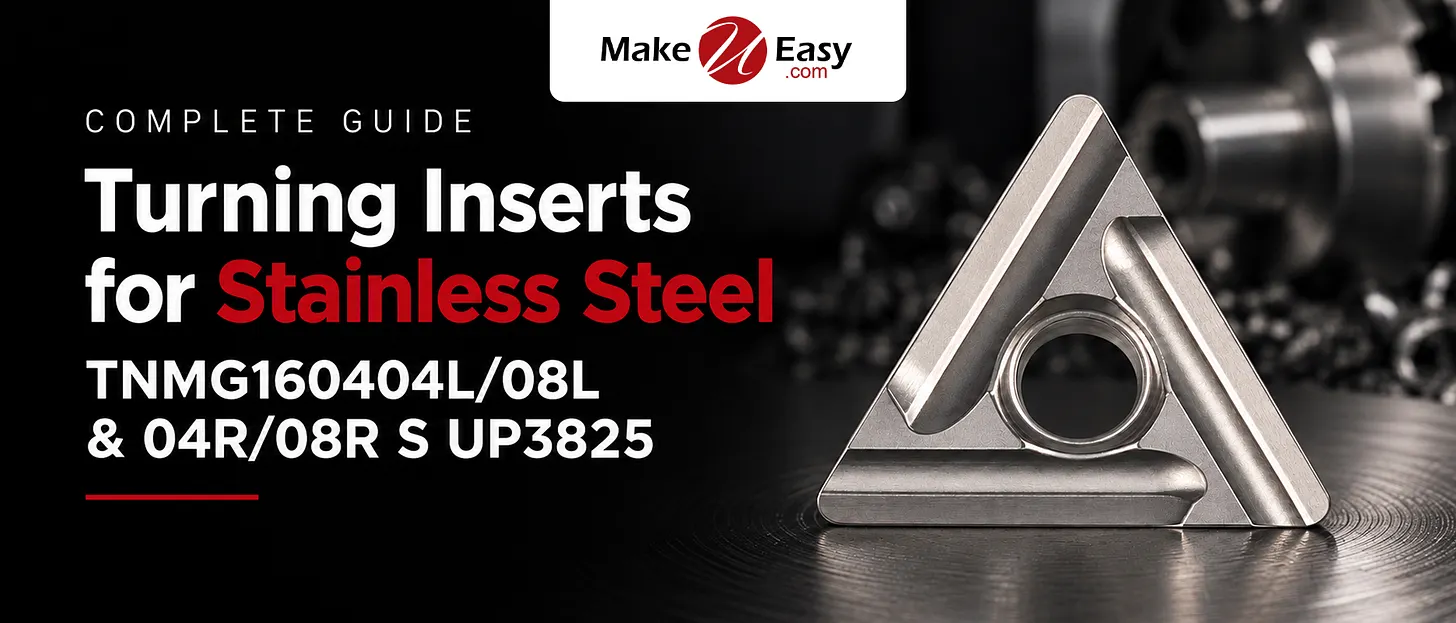
TNMG160404L/08L & 04R/08R S UP3825 Turning Inserts for Stainless Steel: Complete Guide
Author : Surya makeyoueasy | Published On : 07 Oct 2026
Introduction
Stainless steel turning requires careful insert selection because work hardening, heat generation, built-up edge, and chip control can affect machining performance. The TNMG160404L/08L and TNMG160404R/08R S UP3825 turning inserts are designed for compatible turning applications where geometry, cutting-edge condition, and grade selection play an important role. Understanding their designations and application requirements helps machinists choose suitable inserts for stable machining, consistent surface finish, and reliable tool life.
What Are TNMG160404L/08L & 04R/08R S UP3825 Inserts?
These are negative, triangular carbide turning inserts intended for use with compatible TNMG tool holders. The TNMG geometry is commonly used for external turning, facing, and profile machining.
The listed variants include 0.4 mm and 0.8 mm nose radii, with L and R identifiers. The UP3825 designation identifies the specified carbide grade. Since suffix meanings and grade performance can vary by manufacturer, confirm the exact product datasheet and holder compatibility before ordering.
TNMG Insert Specifications
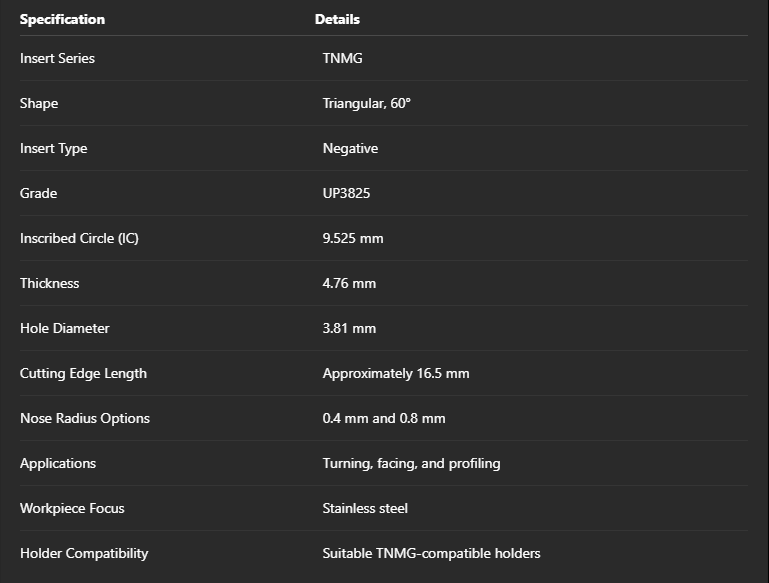
Specifications are typical for TNMG1604 inserts. Confirm exact dimensions and grade information against the supplier’s catalogue.
Understanding the Insert Designation
Breaking down the TNMG code helps identify the insert’s geometry and dimensions.
-
T: Triangular insert shape with a 60° included angle.
-
N: 0° clearance angle, indicating a negative insert.
-
M: Manufacturing tolerance classification.
-
G: Insert style and hole/clamping configuration.
-
16: Size designation corresponding to a 9.525 mm inscribed circle.
-
04: Thickness code corresponding to 4.76 mm.
-
04: 0.4 mm nose radius.
-
08: 0.8 mm nose radius.
The additional L and R suffixes identify specific product variants. Their precise meaning should be checked against the manufacturer’s designation system rather than assumed to be universal.
0.4 mm vs. 0.8 mm Nose Radius
Nose radius influences surface finish, cutting forces, and edge strength. Selecting the right radius depends on the operation, machine rigidity, and required finish.
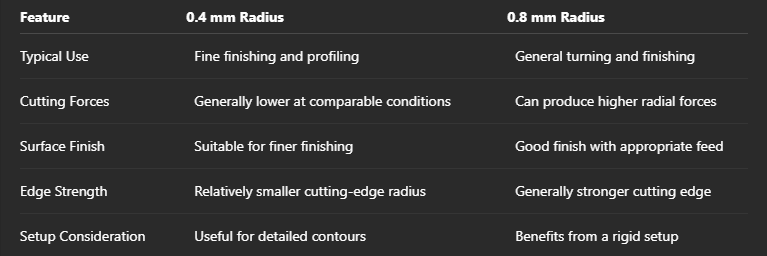
A smaller nose radius does not automatically guarantee a better finish. Feed rate, tool stability, insert condition, and workpiece material also affect the final surface quality.
Why Use the UP3825 Grade for Stainless Steel?
Stainless steel machining presents challenges such as work hardening, heat concentration, and chip adhesion. A suitable carbide grade and chipbreaker help manage these conditions.
When selecting the UP3825 grade, consider:
-
Wear resistance: Helps maintain the cutting edge during continuous machining.
-
Edge toughness: Important when cutting conditions involve variable loads.
-
Thermal performance: Relevant because stainless steel can generate substantial heat during cutting.
-
Chip control: The insert geometry should produce manageable chips for the selected feed and depth of cut.
-
Application compatibility: Verify the grade’s approved material range and cutting data.
The exact coating composition, recommended cutting speeds, and performance limits should be taken from the grade manufacturer’s technical documentation. Avoid substituting another grade solely because its designation looks similar.
Main Applications
1. External Turning
TNMG inserts are commonly used to machine cylindrical surfaces, shafts, and other external features. The appropriate nose radius and chipbreaker depend on the depth of cut and feed rate.
2. Facing Operations
The triangular geometry supports facing applications when used with a compatible holder and suitable approach angle.
3. Profile Turning
TNMG inserts can machine contours and shoulders within the limits of the tool-holder geometry and component design.
4. Stainless Steel Machining
The correct grade and chipbreaker can help manage work hardening, heat, and chip formation when turning stainless steel. Cutting parameters should be selected according to the specific stainless grade and manufacturer’s recommendations.
5. General Production Turning
The multiple cutting edges of a negative triangular insert can support economical production when the insert is indexed correctly, and the cutting conditions are stable.
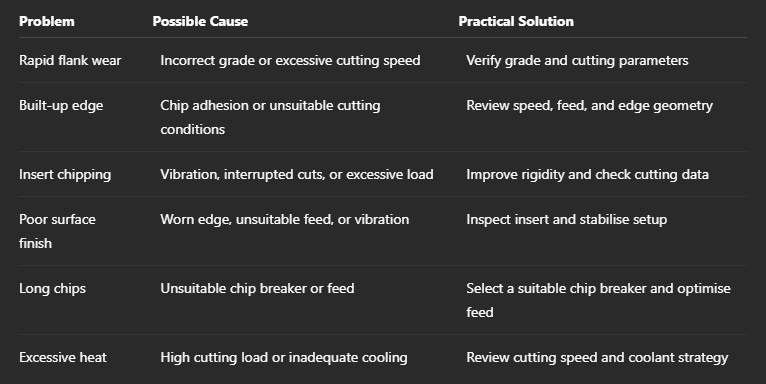
Common Problems and How to Avoid Them
Tips for Better Stainless Steel Turning
-
Use a grade and chipbreaker specifically recommended for the stainless steel being machined.
-
Maintain a rigid tool setup and minimise unnecessary tool overhang.
-
Avoid prolonged rubbing or dwelling, which can contribute to work hardening.
-
Follow the manufacturer’s recommended cutting speed, feed, and depth of cut.
-
Inspect insert edges regularly for wear, chipping, and built-up material.
-
Confirm the insert is seated correctly and securely clamped.
-
Use coolant according to the insert manufacturer’s recommendations and the machining operation.
Why Choose MakeYouEasy?
MakeYouEasy provides CNC cutting tools, turning inserts, milling tools, tool holders, and machining accessories for manufacturing professionals. Selecting compatible inserts and tooling helps simplify procurement and supports consistent machining operations.
For stainless steel turning, choosing the correct insert geometry, nose radius, carbide grade, and holder is essential for achieving reliable results.
Conclusion
The TNMG160404L/08L and 04R/08R S UP3825 turning inserts offer triangular negative geometry for compatible turning applications, including stainless steel machining. Their 0.4 mm and 0.8 mm nose radius options provide flexibility for different finishing and general turning requirements.
For dependable performance, verify the exact grade specifications, choose the appropriate nose radius, maintain a stable setup, and follow recommended cutting parameters. Matching the insert to the workpiece and operation can help improve surface quality, control tool wear, and maintain machining consistency.
Frequently Asked Questions
1. What is the TNMG160404 insert used for?
It is a negative triangular carbide insert commonly used for external turning, facing, and profiling.
2. What is the difference between TNMG160404 and TNMG160408?
TNMG160404 has a 0.4 mm nose radius, while TNMG160408 has a 0.8 mm nose radius.
3. Can TNMG inserts machine stainless steel?
Yes, when the selected grade and chipbreaker are suitable for the stainless steel and cutting conditions.
4. What does the UP3825 designation mean?
UP3825 identifies the specified carbide grade, whose exact coating and application range should be confirmed from the manufacturer’s technical data.
5. How can I improve TNMG insert tool life?
Use suitable cutting parameters, maintain tool rigidity, select the correct grade, and replace worn or damaged edges promptly.
Popular Search Keywords
TNMG160404L UP3825, TNMG160408L UP3825, TNMG160404R UP3825, TNMG160408R UP3825, TNMG turning inserts for stainless steel, UP3825 carbide insert, TNMG1604 insert specifications, TNMG 0.4 nose radius, TNMG 0.8 nose radius, stainless steel turning insert, negative triangular carbide insert, CNC stainless steel turning tools
