Thermometer Calibration: Importance, Process & When It Is Needed
Author : Ncqc laboratory | Published On : 05 Nov 2026
Accurate temperature monitoring is essential for maintaining product quality, workplace safety, and operational efficiency. Thermometers are widely used in laboratories, pharmaceutical facilities, food processing units, hospitals, and manufacturing industries. Even a minor deviation in temperature readings can affect product quality, testing outcomes, and process performance. Regular thermometer calibration helps identify measurement errors and ensures dependable results.
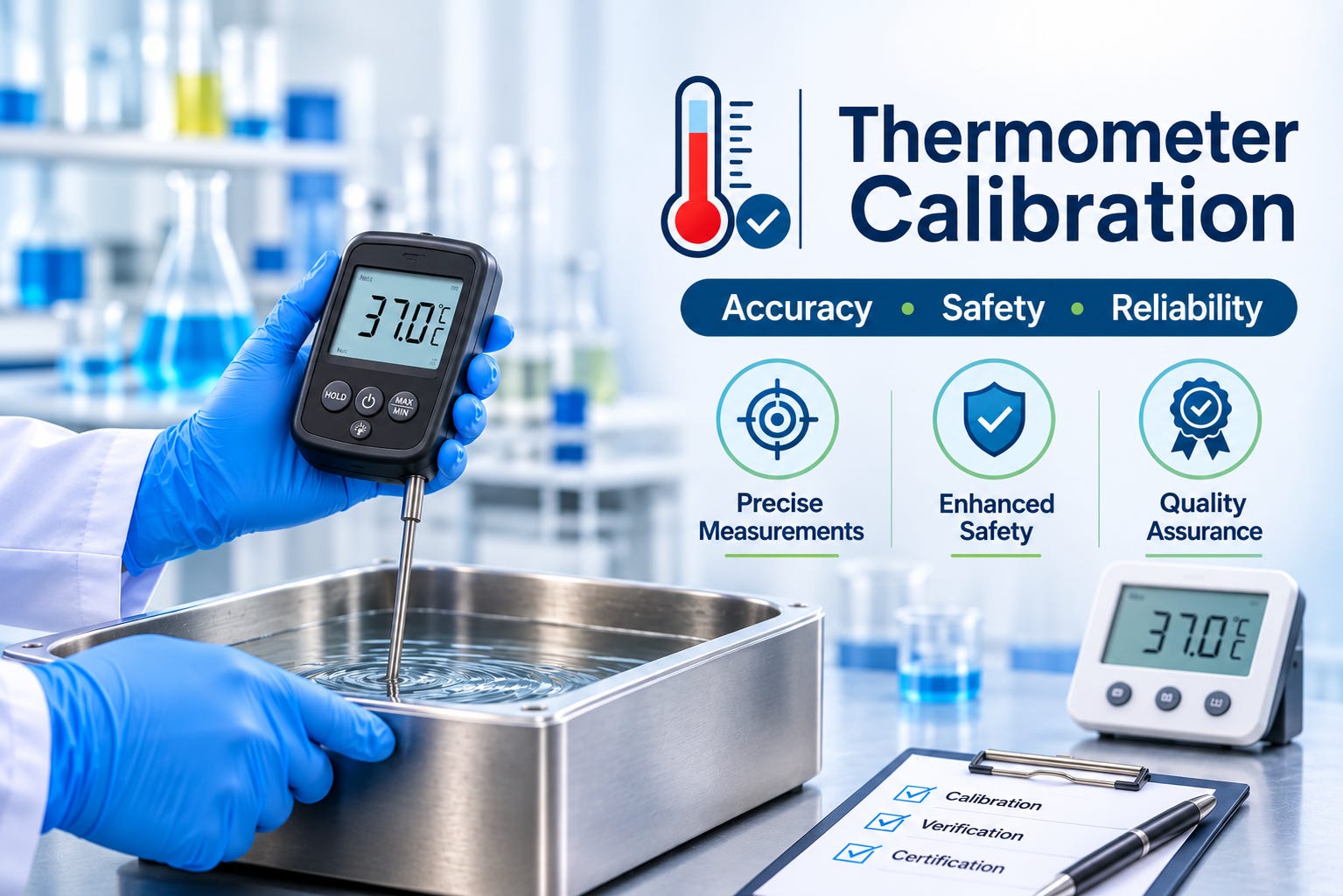
What Is Thermometer Calibration?
Thermometer calibration is a procedure used to assess an instrument’s performance by comparing its readings with a calibrated reference standard. This comparison helps identify differences between the displayed value and the reference temperature.
The process determines whether the device operates within its specified accuracy limits. It applies to various instruments, including digital, infrared, liquid-in-glass, and industrial thermometers. The findings are recorded in a calibration certificate, which provides important information about measurement errors, uncertainty, and traceability.
Why Is Temperature Accuracy Important?
Reliable temperature monitoring supports several important business and industrial activities. Some key benefits include:
-
Product Quality: Maintains suitable temperature conditions during manufacturing, processing, and storage.
-
Process Control: Helps operators maintain consistent conditions throughout production activities.
-
Workplace Safety: Supports monitoring of critical temperature limits in industrial environments.
-
Regulatory Requirements: Provides documented evidence to support applicable quality and compliance procedures.
-
Reliable Testing: Reduces the possibility of incorrect results caused by measurement deviations.
Without regular checks, inaccurate readings may go unnoticed and affect important operational decisions.
When Should a Thermometer Be Calibrated?
The required frequency depends on the instrument type, usage, working environment, and previous calibration history. However, certain situations indicate that testing may be necessary:
-
Before Initial Use: Newly purchased instruments used for critical applications should be checked before operation.
-
At Planned Intervals: Periodic testing helps identify performance changes over time.
-
After Physical Damage: Accidental drops, shocks, or exposure to harsh conditions may affect sensor performance.
-
After Repairs: Maintenance or component replacement can influence measurement reliability.
-
When Readings Differ: Unexpected variations between instruments may indicate a measurement problem.
-
Before Quality Audits: Updated records help demonstrate proper equipment monitoring.
How Is the Calibration Process Performed?
A typical procedure involves several important stages:
-
Visual Inspection: The technician checks the instrument for physical damage, display problems, and sensor condition.
-
Reference Selection: A suitable calibrated thermometer with appropriate accuracy and traceability is selected.
-
Temperature Comparison: Both instruments are exposed to controlled temperature conditions.
-
Data Recording: Readings are noted at selected points across the required operating range.
-
Result Evaluation: Observed deviations are assessed against applicable acceptance criteria.
-
Certificate Preparation: Results and measurement uncertainty are documented for future reference.
The exact procedure varies according to the instrument’s design and intended application.
Industries That Depend on Reliable Temperature Monitoring
Pharmaceutical companies use thermometers to monitor storage conditions and protect temperature-sensitive products. Food processing facilities depend on suitable readings during production and preservation. Hospitals, research laboratories, chemical plants, and manufacturing units also require dependable temperature monitoring for their daily activities.
Conclusion
Maintaining dependable temperature measurements is important for product quality, process consistency, and operational safety. Regular instrument checks, appropriate testing intervals, and proper documentation help organisations identify errors and maintain confidence in their results.
For professional support with thermometer calibration, visit Calibration Laboratory to explore the available calibration services.
