Thermocouple Calibration: Ensuring Accurate and Reliable Temperature Measurement
Author : Ncqc laboratory | Published On : 07 Oct 2026
Accurate temperature measurement is essential in manufacturing, pharmaceuticals, laboratories, food processing, healthcare, and other industries where temperature directly affects product quality and process performance. Thermocouples are widely used for measuring temperature because of their versatility, durability, and broad measurement range. However, like other measuring instruments, thermocouples can develop measurement errors over time. Thermocouple calibration helps verify their accuracy and ensures reliable temperature measurement.
What Is Thermocouple Calibration?
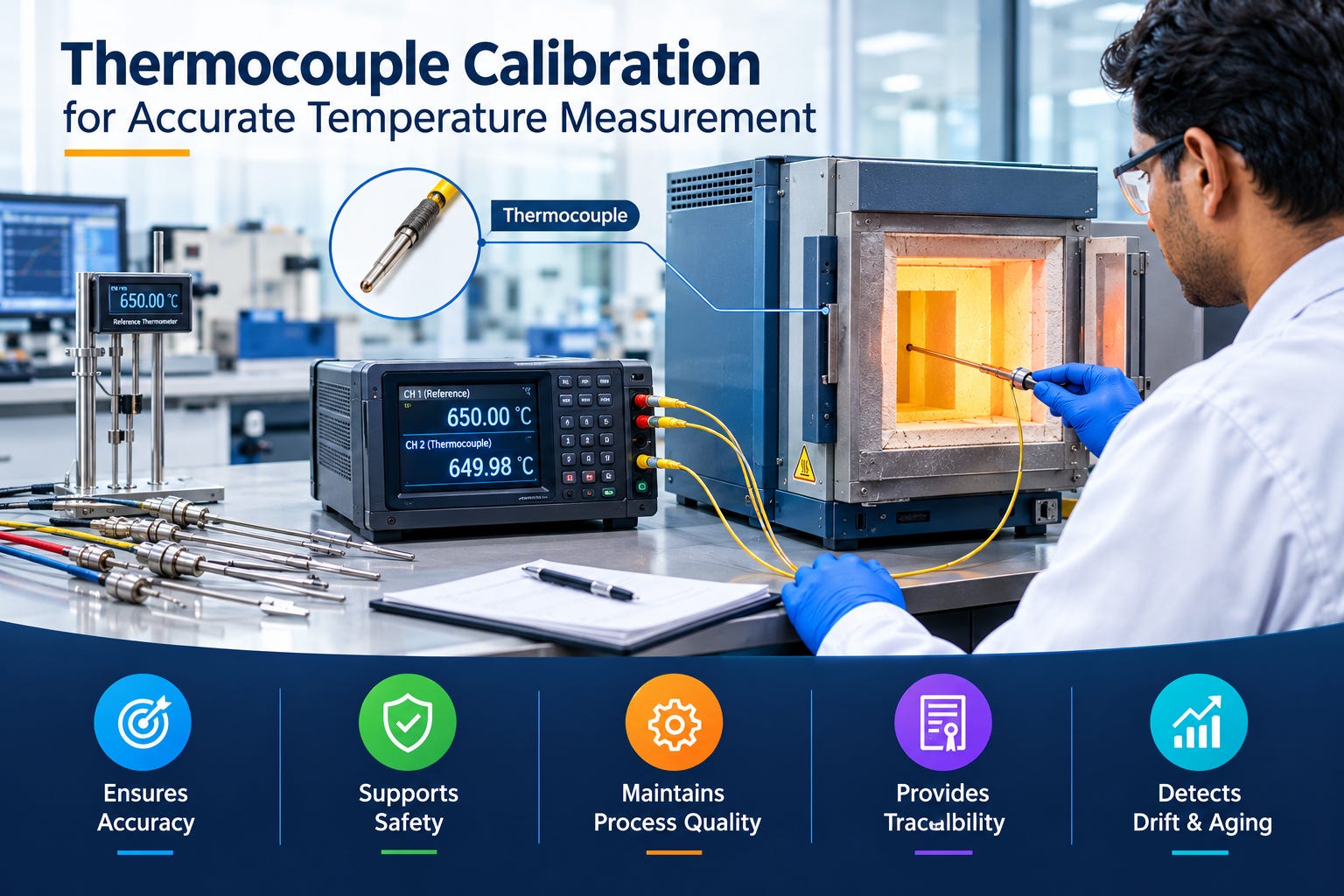
Thermocouple calibration is the process of comparing the temperature reading of a thermocouple with a calibrated reference standard under controlled conditions. The difference between the thermocouple reading and the reference value is determined to evaluate its accuracy.
A professional thermocouple calibration laboratory uses suitable temperature sources and reference standards to perform calibration at defined temperature points. The calibration results help determine measurement errors, uncertainty, and whether the thermocouple is suitable for its intended application.
Why Is Thermocouple Calibration Important?
Temperature measurement errors can affect manufacturing processes, product quality, and safety. Regular calibration helps organizations identify measurement deviations before they become significant problems.
The key benefits of thermocouple calibration include:
· Improved temperature measurement accuracy
· Reliable and consistent process monitoring
· Reduced product rejection and process variation
· Better compliance with quality and regulatory requirements
· Traceability of temperature measurements
· Early identification of sensor drift or performance problems
For industries where temperature is a critical process parameter, maintaining calibrated instruments is an important part of an effective quality management system.
How Is a Thermocouple Calibrated?
Thermocouples are commonly calibrated using the comparison method. The sensor under test is placed together with a calibrated reference sensor in a controlled temperature source, such as a dry-block calibrator, liquid temperature bath, or high-temperature furnace.
The temperature is stabilized at selected test points, and readings from the thermocouple and reference standard are recorded. The difference between the two readings is then evaluated. Depending on the application and instrument design, calibration may be performed at multiple points across the operating range.
A professional laboratory also considers measurement uncertainty, reference standard accuracy, temperature uniformity, and environmental conditions to ensure reliable calibration results.
Common Thermocouple Types and Applications
Thermocouples are available in different types to suit various temperature ranges and operating environments. Common types include Type K, Type J, Type T, Type E, Type N, Type R, Type S, and Type B.
They are used in applications such as industrial ovens, furnaces, autoclaves, temperature chambers, process equipment, laboratories, manufacturing machinery, and other temperature-controlled systems.
The appropriate calibration points should be selected according to the thermocouple’s operating range, process requirements, applicable specifications, and intended use.
Maintain Accurate Temperature Measurements
Regular temperature calibration is an important part of an effective measurement-management system. It helps organizations detect measurement errors, maintain process consistency, and establish confidence in temperature readings.
Whether thermocouples are used in manufacturing, pharmaceutical production, food processing, laboratories, or other industrial applications, periodic calibration can help ensure that temperature measurements remain reliable and fit for purpose.
NCQC Laboratory LLP provides professional thermocouple calibration and temperature calibration services with a focus on measurement accuracy, traceability, and dependable calibration results.
