Thermal Calibration Sources: Types, Applications, and Benefits
Author : Ncqc laboratory | Published On : 28 Oct 2026
Accurate temperature measurement is essential for maintaining product quality, process consistency, and operational safety across industrial and laboratory environments. Thermal calibration sources provide controlled temperature conditions that help verify the performance of thermometers, thermocouples, RTDs, temperature sensors, and other measuring instruments. Regular thermal calibration improves confidence in measurement results and supports reliable temperature monitoring in industries where precision matters.
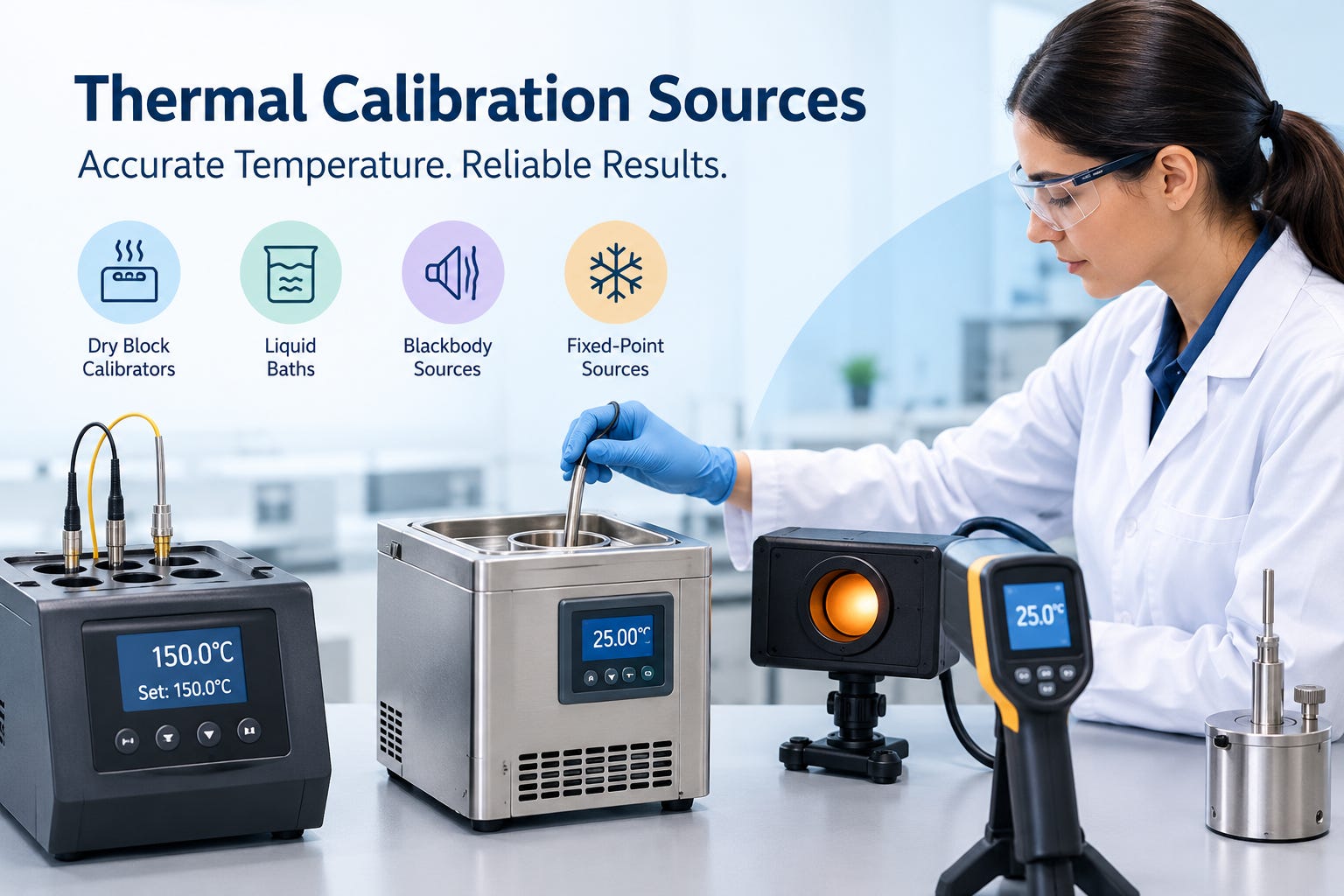
What Are Thermal Calibration Sources?
Thermal calibration sources are specialized devices used to generate stable and controlled temperatures for calibrating temperature-measuring instruments. They allow technicians to compare an instrument’s readings with a suitable reference standard and identify measurement errors or deviations.
Common thermal calibration sources include dry block calibrators, liquid temperature baths, high-temperature furnaces, and blackbody sources. The appropriate source depends on the instrument type, operating temperature range, required accuracy, and calibration method.
Types of Thermal Calibration Sources
Different calibration sources are designed for specific temperature ranges and applications.
-
Dry Block Calibrators: These devices provide controlled temperatures through metal inserts with openings for temperature probes. They are widely used for calibrating RTDs, thermocouples, and digital thermometers.
-
Liquid Temperature Baths: Liquid baths provide uniform temperature conditions and are suitable for calibrating reference thermometers and other compatible temperature sensors.
-
High-Temperature Furnaces: These sources generate elevated temperatures for calibrating sensors and instruments used in industrial heating, manufacturing, and laboratory testing.
-
Blackbody Sources: Blackbody calibrators provide a controlled thermal radiation source for checking infrared thermometers, pyrometers, and other non-contact temperature measurement devices.
Selecting the right thermal calibration equipment helps achieve reliable results and supports measurement traceability.
Applications Across Different Industries
Temperature calibration is important in many sectors where accurate readings influence product quality, safety, and process performance.
· Pharmaceutical Industry: Helps verify temperature instruments used in manufacturing, controlled storage, and laboratory operations.
· Manufacturing and Engineering: Supports the testing of sensors installed in machinery, production lines, industrial ovens, and furnaces.
· Food Processing: Helps maintain dependable temperature monitoring during processing, storage, and quality control.
· Research Laboratories: Supports reliable measurements for experiments, analytical procedures, and technical testing.
· Healthcare Facilities: Helps verify temperature-measuring instruments used in relevant medical equipment and controlled environments.
Using the appropriate calibration method helps organizations maintain consistent operations and identify measurement problems before they affect critical activities.
Benefits of Regular Temperature Calibration
Reliable calibration practices help organizations detect instrument deviations and maintain confidence in their measurement systems. They can also reduce the risk of temperature-related production errors and support quality management procedures.
Key benefits include:
· Improved measurement accuracy and reliability
· Better process consistency and product quality
· Early identification of instrument drift
· Documented calibration results and measurement traceability
· Support for applicable quality and regulatory requirements
Calibration intervals should be determined according to instrument performance, application risks, manufacturer recommendations, and relevant quality procedures.
How to Choose the Right Thermal Calibration Source
Before choosing equipment, evaluate the required temperature range, stability, uniformity, measurement uncertainty, and compatibility with the instrument under test. Portability may also be important for on-site calibration, while laboratory applications may require more precise temperature control.
Consulting an experienced calibration laboratory can help you select a suitable method and ensure that reference standards meet your measurement requirements.
Conclusion
Thermal calibration sources support accurate temperature measurement in industrial, commercial, and laboratory applications. Understanding the available equipment, its uses, and its selection criteria helps organizations improve process reliability and maintain consistent measurement quality.
For professional guidance on temperature measurement and calibration requirements, contact NCQC Laboratory LLP to discuss your application and explore suitable calibration solutions.
