The Surgeon’s Precise Bite: Understanding Single Action Rongeurs
Author : Grey Med | Published On : 18 Jun 2026
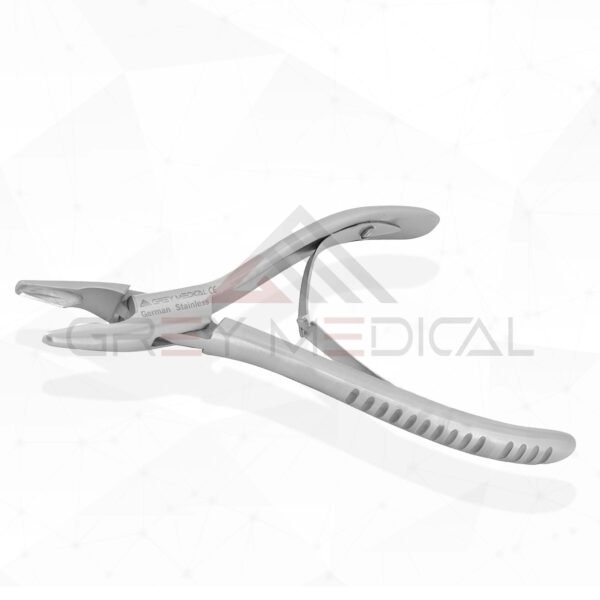
In the fast-paced and highly precise world of surgery, the tools a surgeon wields can make all the difference. Among the unsung heroes of the operating room is the single action rongeur, a heavy-duty, plier-like instrument designed to do what standard forceps and scissors cannot: bite through bone, cartilage, and tough tissue. Whether you are medical student familiarizing yourself with surgical trays, a sterile surgical tools processing technician ensuring instrument integrity, or just curious about medical hardware, understanding how a single action rongeur works is essential.
What is a Single Action Rongeur?
A rongeur (pronounced rawn-zhur, derived from the French word for "rodent" or "gnawer") is a sharp-edged, scooping instrument. The "single action" distinction refers specifically to its hinge mechanism.
Unlike double action rongeurs, which feature two joints to multiply the user's hand force, a single action rongeur has a single fulcrum (hinge point). When you squeeze the handles, the jaws close in a direct 1:1 mechanical ratio.
Key Anatomy of the Instrument
-
The Jaws: Cup-shaped, sharp, and scooped. They are designed to cleanly slice off small pieces of bone or tissue rather than crushing them.
-
The Hinge: A single rivet or screw that serves as the sole pivot point.
-
The Spring Mechanism: Most single action rongeurs feature a leaf spring between the handles. This automatically forces the instrument back open after a cut, reducing hand fatigue for the surgeon.
Common Uses in Surgery
Because they require a bit more manual grip strength than their double-jointed cousins, single action rongeurs are typically used for more delicate, precise, or superficial bone-shaving tasks. They are staples in several surgical specialties:
-
Orthopedic Surgery: Used to trim jagged bone edges after a fracture or to shape a bone surface before placing an implant.
-
Neurosurgery and Spine Care: Essential for performing laminectomies or removing small segments of bone to relieve pressure on nerves.
-
Oral and Maxillofacial Surgery: Used to contour the jawbone or extract bone fragments after a complex tooth extraction.
-
Podiatry: Ideal for removing bony overgrowths or bunion fragments in tight spaces.
Single Action vs. Double Action: The Main Differences
Choosing between a single and single action rongeur double action rongeur comes down to a trade-off between force and control.
-
Manual Effort: Single action rongeurs require more hand strength from the surgeon because there is no secondary hinge to leverage the force.
-
Size and Visibility: Because they lack the bulky secondary joint, single action rongeurs are much sleeker and lighter. This gives the surgeon a clearer, unobstructed view of the surgical site, which is crucial when working near delicate nerves or blood vessels.
-
Tactile Feedback: A single hinge provides superior "feel." The surgeon can feel exactly how much resistance the bone is putting up, allowing for highly nuanced control.
Care and Maintenance in the Sterile Processing Department (SPD)
Because rongeurs are used to cut bone, they are highly prone to dulling and tissue buildup. Proper maintenance is critical to keep them functional and safe.
Pro-Tip for Sterile Processing: Always inspect the cups of the rongeur for micro-cracks or biological debris. Use a soft nylon brush during decontamination to clean out the jaw cups, as trapped bone fragments can harden and ruin the instrument during autoclaving.
To test if a single action rongeur is sharp enough for surgery, it should cleanly bite through a piece of standard index card or thick cardstock without tearing or snagging the paper. If it bends the paper instead of cutting it, it needs to be sent out for sharpening.
