The Bedtime Struggle Most Australian Parents Don't Realise Is a Bedding Problem
Author : Auteeze Australia | Published On : 19 May 2026
It's 9pm. You've done the bath. You've read the book. You've done the second book. You've sat in the hallway pretending to leave. And still, your child is awake, restless, calling out, or crying. You're exhausted. They're exhausted. And nobody is sleeping.
If this sounds like your household, you are not alone. Research from the Royal Children's Hospital National Child Health Poll found that 42 percent of Australian children aged five to seventeen have a problem with their sleeping pattern. A separate report found that more than one in five Australian parents struggle to establish a bedtime routine at all. That's a staggering number of families silently battling the same thing every single night.
Here's what most of them don't know: for a significant number of children, particularly those with sensory sensitivities, autism, or ADHD the problem isn't the routine. It isn't the screen time or the sugar after dinner. It's the bedding.
The Part of the Bedtime Equation Nobody Talks About
Most bedtime advice focuses on what children do before they get into bed. Routines, wind-down time, lights off, no devices. All of that matters. But what happens the moment your child actually gets under the covers — the texture against their skin, the weight on their body, the temperature that builds up through the night that part rarely gets discussed.
For children with sensory processing differences, this is exactly where things fall apart.
Why Sensory-Sensitive Children Struggle More at Bedtime
Children with sensory sensitivities experience the world more intensely than other kids. A seam on a sock can feel unbearable. A tag on a shirt can derail an entire morning. So imagine what the wrong bedding feels like when they're lying still, with nothing to distract them, trying to wind down a nervous system that is already working overtime.
Rough fibres, heat-trapping fabrics, or bedding that feels loose and unsettling can keep a sensory-sensitive child in a state of low-level alertness all night long. They're not being difficult. Their nervous system genuinely cannot settle, and the thing covering them is making it harder.
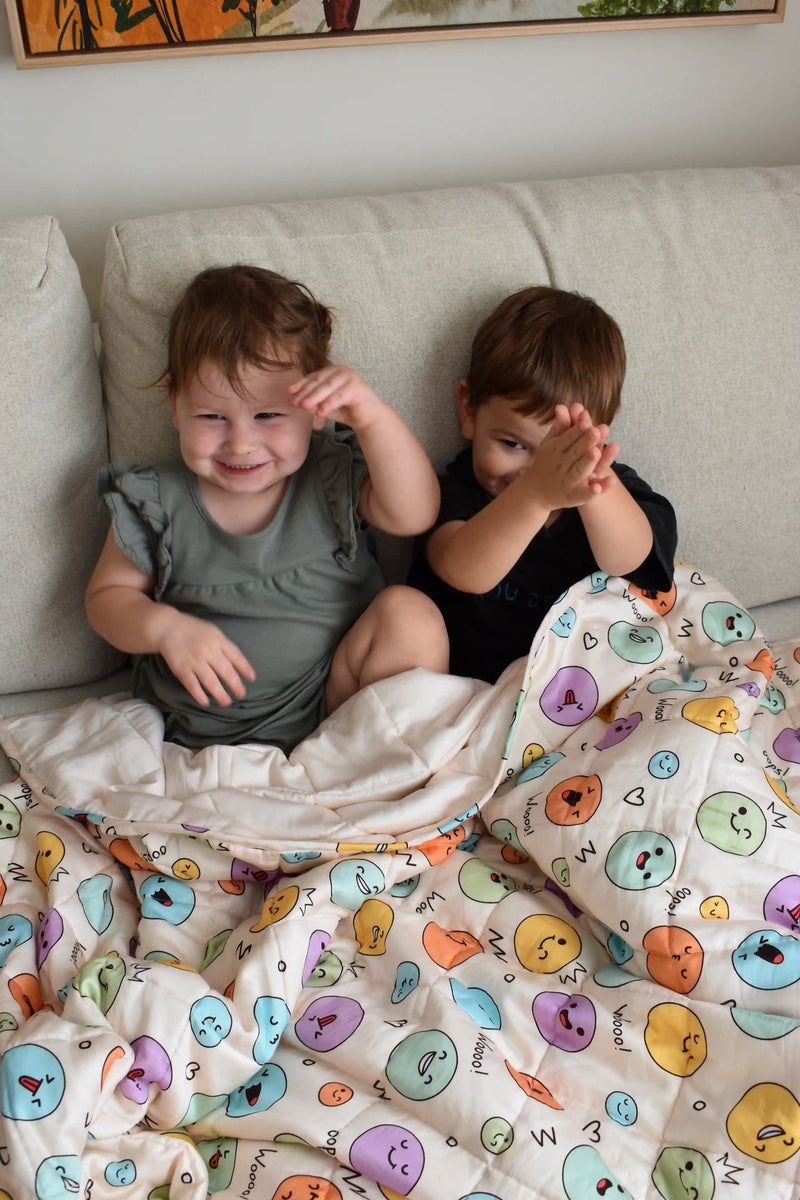
The Bedding Problem Behind the Behaviour
This is where sensory bedding in Australia parents are starting to pay attention to; it often changes everything. When bedding actively works with a child's nervous system, providing gentle, consistent pressure; staying cool against the skin; and feeling soft rather than irritating, the physical experience of being in bed shifts entirely.
A child who fought bedtime for years sometimes starts going to bed willingly. Not because their behavior changed, but because the sensory environment finally felt safe enough to let them relax.
What the Right Sensory Bedding Actually Provides
Understanding this comes down to one concept: deep pressure stimulation. This is the same calming sensation we get from a firm hug, and it is precisely what a quality weighted blanket for kids delivers when the child pulls it over themselves at night.
Deep pressure stimulation signals to the nervous system that it is safe to slow down. It reduces cortisol, supports melatonin production, and helps transition the body from a state of alertness into genuine rest. For children who struggle to make that transition on their own, a weighted blanket doesn't just make them comfortable; it gives their nervous system the input it was missing.
Why a Sensory Blanket for Autism Is Often the Missing Piece
For children on the autism spectrum, bedtime difficulties are particularly common. The combination of sensory sensitivity, difficulty with transitions, and nervous system dysregulation makes the leap from wakefulness to sleep genuinely challenging, not a behavioral choice. A sensory blanket for autism that provides steady, even deep pressure throughout the night can be genuinely transformative for these families.
Many Australian parents describe trying everything, including melatonin, strict routines, and sleep consultants, before discovering that the right weighted blanket was the piece that finally made the difference.
The Fabric Question Matters More in Australia Than Anywhere Else
Here is where Australian families face a specific challenge. Most weighted blankets on the market are made for cooler climates. In Australia's warm, humid conditions, a heat-trapping blanket defeats its own purpose; the child overheats, becomes uncomfortable, and wakes through the night no matter how well the weight was chosen.
This is exactly why Koala weighted blankets and bamboo-based options have become so popular with Australian sensory families. Bamboo is naturally breathable and temperature-regulating; it stays cool in summer and warm in winter without trapping heat against the body. It is hypoallergenic, extraordinarily soft, and gentle on the kind of sensitive skin that reacts to synthetic fibres.
The Auteeze kids weighted blanket range is made from 100 percent bamboo and is OEKO-TEX® Standard 100 Class 1 certified, the highest safety standard available, so parents can feel confident about exactly what is touching their child's skin all night long.
Building a Sleep Environment That Actually Works
A weighted blanket is a powerful tool, but it works best as part of a broader sensory-friendly sleep environment. Think about every element of your child's experience from the moment they get into bed.
The Role of Supportive Sleep Products
Bedding is one layer. The pillow is another one. A quality memory pillow Australia families use alongside a sensory blanket can further reduce physical restlessness by supporting proper head and neck alignment removing another source of low-level discomfort that can keep a child from fully settling.
Small adjustments, made thoughtfully across the whole sleep environment, often achieve what no single product or no amount of routine coaching could accomplish on its own.
What to Do Tonight
You do not need to overhaul everything at once. Start with the most significant sensory layer, the blanket your child pulls over themselves every night. Choose one made from breathable, natural bamboo fabric. Choose a weight appropriate for their body size. Occupational therapists recommend approximately ten percent of body weight as a starting point. And if possible, involve your child in choosing the design.
Auteeze offers its sensory bedding Australia parents trust in a range of designs children genuinely love, including playful patterns that make climbing into bed feel like a choice rather than a battle. When a child feels in control of their sleep environment, the bedtime fight often softens before anything else changes.
You Have Not Been Doing It Wrong
Here is the most important thing to take away from all of this: if bedtime has been a battle in your home, you have not been failing your child. You have been working with incomplete information. Behaviour, routine, and parenting strategies matter, but for a sensory-sensitive child, the physical environment they sleep in matters just as much.
The bedtime struggle most Australian parents don't realize is a bedding problem, and now you know. That is the first step to changing it.
