TEP Translation in Singapore: How to Avoid ICA & MOM Rejections
Author : Letter crafts | Published On : 04 Apr 2026
When it comes to certified translations in Singapore, accuracy isn’t just important—it’s mandatory. Whether you’re applying for permanent residency, submitting employment documents, or handling legal paperwork, even minor translation errors can lead to costly delays or outright rejection.
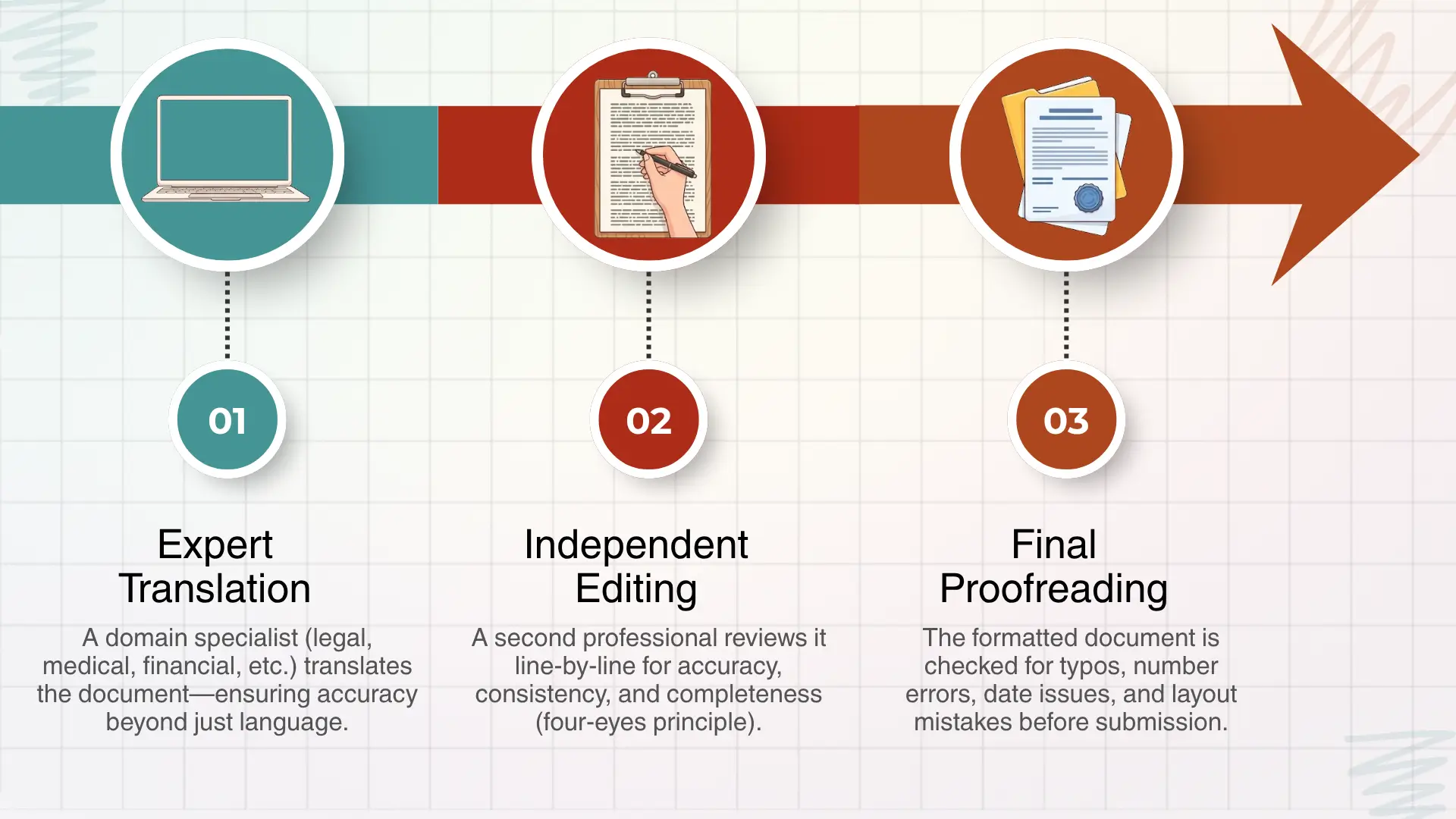
This is where TEP translation—Translation, Editing, and Proofreading—comes in. It is the industry standard for producing reliable, compliant translations that meet the strict requirements of Singapore authorities such as ICA and MOM.
In this article, we’ll explore what TEP translation is, why it matters, and how it helps you avoid common pitfalls that lead to rejected applications.
What Is TEP Translation?
TEP stands for Translation, Editing, and Proofreading, a structured three-step workflow designed to ensure maximum accuracy and quality.
Unlike simple or “single-pass” translation, TEP involves three independent professionals, each responsible for a distinct stage:
- Translation by a domain specialist
- Independent editing (four-eyes principle)
- Final proofreading of the formatted document
This process is aligned with ISO 17100 standards, which define best practices for professional translation services worldwide.
In Singapore, this level of rigor is essential because certified translations are subject to legal scrutiny, notarisation, and official authentication.
Why TEP Matters in Singapore
Singapore has one of the most structured regulatory environments for translated documents. Submissions to ICA and MOM often require:
- Certified translations
- Notary Public authentication
- Singapore Academy of Law (SAL) verification
- A clear chain of professional accountability
Each step assumes that the translation is accurate, consistent, and complete.
However, many applicants discover problems only after submission—when documents are rejected or queried. These issues rarely stem from major mistranslations. Instead, they are usually the result of workflow gaps, especially when TEP is not followed.
A rejected application can delay your process by four to twelve weeks, creating unnecessary stress and administrative burden.
The Three Stages of TEP Explained
1. Translation by a Domain Specialist
The first stage is handled by a subject-matter expert, not just a bilingual translator.
For example:
- Legal documents require legal translators
- Financial filings require financial linguists
- Medical records require healthcare specialists
This ensures that terminology is not only translated correctly but also interpreted accurately within its professional context.
Importantly, every element of the source document must be translated—not just the main text. This includes:
- Stamps and seals
- Handwritten notes
- Marginal annotations
These details are often overlooked in low-quality translations but are critical for official acceptance.
2. Independent Editing (Four-Eyes Principle)
The second stage introduces a completely independent editor.
This is not a casual review—it is a line-by-line accuracy audit comparing the source and translated documents side by side.
The editor verifies:
- Names and terminology consistency
- Dates, numbers, and formatting
- Regulatory and contextual accuracy
This stage is known as the four-eyes principle, meaning two qualified professionals independently review the same document.
Without this step, errors often go unnoticed—especially in multi-document submissions.
3. Final Proofreading of the Formatted Document
The final stage focuses on the actual submission-ready document, not a draft.
This is critical because formatting processes—such as PDF conversion or layout adjustments—can introduce new errors, including:
- Misaligned text
- Incorrect dates or numbers
- Truncated content
- Layout inconsistencies
Proofreading ensures that the final document is accurate, complete, and professionally formatted before certification.
Why Translations Get Rejected
Many rejected submissions share a common pattern: they skip or compromise one of the TEP stages.
1. Untranslated Stamps and Annotations
Official documents often include stamps, seals, and handwritten notes. These elements validate the document in its original jurisdiction.
When left untranslated—or simply labeled as “[stamp]”—they raise red flags for reviewers.
2. Terminology Inconsistencies
In multi-document submissions, inconsistencies in names or terminology can trigger queries.
For example:
- A name spelled differently across documents
- Variations in translated terms
Even if each version is technically correct, inconsistency suggests unreliability.
3. Post-Formatting Errors
Errors introduced after translation—during formatting or conversion—are surprisingly common.
These include:
- Incorrect dates
- Missing text
- Layout distortions
Without final proofreading, these issues often slip through unnoticed.
The Cost of Poor Translation
Many people choose cheaper, single-pass translation services to save money. However, this often leads to higher long-term costs.
Direct Costs:
- Rejection or resubmission fees
- Delayed application timelines
Indirect Costs:
- Legal exposure in contracts
- Reputational damage in business documents
- Loss of credibility with authorities
In comparison, TEP translation—starting from around S$38 per page—is a small investment for significantly higher reliability.
TEP vs Single-Pass Translation
The difference between TEP and single-pass translation is not just about quality—it’s about risk management.
| Feature | Single-Pass Translation | TEP Translation |
|---|---|---|
| Independent editor | No | Yes |
| Accuracy verification | Self-review | Independent audit |
| Terminology consistency | Variable | Controlled |
| Multi-document alignment | Weak | Strong |
| Compliance readiness | Risky | Reliable |
In short, single-pass translation may appear faster or cheaper, but it lacks the safeguards required for official submissions.
How to Verify a Genuine TEP Workflow
Not all agencies that claim to offer TEP actually follow it properly.
Here are five key questions to ask:
- Is the editor different from the translator?
If not, the four-eyes principle is not being applied. - Does proofreading happen on the final formatted document?
Pre-format reviews are not sufficient. - Is the translator a domain specialist?
Generalists may miss critical nuances. - Who signs the Certificate of Accuracy?
It must be an identifiable professional, not just the agency. - How is personal data handled?
Compliance with PDPA and confidentiality standards is essential.
Clear, confident answers indicate a genuine TEP workflow.
The Role of Compliance and Accountability
In Singapore, translation is not just a linguistic task—it is part of a regulated compliance chain.
This includes:
- Professional translation
- Certification of accuracy
- Notarisation
- SAL authentication
Each step requires traceable accountability, meaning every professional involved must stand behind their work.
Without a structured process like TEP, this chain becomes fragile.
Conclusion: TEP Is the Only Credible Standard
TEP translation is not a premium feature—it is the baseline requirement for certified translations in Singapore.
It ensures that:
- Every detail is accurately translated
- Every document is independently verified
- Every submission meets regulatory standards
In a system where even minor errors can cause delays or rejection, TEP provides the reliability you need.
If you are preparing documents for ICA, MOM, or legal use, choosing a proper TEP workflow is not just a good decision—it’s the only responsible one.
