Temperature Mapping vs Calibration: What Is the Difference?
Author : Ncqc laboratory | Published On : 06 Oct 2026
Accurate temperature control is essential in industries such as pharmaceuticals, laboratories, food processing, manufacturing, and cold-chain operations. Two important processes used to maintain temperature reliability are temperature mapping and calibration. Although they are often discussed together, they have different purposes and evaluate different aspects of temperature measurement. Understanding the difference helps organizations maintain product quality, meet regulatory expectations, and ensure reliable temperature monitoring.
What Is Temperature Calibration?
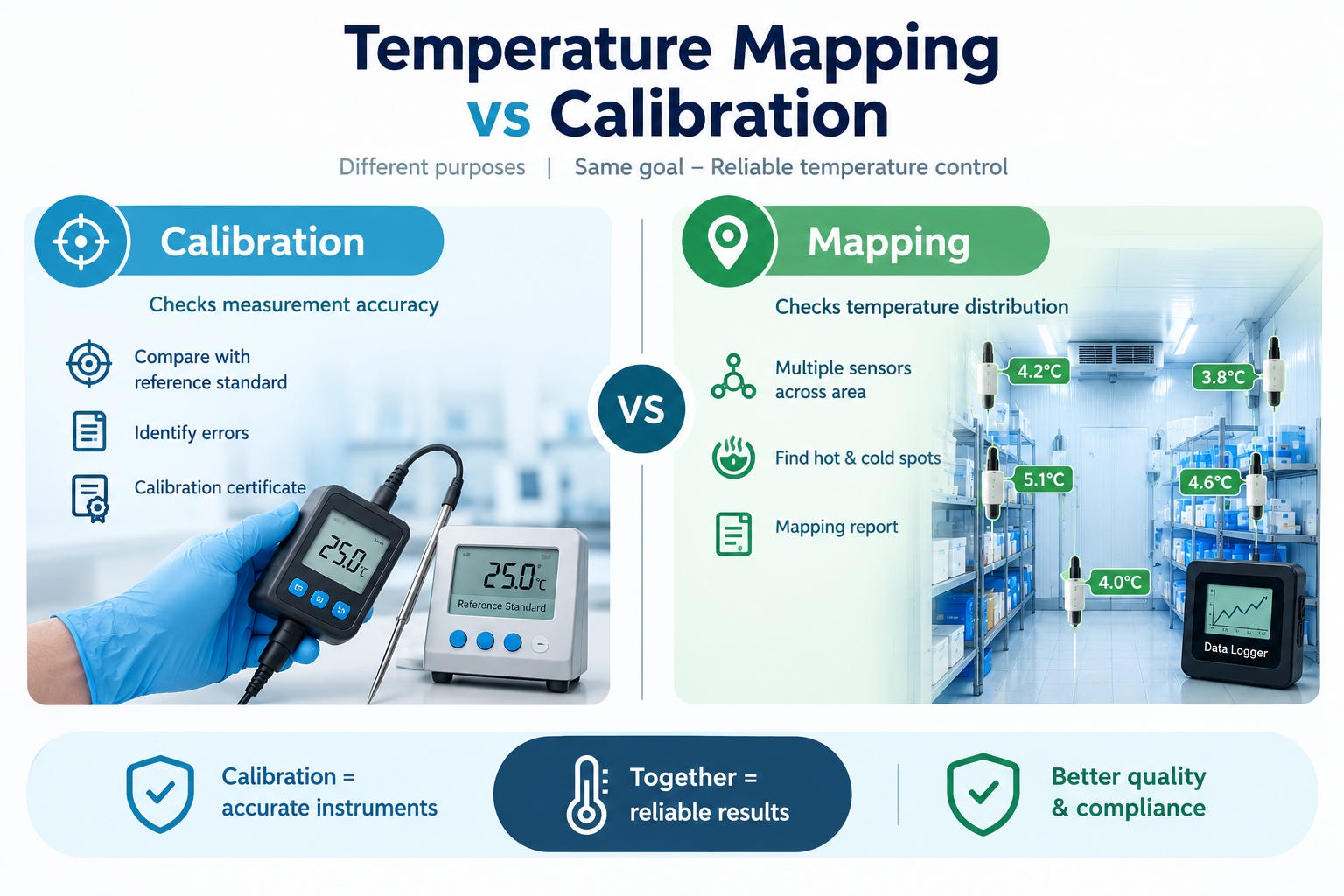
Temperature calibration is the process of comparing the reading of a temperature-measuring instrument with a known and more accurate reference standard. The purpose is to determine whether the instrument is providing reliable temperature measurements and to identify any measurement error or deviation.
Common instruments that may require calibration include thermometers, thermocouples, resistance temperature detectors (RTDs), temperature sensors, and data loggers. During calibration, the instrument’s readings are compared with reference values under defined conditions. The results are generally documented in a calibration report, which may include the measured values, errors, and applicable traceability information.
What Is Temperature Mapping?
Temperature mapping is the process of evaluating temperature distribution across a defined space, equipment, or storage area. Instead of checking only one measurement point, multiple calibrated sensors or data loggers are positioned at different locations to collect temperature data over a specified period.
This study can be performed in refrigerators, freezers, cold rooms, warehouses, incubators, storage chambers, and other controlled environments. The collected data helps identify areas where temperatures may be higher or lower than expected, commonly known as hot spots and cold spots.
Temperature Mapping vs Calibration: Key Differences
The main difference is what each process evaluates.
Temperature Calibration checks the accuracy of an individual instrument by comparing its readings with a reliable reference standard. It identifies measurement errors and provides results through a calibration certificate or report.
Temperature Mapping checks the temperature distribution within an area or equipment. Multiple calibrated sensors or data loggers are placed at different locations to identify temperature variations, including hot and cold spots. The results are documented in a mapping report.
In simple terms, calibration confirms whether an instrument measures temperature accurately, while mapping confirms whether temperature is maintained consistently throughout an environment.
Both processes are complementary and help ensure reliable temperature control and monitoring.
Why Are Both Important?
Both processes are important for reliable temperature-controlled operations. Accurate instruments are essential for obtaining trustworthy data during a mapping study. If sensors or data loggers are not properly calibrated, the recorded results may not accurately represent actual conditions.
On the other hand, calibration alone cannot show whether every location within a storage area or chamber maintains the required temperature. Using both approaches provides greater confidence in measurement accuracy, environmental control, product quality, and regulatory compliance.
When Should You Perform Calibration and Temperature Mapping?
Calibration should be performed at defined intervals and whenever events such as repairs, damage, adjustments, or other conditions could affect instrument accuracy. Temperature mapping may be required during equipment qualification, commissioning, after significant modifications, or when environmental conditions change.
The appropriate frequency depends on the equipment, application, risk level, internal procedures, and applicable standards or regulatory requirements.
Final Takeaway: Two Processes, Different Purposes
Temperature calibration and Temperature Mapping serve different but connected purposes. Calibration verifies whether a temperature instrument measures accurately, while mapping verifies how temperature is distributed throughout a defined environment. Using both appropriately helps organizations maintain reliable temperature control and greater confidence in temperature-sensitive operations.
